1. How to choose optical cable?
In addition to the number of fiber cores and fiber types, the selection of optical cables also depends on the usage environment of the optical cables. The structure and outer sheath of the optical cables should also be selected.
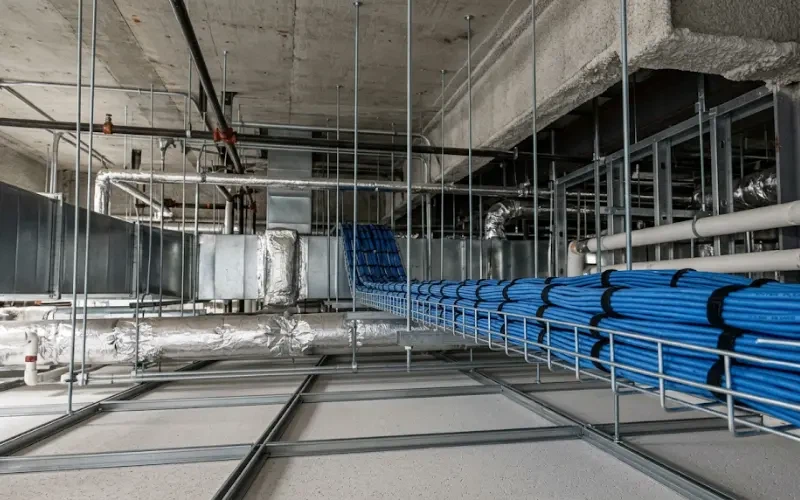
1. When the optical cable is directly buried outdoors, it is advisable to use loose-tube armored optical cable. When used overhead, a loose tube optical cable with a black PE outer sheath with two or more reinforcing ribs can be used.
2. When selecting optical cables for use in buildings, tight-buffer optical cables should be selected and attention should be paid to their flame retardant, toxic and smoke characteristics. Generally, the flame-retardant but smoke-free type (Plenum) or the flammable and non-toxic type (LSZH) can be used in pipes or forced ventilation areas. The flame-retardant, non-toxic and smoke-free type (Riser) should be used in exposed environments.
3. When laying vertical or horizontal cables in the building, you can choose tight-buffered optical cables, distribution optical cables or branch optical cables that are common in the building.
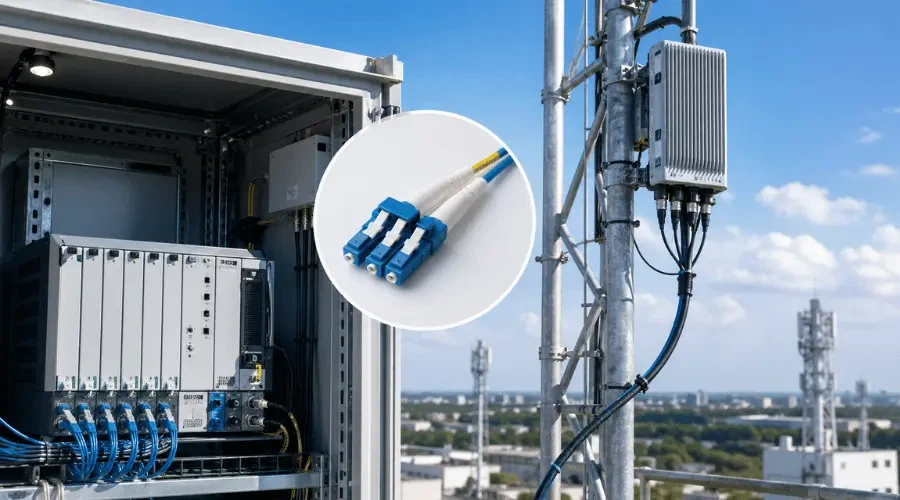
4. Select single-mode and multi-mode optical cables according to network application and optical cable application parameters. Usually, indoor and short-distance applications are mainly multi-mode optical cables, and outdoor and long-distance applications are mainly single-mode optical cables.
2. In fiber optic connections, how to choose different applications of fixed connections and movable connections?
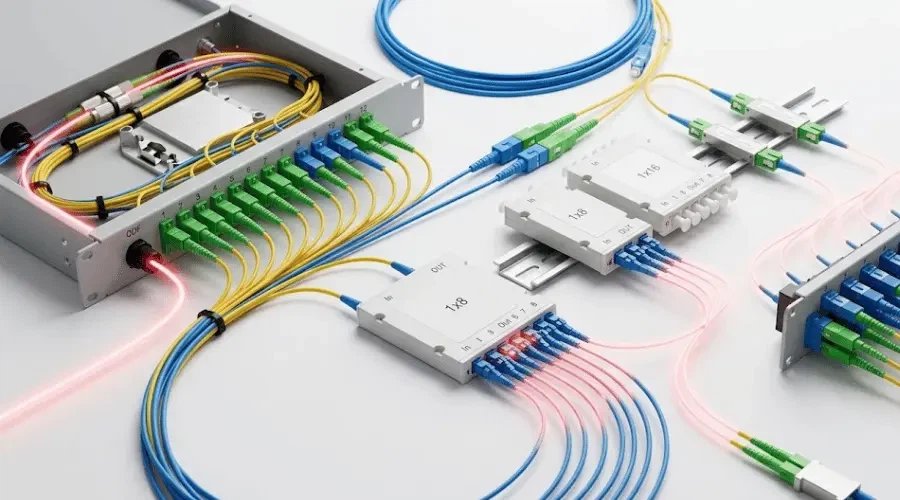
The active connection of optical fibers is achieved through optical fiber connectors. An active connection point in an optical link is an explicit segmentation interface. When it comes to the choice between movable connections and fixed connections, the advantages of fixed connections are reflected in lower cost and smaller optical loss, but poor flexibility, while the opposite is true for movable connections. When designing the network, it is necessary to flexibly choose the use of active and fixed connections based on the entire link situation to ensure both flexibility and stability, so as to give full play to their respective advantages. The movable connection interface is an important interface for testing, maintenance, and changes. The movable connection is relatively easier to find the fault point in the link than the fixed connection, making it easier to replace faulty components, thereby improving system maintainability and reducing maintenance costs.
3. Optical fiber is getting closer to user terminals. What is the significance of "fiber to the desktop" and what factors need to be paid attention to when designing the system?
In the application of "fiber to the desktop" in horizontal subsystems, the relationship with copper cables is complementary and indispensable. Optical fiber has its own unique advantages, such as long transmission distance, stable transmission, not affected by electromagnetic interference, high bandwidth support, and no electromagnetic leakage. These characteristics make optical fiber play an irreplaceable role as copper cable in some specific environments:
1. When the transmission distance of the information point is greater than 100m, if you choose to use copper cable. Repeaters must be added or network equipment and weak current must be added, thereby increasing costs and potential faults. This problem can be easily solved using optical fiber.
2. In specific working environments (such as factories, hospitals, air conditioning equipment rooms, power equipment rooms, etc.) there are a large number of electromagnetic interference sources. Optical fibers can operate stably in these environments without being affected by electromagnetic interference.
3. There is no electromagnetic leakage in optical fibers, and it is very difficult to detect signals transmitted in optical fibers. It is a good choice in places with high confidentiality requirements (such as military, R&D, auditing, government and other industries).
4. In environments with high bandwidth requirements, reaching more than 1G, optical fiber is a good choice.
The application of optical fiber is gradually extending from the backbone or computer room to desktop and residential users, which means that more and more users who do not understand the characteristics of optical fiber are beginning to come into contact with optical fiber systems. Therefore, when designing the optical fiber link system and selecting products, the current and future application requirements of the system should be fully considered, and compatible systems and products should be used to facilitate maintenance and management as much as possible, and adapt to the ever-changing actual on-site conditions and user installation needs.
4. Can the FC connector be directly connected to the SC connector?
Yes, these are just different connection methods for two different types of connectors.
If you need to connect them, you must choose a hybrid adapter. Use an FC/SC adapter to connect the FC connectors and SC connectors at both ends respectively. This method requires that the connectors should all be flat ground. If you must connect angled angle (APC) connectors, you must use the second method to prevent damage.
The second method is to use a hybrid patch cord and two connection adapters. Hybrid patch cords are those that use different fiber optic connector types on both ends. These connectors will go to where you need to connect. This allows you to use a common adapter in the patch panel to connect to the system, but at the expense of the system attenuation budget. The increment of a connector pair.
5. The fixed connection of optical fibers includes mechanical optical fiber splicing and thermal fusion splicing. So what are the selection principles for mechanical optical fiber splicing and thermal fusion splicing?
Mechanical optical fiber splicing, commonly known as optical fiber cold splicing, refers to an optical fiber splicing method that does not require a hot fusion splicer and uses simple splicing tools and mechanical connection technology to permanently connect single-core or multi-core optical fibers. In general, when splicing optical fibers with small core numbers and scattered locations, mechanical splicing should be used instead of thermal splicing.
In the early days, mechanical optical fiber splicing technology was often used in engineering practices such as line emergency repairs and small-scale applications in special occasions. In recent years, with the large-scale deployment of fiber-to-the-desktop and fiber-to-the-home (FTTH), people have realized the significance of mechanical fiber splicing as an important fiber splicing method.
For fiber-to-the-desktop and fiber-to-the-home applications that feature a large number of users and dispersed locations, when the user scale reaches a certain level, the construction complexity, construction personnel and fusion splicers cannot meet the time requirements of users to activate services. Due to its simple operation, short personnel training period, and small equipment investment, mechanical fiber splicing provides the most cost-effective fiber splicing solution for large-scale fiber deployment. For example, in high places in corridors, in small spaces, where lighting is insufficient and on-site power supply is inconvenient, mechanical optical fiber splicing provides design, construction and maintenance personnel with a convenient, practical, fast and high-performance optical fiber splicing method.