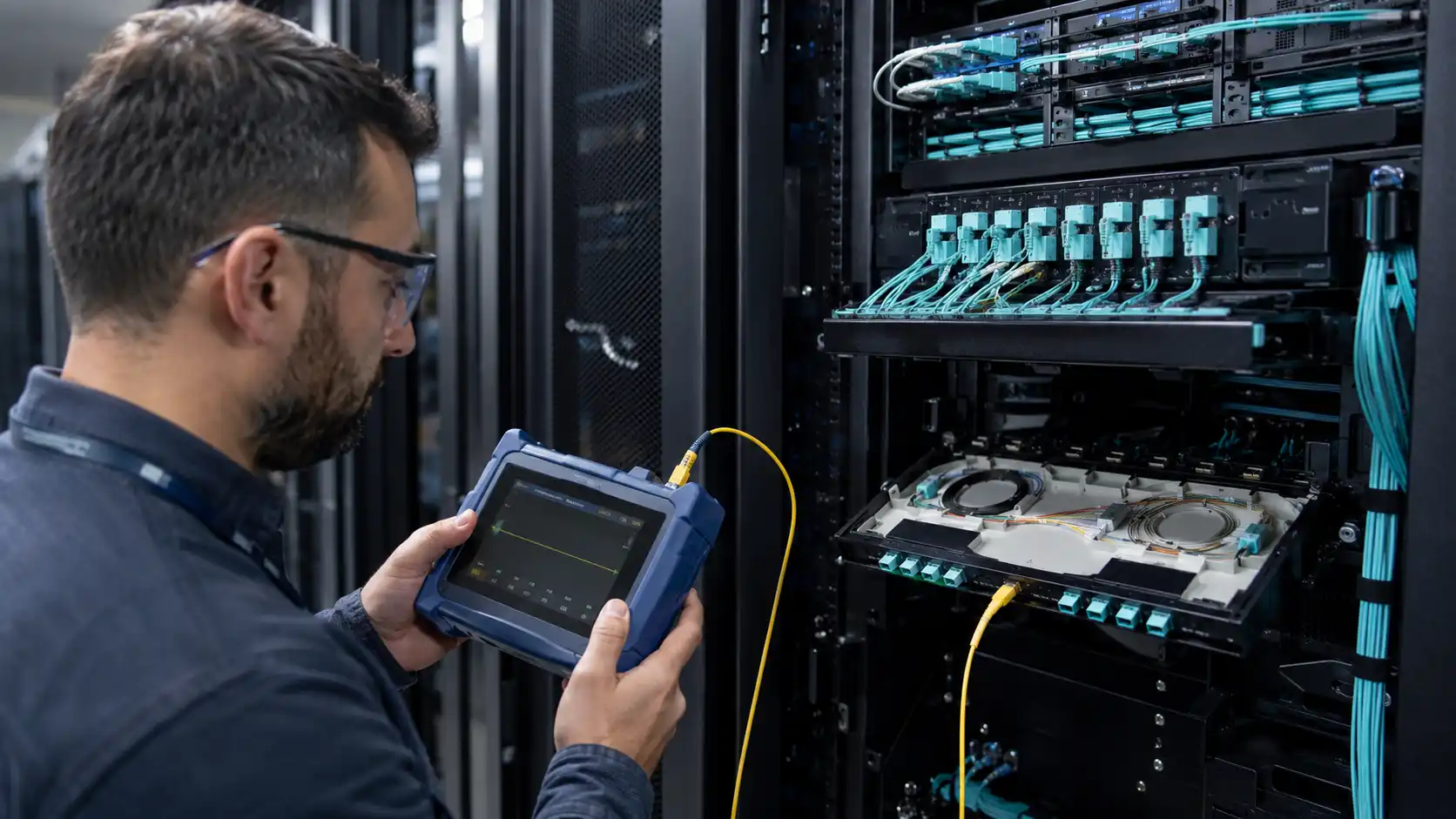
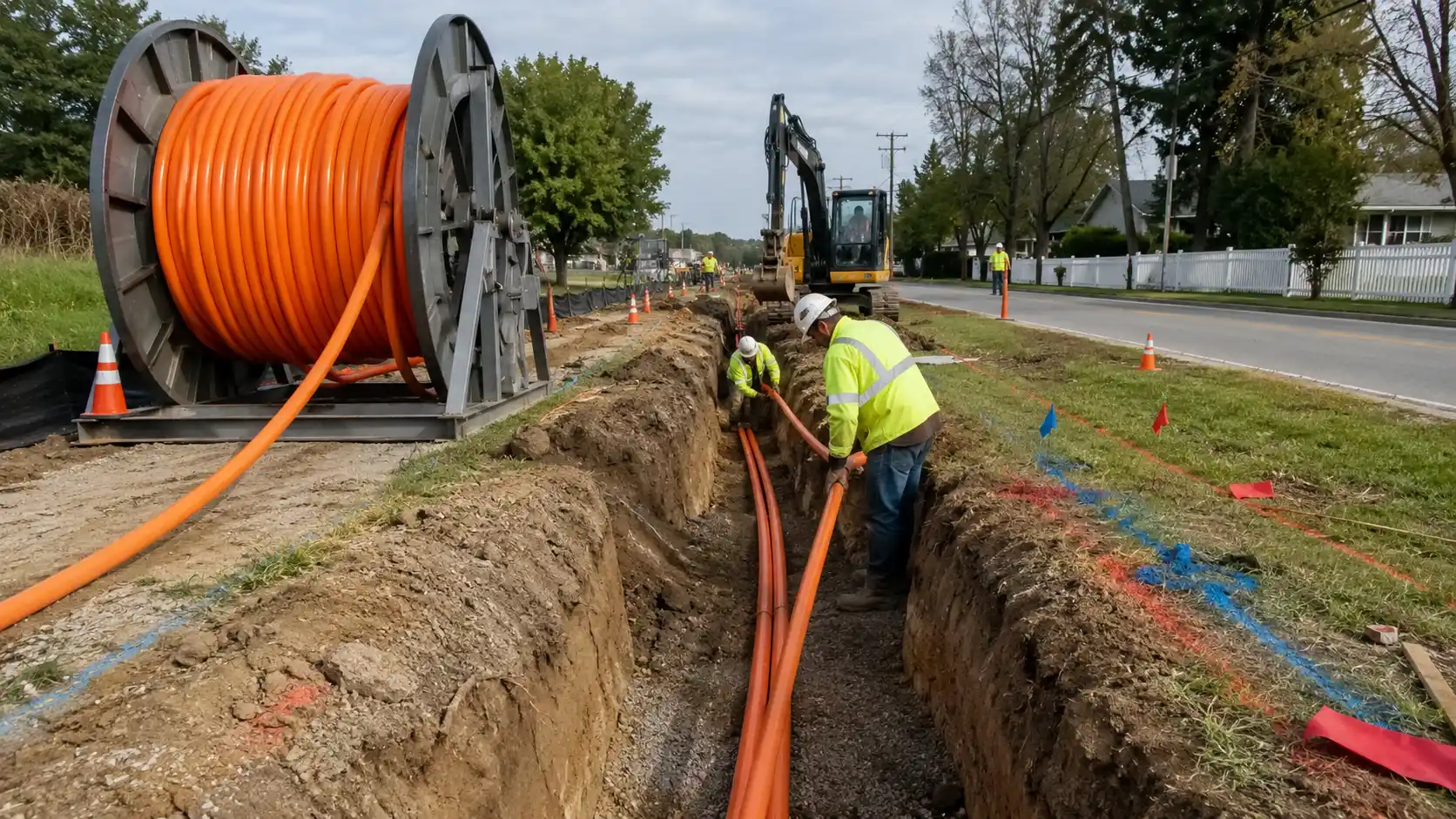
A CPRI cable is a fiber optic cable assembly used to carry fronthaul signals between baseband equipment (BBU) and remote radio equipment (RRU/RRH) in mobile networks, following the Common Public Radio Interface (CPRI) specification. It typically uses duplex fiber connectivity with telecom-grade connectors and is designed for FTTA, base station, and tower deployments rather than ordinary indoor office networking.
CPRI itself is not a cable type - it is the interface specification that defines how user data, control information, and synchronization travel between radio and baseband sides of a base station. The cable is the physical medium that supports that interface. Understanding this distinction helps buyers avoid treating a generic fiber patch cord as interchangeable with a deployment-grade CPRI assembly.
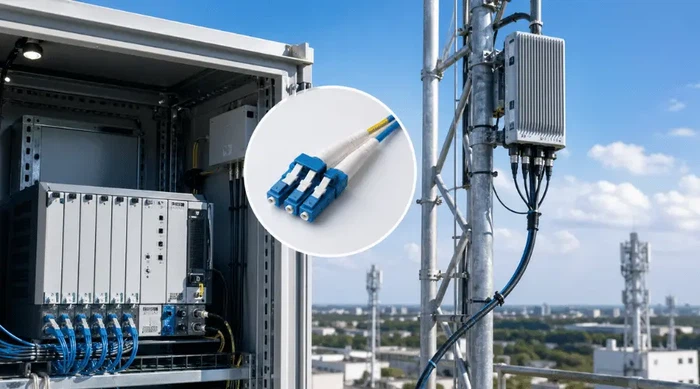
What Does CPRI Stand For?
CPRI stands for Common Public Radio Interface. According to the official CPRI v7.0 specification, it defines the internal interface of radio base stations between the Radio Equipment Control (REC) and the Radio Equipment (RE). The specification covers Layers 1 and 2 of the OSI model and was developed by a consortium including Ericsson, Huawei, NEC, and Nokia (with Nortel contributing to earlier versions before leaving in 2009).
In everyday telecom language, CPRI describes the link between a BBU (Baseband Unit) and an RRU or RRH (Remote Radio Unit / Remote Radio Head). The specification handles user plane data transport, control and management plane mechanisms, and synchronization - which is why this link is more than a simple data connection. It coordinates radio operation across physically separated components in a mobile access network.
How a CPRI Link Works?
A CPRI link connects the baseband processing side of a mobile base station to the radio side. In traditional deployments, this means a fiber connection runs from a BBU - often housed in an equipment room or shelter - to one or more RRUs mounted on a tower, rooftop, or pole. This connection is a fronthaul link within the radio access network, distinct from backhaul or enterprise Ethernet connections.
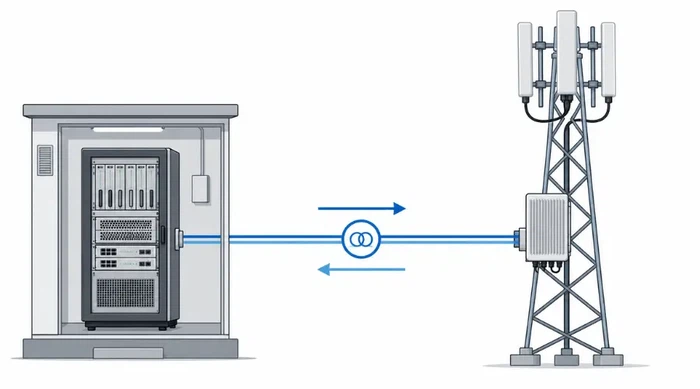
The CPRI interface transports digitized in-phase and quadrature (IQ) samples using time-division multiplexing over optical or electrical connections. The link also carries synchronization and control data, which is essential for coordinated radio transmission across distributed antenna sites. The physical layer supports both single-mode and multimode fiber, with the choice depending on the optical transceivers and link distance involved.
What a CPRI Cable Assembly Typically Includes?

When engineers or procurement teams search for a "CPRI cable," they are usually looking for a fiber optic cable assembly built for fronthaul use. A typical assembly includes the following components:
- Duplex fiber connectivity - most CPRI links require a pair of fibers (one transmit, one receive), so duplex construction is standard.
- Telecom-grade connectors - LC duplex connectors are the most common in current product implementations. Confirm the connector format against your equipment's port interface before ordering. Browse fiber optic connector types for reference.
- Appropriate fiber type - either single-mode (OS2 9/125) or multimode (OM3/OM4 50/125), matched to the transceiver modules installed in the BBU and RRU.
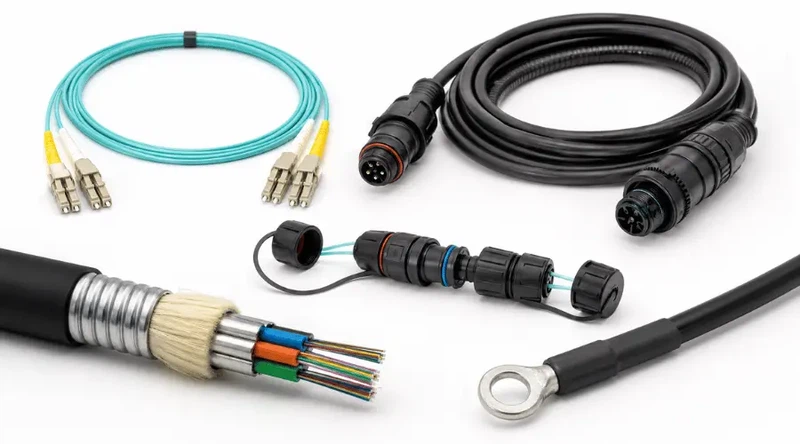
- Indoor or outdoor jacket construction - an indoor equipment-room jumper and an outdoor tower-to-shelter run face very different mechanical and weather requirements. Outdoor assemblies often feature armored or ruggedized designs. See outdoor cable assemblies for examples.
- FTTA-specific protection features - for fiber-to-the-antenna runs, cable assemblies may include UV-resistant jackets, waterproof connectors, and pull-eye termination for tower installation. Explore FTTA solutions for the full range of accessories.
Single-Mode vs Multimode for CPRI
One of the most common misconceptions in CPRI cable sourcing is that CPRI uses only multimode fiber. That is not accurate. The CPRI specification supports both electrical and optical interfaces at the physical layer, and the optical interface accommodates both single-mode and multimode fiber depending on the transceiver type and line rate.
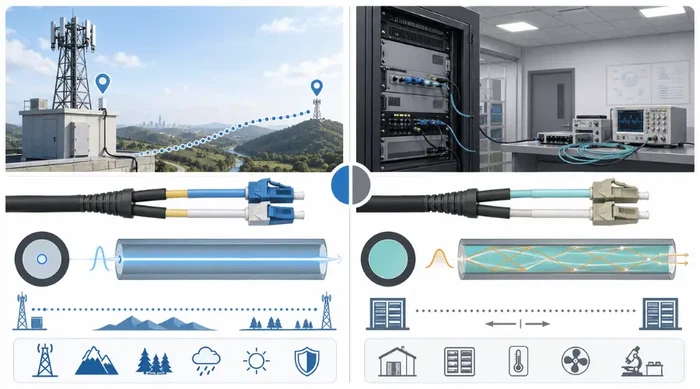
Choose single-mode fiber when the deployment involves longer distances (typically beyond a few hundred meters), outdoor carrier-grade environments, or when the installed optical transceiver modules are single-mode types (such as 1310 nm LR optics). Choose multimode fiber when the link is short - for instance, within the same equipment room or across a short in-building run - and both ends are fitted with multimode optics (such as 850 nm SR modules).
In outdoor FTTA deployments where the BBU sits at ground level and the RRU is mounted on a tower or rooftop tens or hundreds of meters away, single-mode fiber is the more reliable choice. Indoor co-located setups or lab environments may use multimode. The deciding factors are always the transceiver specification and the physical link distance - not a blanket rule about what "CPRI cables" should be.
Where CPRI Cables Are Commonly Used
FTTA (Fiber-to-the-Antenna) Deployments
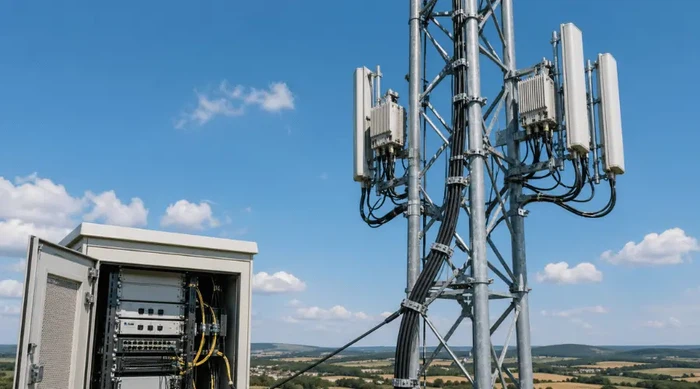
FTTA architectures replace traditional coaxial RF feeder cables with fiber optic links between baseband and radio equipment. This approach reduces signal loss, lowers weight on the tower, and supports higher-capacity radio configurations. CPRI cable assemblies designed for FTTA typically include outdoor-rated fiber, waterproof connectors, and mechanical protection features suited for tower climbing and exposed installation. For a broader look at FTTA architecture, see our guide on what is FTTA.
Base Station Fronthaul
CPRI has served as the dominant fronthaul interface across 2G, 3G, and 4G networks, and it remains deployed in many 5G-era sites where the traditional BBU/RRU architecture is still in use. According to TechTarget's CPRI overview, the interface has proven its usefulness through multiple wireless generations for fronthaul communication between RRHs and BBUs.
Field Replacement and Maintenance
A significant portion of real-world CPRI cable purchases are replacements for damaged assemblies, upgrades to existing links, or spare inventory for field maintenance. In these scenarios, buyers need to match the fiber type, connector format, cable length, and outdoor rating of the original assembly. This is where having clear equipment records and a reliable supplier with custom assembly capability matters most.
CPRI vs eCPRI: What Changed and Why It Matters
CPRI is the classic fronthaul interface based on time-division multiplexing (TDM), designed for point-to-point links between a BBU and RRU. It works well for 4G and earlier generations but carries a constant-bitrate data stream regardless of actual traffic load, which becomes a bandwidth challenge as radio configurations grow more complex in 5G.
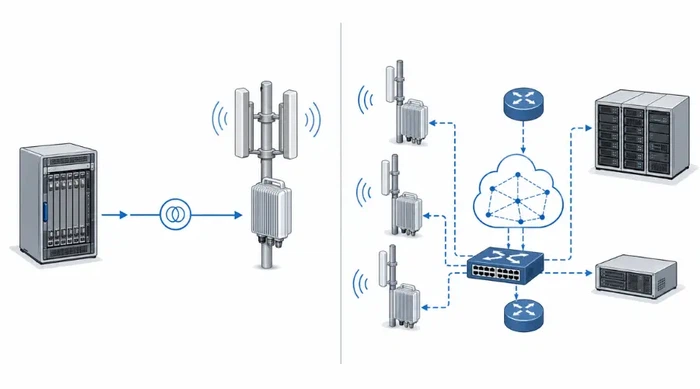
eCPRI (enhanced CPRI) was introduced in 2017 by the same consortium - Ericsson, Huawei, NEC, and Nokia - to address these limitations. According to the eCPRI v2.0 specification, the enhanced interface uses packet-based transport (typically over Ethernet or IP) and supports more flexible functional splits between the radio and baseband processing. This enables significantly lower fronthaul bandwidth requirements - roughly one-tenth of CPRI in some configurations - and allows fronthaul traffic to share Ethernet-based transport infrastructure.
For buyers, the practical takeaway is this: if you are maintaining or expanding a 4G or early-5G site with a traditional BBU/RRU split, you still need CPRI cable assemblies. If your project involves a new 5G Open RAN deployment or a centralized/cloud RAN architecture, eCPRI is likely the interface in play, and the physical cable may be a standard Ethernet-grade fiber patch cable rather than a traditional CPRI assembly. Many operators are currently running both CPRI and eCPRI in parallel during network modernization.
How to Choose the Right CPRI Cable?
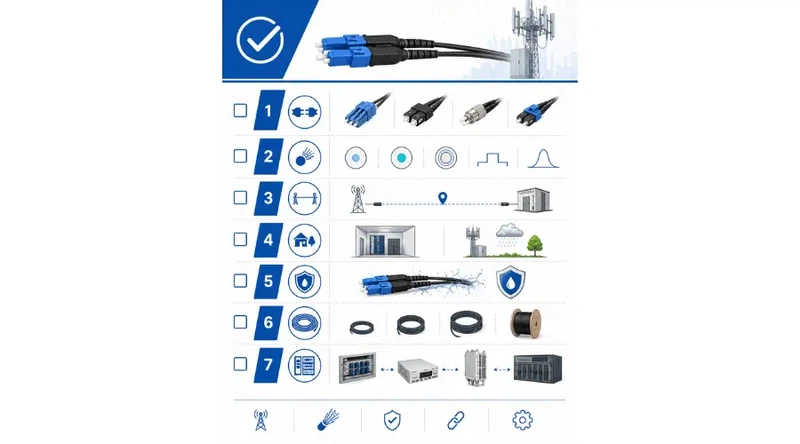
Selecting the correct CPRI cable assembly requires checking several factors before placing an order. Use this as a pre-purchase checklist:
- Equipment port interface - confirm the connector type and fiber mode expected by both the BBU and RRU. Equipment vendors may use LC duplex, SC, or proprietary outdoor connector formats. Check the hardware manual or the installed transceiver module.
- Fiber type - verify whether your transceivers require single-mode or multimode fiber. Do not assume multimode by default. Mismatched fiber type is one of the most common and costly sourcing mistakes.
- Link distance - measure the actual cable route, including vertical tower runs. Outdoor runs are often longer than expected once routing and service loops are accounted for.
- Indoor or outdoor environment - indoor jumpers use standard PVC or LSZH jackets. Outdoor cables need UV-resistant, moisture-sealed, and often armored construction. Tower-top installations may also require pull-eye termination for safe hoisting.
- Connector and assembly format - confirm whether you need a straight duplex jumper, a breakout assembly, or a ruggedized IP67-rated waterproof connector for exposed environments.
- OEM and carrier requirements - some mobile operators and equipment vendors have specific testing, labeling, or material requirements for fronthaul cabling. Confirm these before finalizing the order.
Common Mistakes to Avoid?
Treating CPRI as a cable category.
CPRI is the interface specification. The cable is the physical assembly that supports it. Not every fiber patch cord qualifies as a CPRI cable, and not every "CPRI cable" listed online meets the environmental or performance requirements of a real deployment.
Assuming multimode is the default.
Many telecom fronthaul links - especially outdoor FTTA runs - use single-mode fiber. Choosing the wrong fiber type means the link will not work, regardless of cable quality.
Ignoring eCPRI in new-build planning.
If your network roadmap includes 5G Open RAN, centralized RAN, or cloud RAN, the fronthaul interface is likely moving to eCPRI. Even if you are buying CPRI assemblies today, factor migration or coexistence into your planning.
Selecting by price alone.
A cheaper generic jumper that fails an environmental, compatibility, or insertion-loss test creates far higher costs downstream - in truck rolls, rework, and downtime. For telecom infrastructure, assembly reliability matters as much as unit cost.
Frequently Asked Questions
Is a CPRI cable the same as a regular fiber patch cord?
Not exactly. A CPRI cable may share the same fiber and connector types as a standard fiber optic patch cord, but it is specifically selected or built for fronthaul use between radio and baseband equipment. This often means tighter performance specs, outdoor-rated construction, or specific connector configurations that a general-purpose indoor jumper does not provide.
What devices does a CPRI cable connect?
It connects the BBU (Baseband Unit) or REC (Radio Equipment Control) to the RRU (Remote Radio Unit) or RRH (Remote Radio Head) in a mobile base station's fronthaul network.
Does CPRI support only multimode fiber?
No. CPRI supports both single-mode and multimode fiber at the physical layer. The correct choice depends on the optical transceiver type and the link distance. For a detailed comparison, read our guide on single-mode vs multimode fiber.
Is CPRI still used in 5G networks?
Yes, CPRI remains in widespread use in 5G-era networks, particularly where the traditional BBU/RRU architecture is retained. However, eCPRI is the preferred interface for new 5G deployments using Open RAN or centralized/cloud RAN architectures.
Can I replace a CPRI cable with a standard LC fiber patch cord?
In some indoor, short-distance scenarios, a standard LC duplex patch cord may physically work. However, for outdoor tower runs, FTTA deployments, or any environment requiring ruggedized construction, a purpose-built assembly with appropriate jacket, connectors, and testing is necessary.
What connector types are common in CPRI cable assemblies?
LC duplex is the most common connector for CPRI links. Outdoor installations may also use waterproof connector formats such as ODVA, FullAXS, or PDLC, depending on the equipment vendor and deployment environment. Review available fiber connector types for details.
What is the difference between a CPRI cable and a CPRI module?
A CPRI cable is the fiber optic assembly connecting two pieces of equipment. A CPRI module (often an SFP or SFP+ transceiver) is the optical-to-electrical converter plugged into the equipment port. Both must be compatible - the module determines the fiber type and wavelength, while the cable provides the physical link.
Conclusion
A CPRI cable is best understood as the fiber optic assembly that supports fronthaul connectivity between baseband and radio equipment in mobile networks. Choosing the right assembly requires matching the fiber type, connector format, and environmental rating to your specific equipment, link distance, and installation conditions. For new projects, consider whether your architecture is CPRI-based or transitioning toward eCPRI, and plan your cabling accordingly.
If you need a custom CPRI cable assembly for an FTTA, tower, or base station project, contact our engineering team for specification review and quotation support.