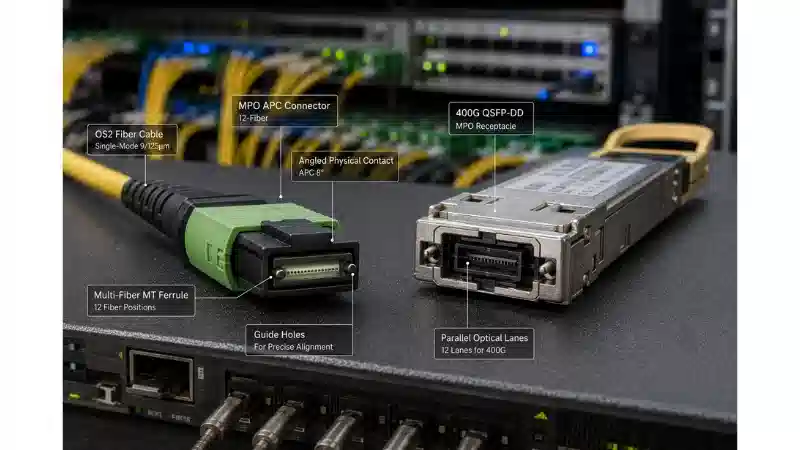
Okay so MPO Connector. If you've been around data centers or network infrastructure for any length of time you probably know what these are, or at least you've heard someone complaining about them in a server room somewhere. They're everywhere now but honestly when I first started working with them maybe six or seven years ago? Total nightmare. Still kind of are sometimes.
The basic idea is pretty straightforward though - instead of terminating like a dozen individual fiber cables which takes forever and costs a fortune in labor, you get this one connector that handles multiple fibers at once. Usually 12, sometimes 24. I've seen 16 fiber ones too but those are for specific use cases and we had this whole thing at a previous job where someone ordered the wrong type and... anyway. MPO Fiber Connector technology basically lets you cram way more bandwidth into way less physical space, which matters when you're paying something like $200-300 per U of rack space in major metros.

Where you actually see these things
Data centers obviously. That's the easy answer everyone gives. But here's what's interesting - and this is just from what I've noticed working on different projects - the use cases have gotten way more diverse than they used to be. Like high-performance computing environments, those research facilities running climate models or whatever, they're using MPO Cable assemblies all over the place because the interconnect speed between compute nodes is absolutely critical. You screw that up and your whole simulation slows down.
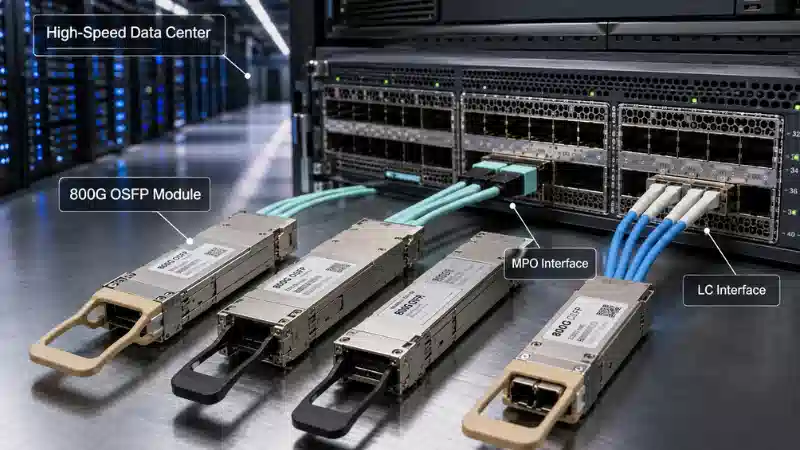
I worked on a telecom project once, must've been 2019 or early 2020, where we were doing this massive fiber distribution upgrade in a central office. The building was from the 70s I think? Maybe 60s. Space was ridiculous. We ended up using MPO to LC Cable breakouts because otherwise there was literally no physical way to get that many individual fiber runs through the existing pathways. Would've had to jackhammer through concrete and the client was NOT interested in that option, can't say I blame them.
Testing facilities use them a lot too which makes sense when you think about it. If you're manufacturing optical transceivers or testing switches at scale, you need to connect and disconnect stuff constantly and having MPO to MPO Cable assemblies means you're not sitting there with fusion splicers all day long. Though I knew a guy who swore by individual terminations for everything and we used to argue about this all the time at lunch.
The upgrade path thing (this is actually important)
So one of the better arguments for MPO infrastructure - and I say this as someone who used to be pretty skeptical - is that it gives you room to grow without ripping everything out. Say you installed 12-fiber MPO Fiber Optic cabling back when 10G was the hot thing. Now you need 100G or 400G for some new application. Lot of times? You keep the same physical cabling, just swap the breakout cables or the transceiver modules on the ends. The structured cabling stays put.
Which is great in theory. In practice I've seen it work beautifully and I've also seen it be a total disaster because nobody documented the polarity properly and three years later you're trying to figure out what on earth the previous tech was thinking. There's three polarity types - A, B, C - and if you mix them up or your documentation is garbage (which it usually is, let's be honest), troubleshooting becomes this special kind of hell. My boss used to joke that polarity mistakes were job security for fiber techs.

Who's actually using all this stuff
The big cloud providers are obviously all over MPO. AWS, Google Cloud, Azure - their scale basically demands it. You can't run those enormous hyperscale facilities with individual fiber terminations, the math just doesn't work. But it's not only them anymore.
I've got a friend who works for a mid-size regional bank and they deployed MPO Adapter panels for their trading floor infrastructure maybe two years ago. Something about latency requirements for the trading systems, apparently even microseconds matter when you're talking high-frequency trading stuff. Which sounds insane to me but whatever, not my money on the line.
Healthcare is another weird one that's been growing. Medical imaging - CT scans, MRIs, all that - those files are absolutely massive. And as hospitals move toward centralized storage or cloud-based PACS systems they need the bandwidth to move gigabytes of image data around quickly. Friend of mine did a hospital network upgrade last year and they went all-in on MPO backbone specifically for imaging traffic. Said it was way easier than trying to segment everything on the same infrastructure.
Oh and universities. Research universities especially. They've got these massive compute clusters for research projects and the network between those systems needs to be fast. I did some work at a university in the midwest - won't say which one - and their HPC interconnect was all MPO because they were running these computational chemistry simulations that generated stupid amounts of data.
Things they don't really tell you about
Cleaning is SO much more critical with MPO than regular connectors. You've got 12 or 24 fiber end-faces packed together and if there's any dirt or oil on that ferrule you're basically screwed across multiple channels. I learned this the hard way on my first big MPO deployment - we had intermittent errors that drove us crazy for like two days before someone thought to really inspect the connectors properly. Now I'm paranoid about cleaning. Got a whole kit in my van.
Also not all MPO is created equal. There's the generic MPO standard and then there's MTP which is US Conec's branded version with supposedly better specs. They're supposed to be interoperable and mostly they are but I've definitely had situations where mixing manufacturers gave us higher insertion loss than we expected. Nothing catastrophic but enough to be annoying and make you question your life choices.
The bend radius thing is real too. With MPO Cable assemblies you're dealing with ribbon cable and those bend radius specs are tighter than regular fiber. Exceed them and you can damage multiple fibers at once instead of just one. Which is bad. Found this out when a junior tech we had - nice kid but didn't listen - basically ruined a whole trunk cable by routing it wrong. That was an expensive mistake and I got yelled at by the client even though it wasn't technically my fault.
Cost is... complicated. Upfront the MPO Fiber Connector assemblies cost more than buying equivalent duplex LC cables. Sometimes a lot more. But labor savings can offset that pretty quick, especially on new installs where you're terminating hundreds of connections. For retrofits or partial upgrades though? The calculation gets messier and sometimes it doesn't make sense economically which is frustrating because you want to use the newer better technology but the client is looking at the bill and going "why are we spending this much?"
My actual take on whether you should use them
Look I'm not going to sit here and tell you MPO is perfect for everything because it's not. Small office with 30 fiber connections? Just use regular duplex fiber with LC connectors. Easier, cheaper, any tech can work on it. But once you're getting into hundreds of connections, or working in tight spaces, or planning for future bandwidth needs - and honestly who isn't these days - then yeah MPO starts making sense despite the headaches.
The technology's gotten better too. There's newer connector designs, better testing equipment - the OTDR stuff we have now is light years ahead of what we had even five years ago. And the industry has gotten better at standardizing polarity approaches though there's still plenty of chaos out there in the wild.
I guess what I'm saying is it depends? Which I know is the most annoying answer possible but it's true. Every deployment is different, every client has different needs and budgets. Sometimes MPO is the obvious choice, sometimes it's overkill, sometimes it's somewhere in between and you just have to make a judgement call and hope it works out.