Last month I had to redo our entire ToR switch interconnect because someone ordered the wrong polarity. 16 hours of downtime. Not fun explaining that to management.
But let me back up. When we started the DC expansion project in Q3, the question was whether to stick with traditional LC duplex for everything or finally bite the bullet and go MPO-based. Our lead network guy kept pushing for MPO saying "industry standard" and "future proof" - you know the drill. I was skeptical because I'd heard horror stories about polarity issues.
Turns out both approaches have their place and messing up either one costs you.

The density problem we had
Our old setup was pure LC. 48-port switches, everything running 10G SR optics, OM3 fiber everywhere. Worked fine until we needed to add capacity. The cable trays were already at 60% fill and code says you can't go over 50% for plenum spaces (varies by jurisdiction but that's our local requirement).
So we had two options - rip out existing trays and install bigger ones, or find a way to get more bandwidth through less physical cable. Guess which one finance approved.
This is where mpo to lc starts making sense. A 12-fiber trunk takes up maybe 1/3 the tray space compared to six duplex LC cables. And when you're running 200+ connections between floors, that space saving isn't just convenient, it's the difference between passing inspection or not.
Setting up the first few links
We went with FS.com breakout cables for the initial deployment. Their 5-meter OM4 MPO-12 to 6xLC breakout was around $85 each back in September - I remember because purchasing made me get three quotes and they came in lowest. Corning quoted almost double for the same spec.
The installation part... let me tell you about polarity because this is where everything goes sideways if you don't pay attention.
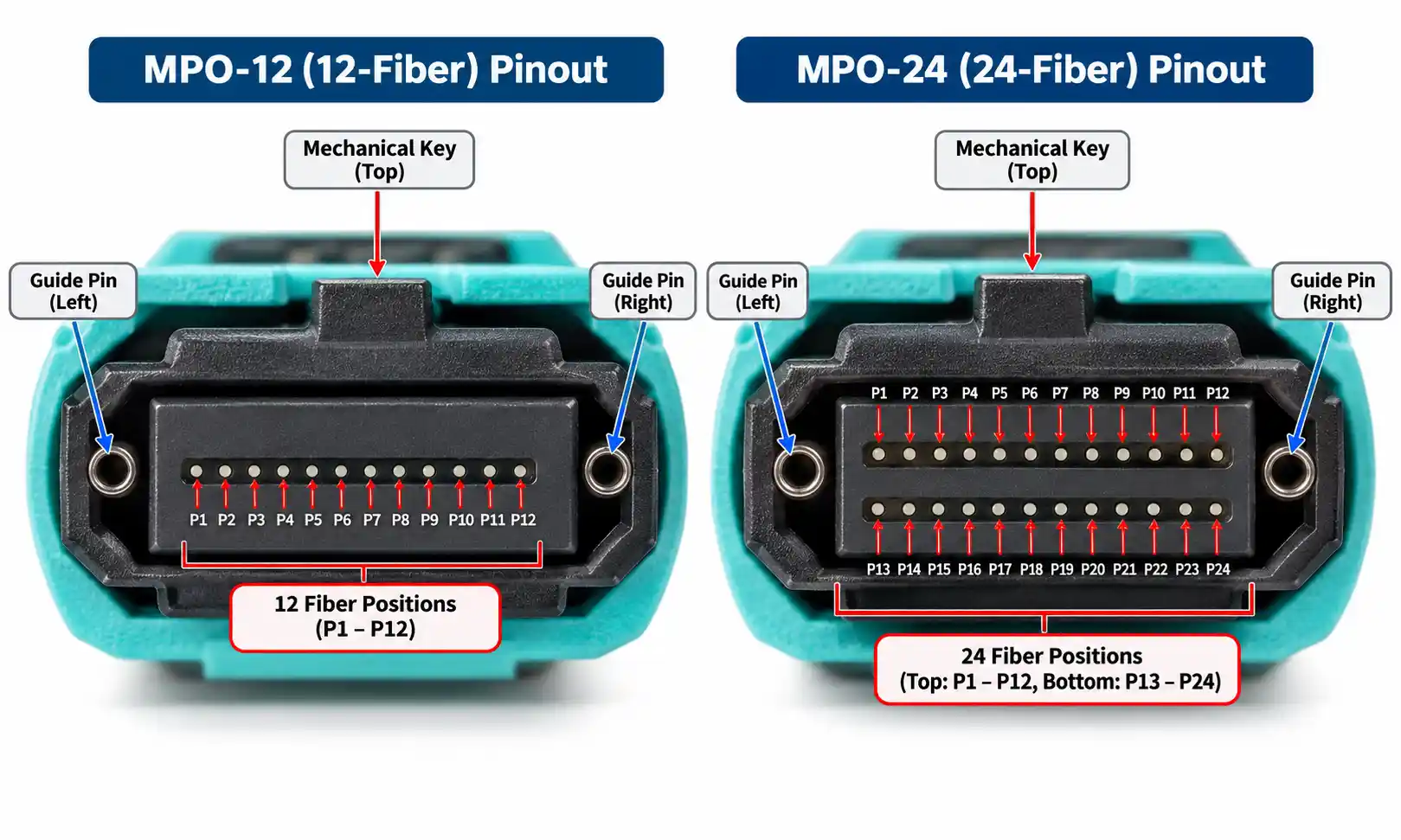
Standard 40GBASE-SR4 uses four lanes. Your QSFP+ transceiver has 12 fibers in the MPO interface but only uses 8 - four TX and four RX. The middle four positions are just empty. When you plug in an mpo patch cable on one end and it breaks out to LC on the other, you need those fibers landing on the right pins.
Type B polarity flips the array. Fiber 1 on one end goes to fiber 12 on the other end. Fiber 2 goes to 11. And so on. This is what Cisco and most vendors expect for 40G parallel optics, verified from cisco.com spec sheets. But some older equipment uses Type A which is straight-through, and if you mix them you're basically connecting TX to TX and RX to RX which does exactly nothing.
We labeled everything. I mean EVERYTHING. Each breakout leg got a label with the fiber position and polarity type because three months later when someone needs to troubleshoot, they're not going to remember which cable was which.
The bandwidth jump
Going from 10G to 40G per port sounds great on paper. In reality? Our first week we had packet drops on two of the uplinks. Turned out to be dirty connectors on the LC ends. MPO Connector interfaces have 12 contact points instead of 2, so there's more surface area to potentially get contaminated. We bought one of those $300 MPO cleaning kits - the kind with the mechanical push-action cleaner. Worth every penny.
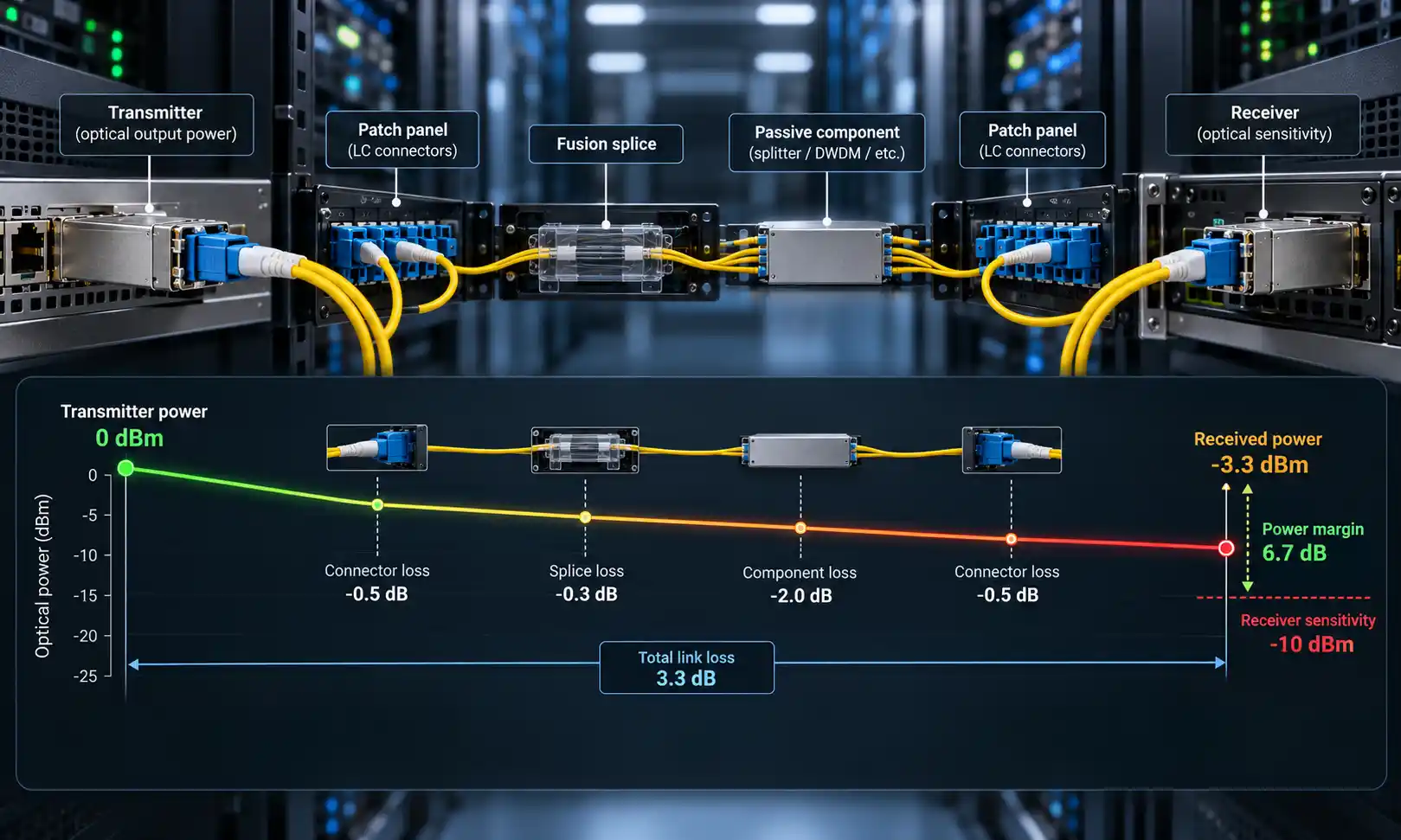
Insertion loss spec for these cables is supposed to be under 0.5dB per mated pair according to TIA-604-5 standard. Our testing showed most connections hitting 0.3-0.4dB which is solid. One cable measured 0.7dB and we pulled it and sent it back as defective. When you're running 100m spans on OM4, every tenth of a dB matters because you're already near the power budget ceiling.

When mpo vs lc becomes a real decision
Smaller closets? Don't bother with MPO. We have a few IDF closets with maybe 12 connections total. Running mpo breakout cable there would be stupid. Just use regular LC patch cords and call it a day. The crossover point for us was around 30-40 connections in a single location. Below that, the added complexity of MPO polarity management isn't worth the density benefit.
But in our main DC with 480 ports of 40G between spine and leaf layers, MPO saved us probably two weeks of installation time. Instead of terminating 960 individual LC connections (480 duplex pairs), we ran 80 MPO trunks with factory-terminated breakouts. Less field termination means less chance of bad crimps or polish jobs.
The spine switches - we used Arista 7280R - come with 32 QSFP28 ports each doing 100G. For the leaf connections we broke those out using mpo to lc breakout cable configurations to drive four 25G links per port. Arista's breakout mode support is pretty flexible, documented at arista.com/en/support, and let us mix 100G and 4x25G on the same switch.
Cable management gets weird
Length matters more than you'd think with breakout cables. The split section where the single MPO trunk fans out into multiple LC legs - that section is rigid. Usually 18-24 inches of unstrained breakout zone. You need slack space for that.
Our rack design allocated 4U at the top for cable management but it wasn't enough once we started adding breakouts. We ended up installing wire managers on the sides of the rack too because those LC legs don't bend as tight as regular patch cables. Minimum bend radius on OM4 is 30mm under load per TIA-568 specs, and the breakout section has internal strain relief that makes it stiffer.
For runs between racks we used straight mpo patch cable trunk lines - no breakout - then did the breakout at each end with short 1-meter breakout sections. Cleaner install and easier to trace. Long mpo to lc breakout cable designs like 10-meter or 15-meter versions exist but they're a pain to work with because you've got all those LC legs flopping around for the entire length.
Testing took longer than expec ted
ted
We allocated 2 days for acceptance testing. Took 5. Every single MPO connection needs polarity verification. Every LC termination needs insertion loss and return loss measured. When you have 80 trunks with 6 breakouts each, that's 480 duplex LC pairs to test.
We caught maybe 15 cables with issues. Some were polarity reversals - probably got Type A mixed in with the Type B order somehow. A couple had high loss on specific fiber strands, usually position 11 or 12 for some reason. And one mpo patch cord had a cracked ferrule that wasn't visible until we put it under the microscope. That one was weird because it passed initial insertion loss but failed return loss measurement at -25dB when spec is -35dB or better.
The vendor (FS again) replaced all the defective cables but it added a week to the schedule. Budget another 10% spare cables for any MPO project, trust me on this.
Would I do mpo to lc again? Yeah, for high-density environments. For smaller deployments or anything under 40G where you're just running 10G links, regular LC infrastructure is simpler and cheaper. But once you're dealing with QSFP optics and spine-leaf designs, MPO-based cabling is basically mandatory unless you enjoy spending 3x the time on installation and cable management.
Just triple-check your polarity before you plug anything in. Label everything. And buy spares.