I've been in fiber optic procurement for nine years. Most of what I learned came from expensive mistakes, not training manuals. This guide is what I wish someone had handed me before my first data center cabling project went sideways in 2019.
Why LC Connectors Became the Default
The LC connector captured over 37% of the global fiber optic connector market by 2023, according to Persistence Market Research (persistencemarketresearch.com). That number alone doesn't explain why you should care. What matters is the practical consequence: every major transceiver manufacturer designs around LC interfaces first. SFP, SFP+, SFP28, QSFP+ breakout cables. All of them assume you're terminating to LC.

I spent my first two years in this industry trying to understand why ST and SC connectors were dying. The answer turned out to be boring: density. When you're fitting 48 ports into a 1U patch panel, the 1.25mm ferrule and push-pull latching mechanism of LC simply works better than the alternatives. The TIA-568.3-E standard codified what installers already knew from cramped telecom rooms.


The Specification Question Nobody Asks Correctly
Most RFQs I receive ask the wrong question. They specify "LC to LC single mode" or "LC to LC multimode" as if that's sufficient. It's not.
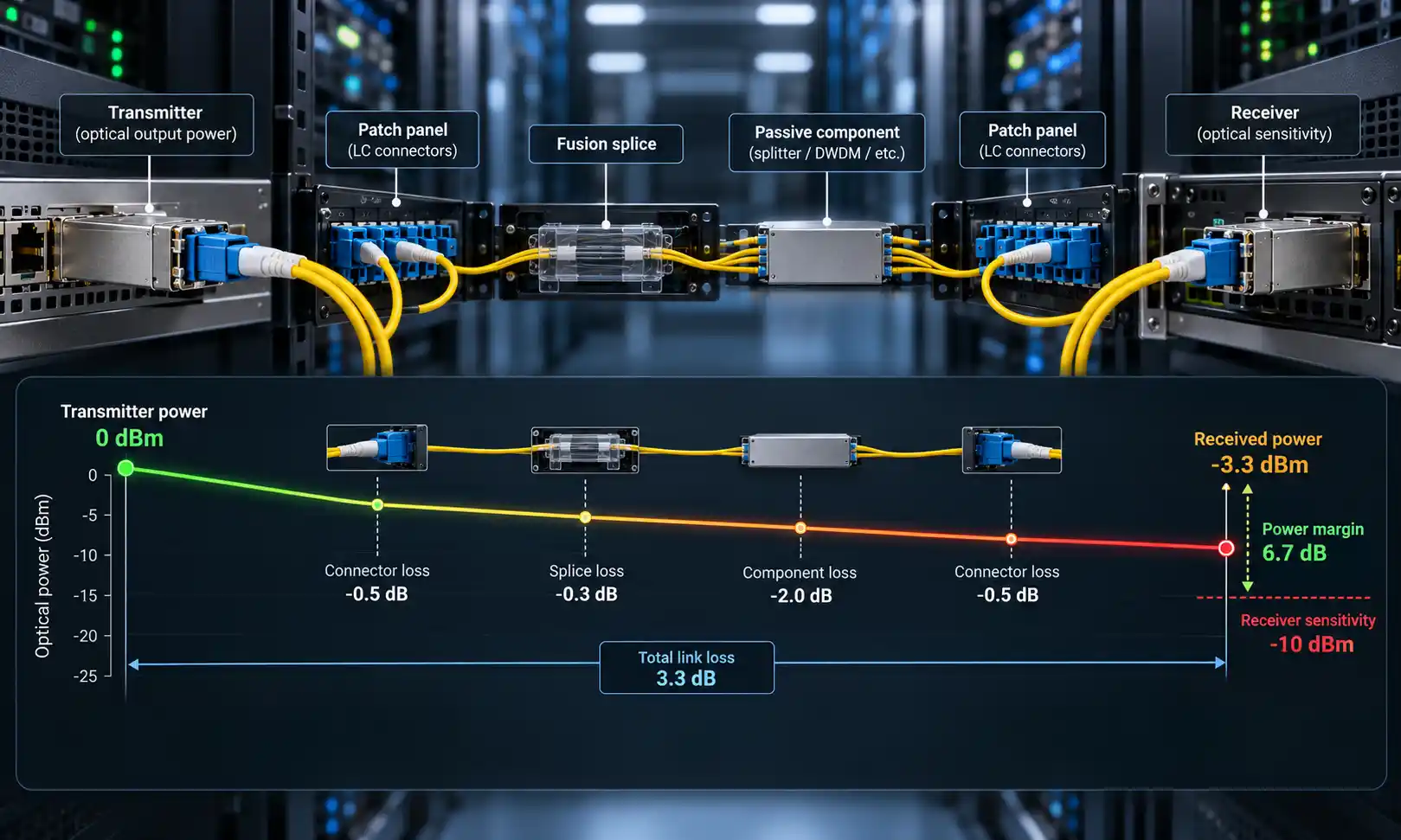
The question that actually matters is: what insertion loss can you tolerate across your entire link budget? And I'll be honest, most of the people sending me purchase orders haven't done that calculation. They're copying specifications from a previous project or a vendor recommendation.
Single mode OS2 fiber gives you the distance. 10km, 40km, 80km depending on your transceivers. OM4 multimode gives you the bandwidth for shorter runs while keeping transceiver costs lower. But here's the part I'm not going to fully explain in a public blog post: the relationship between connector quality, splice loss, and your ability to actually achieve those rated distances gets complicated fast. If you're planning anything over 2km or running 100G+, we should probably talk directly.
What We Actually Tested (and Why You Should Be Skeptical)
I need to address something before citing our internal data. We pulled 50 random LC duplex cables from three competing suppliers sold through major distribution channels. We tested them against our own production using the same Fluke DTX-1800 setup.
Fifty cables is not a statistically rigorous sample. We didn't publish brand names because we're not interested in litigation. I'm telling you this upfront because if you're a serious procurement professional, you should be skeptical of any vendor showing you comparison data against anonymous competitors. We would be skeptical if we were in your position.
That said, here's what we found:
| Metric | FOCC LC Cables | Competitor Average |
|---|---|---|
| Mean Insertion Loss | 0.14 dB | 0.28 dB |
| Cables Exceeding 0.20 dB | 2.1% | 34% |
| Return Loss Below Spec | 0% | 8% |

The gap is real. Whether you trust our methodology is your call. We can provide the test equipment specifications and procedure documentation if you want to replicate this yourself. That offer is genuine.
APC vs UPC: I Have a Strong Opinion Here
For LC to LC patch cables in enterprise and data center environments, use UPC polish. I'm not going to hedge on this one.
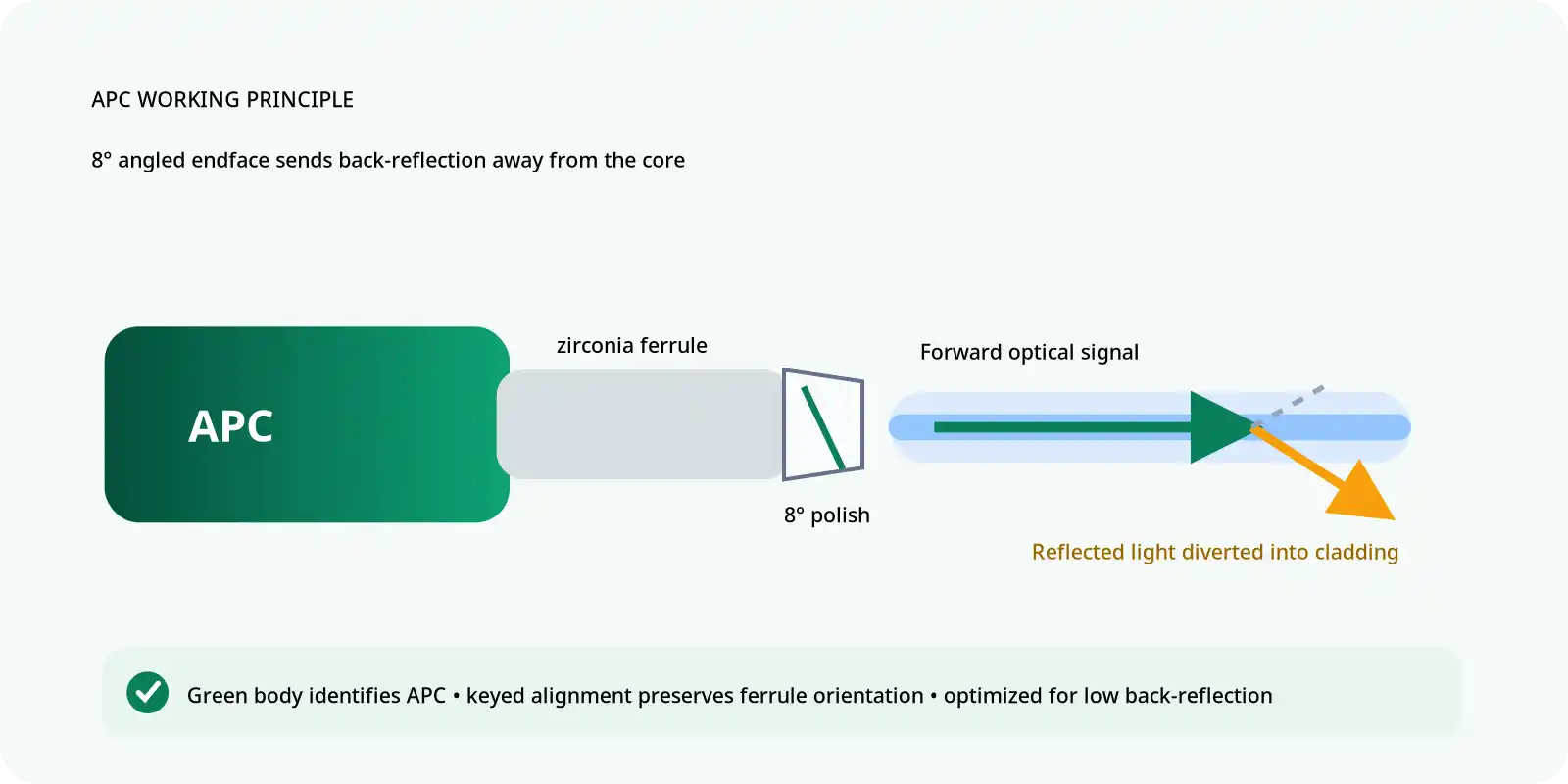
APC (angled physical contact) matters for CATV, PON systems, and high-power applications where back-reflection can damage laser sources. The 8-degree angled ferrule reduces return loss significantly. But for standard data transmission? The added cost, the incompatibility with UPC connectors, the green-to-blue confusion that causes field installation errors. Not worth it.
I've seen purchasing teams specify APC across entire projects because someone told them "angled is better." They end up with a $15,000 cable plant that can't interface with their existing UPC patch panels without adapters. FOCC LC UPC cables handle 99% of enterprise applications. When APC is genuinely necessary, the application requirements make it obvious.
The 400G Migration Question
This is where I'm going to be less helpful than you might want.
400G Ethernet changes the connector landscape. QSFP-DD transceivers, MPO/MTP trunk cables, LC breakout configurations. The cable you buy today for 10G or 25G switching may or may not work when you upgrade. It depends on your specific migration path, your switch vendor roadmap, your building topology.
I could write another 2,000 words about 400G cabling strategy. But honestly? If you're actively planning a 400G deployment, you shouldn't be getting your information from a supplier blog post. You should be having a direct conversation with someone who can look at your actual network architecture. FOCC provides technical consultation for projects like this, and I'm not saying that to push a sale. I'm saying it because the variables are genuinely too complex for generic guidance.

Contamination: The Boring Problem That Causes 70% of Failures
MicroCare Corporation published research indicating that 70% to 85% of fiber network failures trace back to contamination on connector end faces (microcare.com). This matches what we see in warranty returns. The expensive cable isn't the one that fails. The one that got dust on the ferrule during installation fails.
Cleaning protocols are boring. Nobody wants to read about them. I'm not going to pretend otherwise. But if you're buying FOCC LC fiber patch cables and not also budgeting for IBC one-click cleaners and inspection scopes, you're going to have problems that aren't our fault but will still end up in our inbox.

What FOCC Actually Does Differently
Our Shenzhen facility runs automated polishing and end-face geometry testing. Every cable ships with individual test documentation. This is our standard process, not a premium add-on.
The practical difference shows up in consistency. When you order 500 LC to LC single mode fiber cables from us, you're not getting 450 good cables and 50 that are technically in spec but sitting at the edge of acceptable. The distribution curve is tighter. That matters less for a small install and more when you're deploying at scale and don't want to troubleshoot intermittent issues six months later.
Pricing Reality
FOCC LC to LC fiber optic cables are not the cheapest option on the market. We're typically 15-25% above commodity pricing from generic suppliers.
The math works out favorably when you factor in failure rates, but I'm not going to pretend that math is simple. If you're buying 20 patch cables for a small office, the commodity option probably makes more sense. If you're deploying 500+ connections in an environment where downtime costs real money, the quality gap matters. Where exactly that breakpoint falls depends on your specific operational costs, and I don't know your operational costs.
For volume orders, custom lengths, or specific jacket requirements like LSZH for plenum spaces, the pricing conversation needs to happen directly. We publish standard pricing on focc-fiber.com, but the actual quote for a real project usually looks different.
What This Guide Didn't Cover
I intentionally left some topics thin or skipped them entirely.
Bend-insensitive fiber selection for high-density routing. Specific transceiver compatibility across vendor ecosystems. Field termination vs factory-terminated assemblies. Custom cable assemblies for OEM integration. These aren't topics I can address responsibly in a general blog post because the right answer depends heavily on context I don't have.

If you landed on this page searching for FOCC LC fiber cables or trying to understand LC to LC connection requirements, I hope this was useful. If you have a specific project with actual specifications, the next step is probably a direct conversation. Our technical team handles pre-sale consultation without the aggressive follow-up calls that make everyone hate contacting vendors.
Inquiry form at focc-fiber.com/contact. Standard response time is one business day for technical questions.