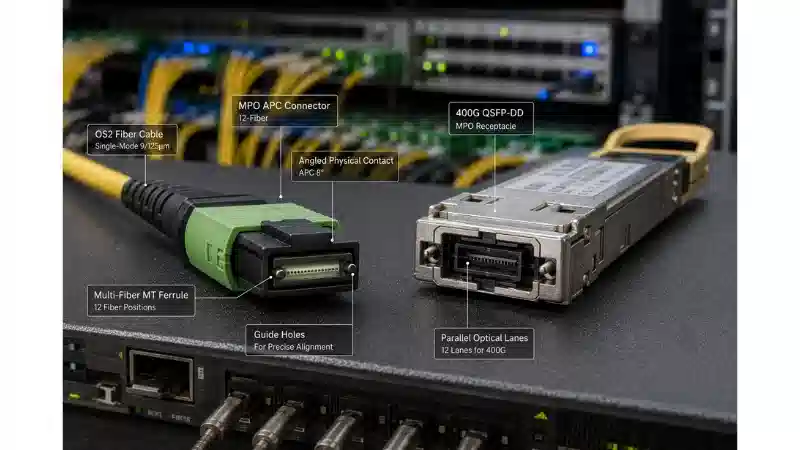
Network infrastructure demands have shifted dramatically as organizations grapple with exponential bandwidth growth. A 1U housing that once held 144 fibers using duplex connections can now accommodate 864 fibers with fiber optic MTP housings-six times the capacity. This density revolution fundamentally changes where and how fiber optic MTP connectivity gets deployed, making location decisions more critical than ever for network performance and scalability.
The Core Value Proposition of Strategic MTP Placement
Installation location determines far more than cable routing paths. The physical environment where you deploy fiber optic MTP connectors directly influences signal integrity, maintenance accessibility, thermal management, and future expansion capabilities. MTP connectors maintain superior signal integrity with reduced insertion loss, which proves essential for applications requiring high bandwidth. Understanding where these multi-fiber systems belong within your infrastructure means evaluating three fundamental dimensions: facility requirements, network architecture, and operational constraints.
The placement strategy affects everything from initial capital expenditure to long-term operational efficiency. Proper location selection reduces cable congestion, simplifies troubleshooting, facilitates cleaner airflow patterns, and creates logical pathways for capacity additions. Organizations that approach MTP installation as a strategic decision rather than a tactical cable-pulling exercise consistently achieve better performance outcomes and lower total cost of ownership.
First Pillar: Data Center and Enterprise Environments
Hyperscale and Colocation Facilities
Fiber optic MTP connectors became the format of choice for data centers with serious space constraints and massive amounts of cables. In hyperscale environments, these connectors typically install in three critical zones: main distribution areas (MDAs), horizontal distribution areas (HDAs), and equipment distribution areas (EDAs). The MDA serves as the primary aggregation point where MTP fiber connector trunk cables interconnect between buildings or data halls. This central location handles the highest fiber counts-often 144-fiber trunk assemblies that fan out to lower-density connections.
Within each data hall, HDAs function as intermediate cross-connect points. Here, 24-fiber or 48-fiber fiber optic MTP trunks break down into more manageable segments that feed individual racks. The physical placement typically occurs in dedicated equipment rows or along the perimeter of the data hall, chosen specifically to minimize cable runs while maintaining hot/cold aisle integrity. Temperature management becomes a consideration since OFNP MTP cables are designed with the highest fire rating for installation in ducts, plenums, and other spaces for building airflow.
Top-of-rack (ToR) and middle-of-row (MoR) architectures both accommodate MTP installations, though the approach differs. ToR deployments benefit from MTP-to-LC breakout cables mounted directly on patch panels within each cabinet, converting the high-density MTP interface to traditional LC duplex connections for server network interface cards. MoR configurations centralize the MTP infrastructure in dedicated network equipment rows, using longer horizontal cable runs but consolidating the cross-connect infrastructure.
Enterprise Campus Networks
Corporate campus environments deploy fiber optic MTP connectors differently than hyperscale facilities due to distinct space economics and growth patterns. The telecommunications room (TR) or intermediate distribution frame (IDF) represents the primary installation location, serving as the aggregation point for floor-level connectivity. A manufacturing company upgrading its facility installed 12-fiber MTP trunk cables between its main equipment room and six floor-level TRs, replacing 72 individual LC duplex cables. The consolidation reduced cable pathway congestion by 85% and cut installation time from three days to eight hours.
Building entrance facilities (BEFs) increasingly utilize fiber optic MTP connectors for campus backbone connections. When fiber enters a building from an outside plant or another structure, MTP assemblies in the BEF provide the demarcation point where external cables transition to internal distribution. The physical mounting typically occurs on standard 19-inch or 23-inch rack-mounted fiber enclosures with proper cable management to maintain minimum bend radius requirements.
Equipment rooms housing servers, storage arrays, and network cores install MTP cassettes or patch panels to enable flexible connectivity. These cassettes convert MTP backbone connections into LC, SC, or other connector types that match the equipment interfaces. A B2B SaaS provider consolidated four equipment closets into two by deploying MTP cassette systems, achieving 12:1 space savings compared to their previous LC-only infrastructure while maintaining the ability to reconfigure connections without re-cabling.

Second Pillar: Specialized Network Configurations
Backbone and Horizontal Cabling Systems
Fiber optic MTP trunk cables achieve the highest speeds in the industry with very low signal loss, making them optimal when transmission speeds are the most important consideration. Backbone installations typically span between telecommunications rooms across floors or between buildings on a campus. The physical installation points include cable trays, conduits, and vertical risers where OFNR MTP cables are suitable for vertical shafts between floors meeting high fire protection standards.
Horizontal cabling traditionally relied on individual duplex fibers, but fiber optic MTP solutions are gaining traction in high-density scenarios. The installation occurs in overhead cable trays, raised floor pathways, or perimeter raceways depending on the facility architecture. The key consideration involves matching the MTP fiber count to the zone density-using 12-fiber assemblies for standard office areas but upgrading to 24-fiber or higher in equipment-intensive zones.
Pre-terminated fiber optic MTP trunk assemblies install significantly faster than field-terminated alternatives. Installation time of the MTP system can be reduced by up to 75% compared to traditional fiber systems. This time advantage becomes particularly valuable in retrofit scenarios where minimizing disruption to operational systems drives decision-making.
Broadcast and Industrial Control Applications
MTP fiber cable solutions are suitable for data centers, telecommunications, broadcast communication, and industrial control applications. Broadcast facilities install MTP connectors in master control rooms, production control rooms, and equipment racks supporting video routers and processing equipment. The typical deployment involves MTP breakout cables that convert from multi-fiber backbone connections to the specific connector types required by broadcast equipment-often SMPTE hybrid fiber connectors or traditional SC interfaces.
Manufacturing environments face unique installation challenges due to environmental factors. A precision manufacturing facility deployed MTP assemblies in its machine vision system, installing ruggedized connectors in climate-controlled equipment enclosures near the production floor. The MTP infrastructure connected high-speed cameras to processing servers, with the actual connector terminations occurring in protected junction boxes rather than exposed mounting. This protected deployment approach proved essential given the presence of coolant mist and particulate matter in the manufacturing environment.
Industrial Ethernet networks increasingly adopt MTP solutions for machine-to-machine connectivity requiring deterministic latency. The installation locations mirror IT network architecture but with additional considerations for temperature extremes, vibration, and electromagnetic interference. Protected cable pathways and properly rated cable jackets become non-negotiable requirements.
High-Performance Computing and Research Facilities
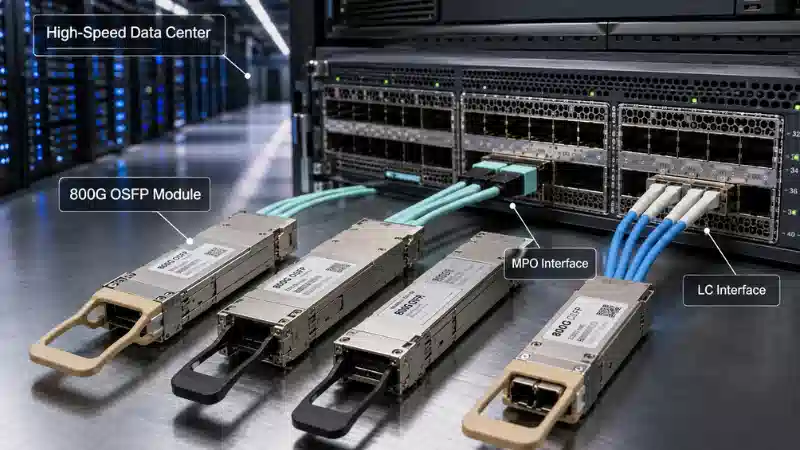
HPC clusters demand specialized MTP deployment strategies. 800 Gig applications use 16-fiber MPOs, with 8 fibers transmitting and 8 receiving at 100 Gbps. The installation typically occurs in overhead cable trays directly above compute racks, with minimal horizontal cable runs to reduce latency. Some facilities employ "zone cabling" approaches where MTP distribution points install every 2-3 racks, creating modular connectivity zones that simplify reconfiguration as compute workloads shift.
Research laboratories with specialized instrumentation often require point-to-point fiber links with extremely low loss budgets. These environments install MTP connectors in dedicated fiber patch panel systems, sometimes with redundant pathways for critical instruments. The physical mounting emphasizes accessibility since research configurations change more frequently than production systems.
Third Pillar: Environmental and Operational Considerations
Plenum vs. Riser Installations
OFNP MTP cables contain no electrically conductive elements and are designed with the highest fire rating for installation in ducts, plenums, and spaces for building airflow. The choice between plenum and riser-rated cable determines where installation can legally occur within a building structure. Plenum spaces-areas used for HVAC air circulation-require plenum-rated cables that produce minimal smoke and toxic fumes during combustion. These installations typically occur in dropped ceilings, raised floors used for air return, and dedicated HVAC shafts.
Riser-rated MTP cables install in vertical pathways between floors where the space does not serve air circulation purposes. Dedicated telecom risers, cable shafts with fire-stopping at each floor penetration, and vertical conduit runs all accommodate riser-rated assemblies. The cost differential between plenum and riser cables often influences architectural decisions about cable routing-sometimes it proves more economical to route cables through dedicated risers using less expensive riser-rated cable than to take shorter paths through plenum spaces.
Understanding local building codes and fire marshal requirements proves essential before finalizing installation locations. Some jurisdictions impose stricter requirements than national standards, potentially limiting where even plenum-rated cables can install.
Polarity and Gender Planning
Male MTP connectors have two pins that align fiber cores during connection, ensuring precise mating with female connectors to minimize signal loss. The physical installation locations must account for proper connector gender pairing-equipment ports universally use male connectors, requiring female connectors on any cable connecting to active equipment.
Polarity management determines the physical cable routing and installation sequence. Type A uses straight-through configuration, Type B uses pair reversal with key-up connectors on both ends, and Type C uses alternate pair construction. These polarity methods affect where cables can physically terminate. Type B polarity often proves easier to manage in backbone installations since both ends maintain the same orientation, while Type A requires careful attention to connector key positions.
Installing MTP infrastructure without a documented polarity scheme creates significant troubleshooting challenges later. The physical location of each connector termination should follow a logical pattern that matches the chosen polarity method, making it easier for technicians to trace circuits and identify issues.
Accessibility and Maintenance Pathways
Installation locations must balance density optimization against maintenance accessibility. Wall-mounted fiber enclosures work well in telecommunications rooms with adequate clearance, but cramped closets often benefit from vertical rack-mounted solutions that consolidate equipment in a smaller footprint. The mounting height affects accessibility-installations above 7 feet require ladders or lift equipment for maintenance, while locations below 2 feet complicate cable management and increase contamination risk from floor-level dust.
Cable management systems at each MTP installation point prove just as important as the connector location itself. Proper fiber management prevents exceeding minimum bend radius specifications and protects against physical damage during maintenance activities. In high-density fiber optic cabling environments, reasonable fiber management is crucial using appropriate fiber management systems and patch panels to ensure clean fiber placement and easy maintenance.
Future expansion planning should influence installation locations. Selecting mounting locations with adjacent open rack units or wall space facilitates capacity additions without requiring infrastructure reconfiguration. Some organizations install oversized cable pathways initially, anticipating 50-100% growth in fiber counts over the facility lifetime.

Strategic Implementation Framework
Assessment and Design Phase
Successful MTP installation begins with systematic assessment of existing infrastructure and future requirements. Document current fiber counts, bandwidth utilization, equipment refresh cycles, and known capacity constraints. This baseline informs where MTP deployment provides maximum value versus where simpler solutions suffice. Not every fiber installation justifies multi-fiber connectors-areas with stable, low-density requirements often fare better with traditional LC duplex connections.
Network topology mapping reveals natural aggregation points where MTP connectors logically fit. Core layer interconnections, distribution layer uplinks, and high-density access layer zones typically benefit most from multi-fiber solutions. The physical installation locations should align with the logical network architecture to maintain clarity between the physical layer and higher-level design.
Environmental surveys identify constraints that affect installation feasibility. Temperature monitoring in equipment rooms, humidity levels in telecommunications closets, and space availability in cable pathways all influence where MTP assemblies can successfully deploy. Facilities with marginal environmental conditions sometimes require supplemental cooling or air filtration before deploying high-density fiber infrastructure.
Installation Execution Best Practices
Planning the layout determines the route of installation by taking into account cable lengths, bends, and possible obstructions to ensure an organized setup that is efficient. Physical installation should follow structured methodology: establish cable pathways first, install mounting infrastructure second, route and secure cables third, and make final terminations last. This sequence minimizes rework and reduces the risk of damaging previously installed components.
Cable pulling through existing pathways requires attention to tensile load limits and bend radius compliance. MTP assemblies use ribbon fiber construction which requires gentler handling than loose-tube cables. The pulling tension should never exceed manufacturer specifications, and any 90-degree turns need adequate radius to prevent fiber stress. Some installations benefit from lubrication products specifically designed for fiber cable pulling.
Connector terminations require stringent cleanliness protocols. Every MTP connector end-face should undergo inspection and cleaning before mating, using appropriate tools designed for multi-fiber ferrules. Contamination represents one of the primary causes of elevated insertion loss and intermittent connection issues. Establishing contamination control procedures during installation sets the foundation for long-term network reliability.
Testing and Documentation Requirements
MPO connectors must meet specific end face geometry parameters defined by IEC PAS 61755-3-31, including angle of polish, fiber protrusion height, and maximum fiber height differential. Post-installation testing should verify insertion loss across all fiber positions, measure return loss for critical circuits, and confirm polarity matches the design intent. Automated test equipment capable of testing all fibers in an MTP connector simultaneously significantly reduces testing time compared to individual fiber testing.
Documentation capturing physical installation details proves invaluable for future maintenance. Record the physical mounting location, cable routing path, connector gender and polarity, measured loss values, and any deviations from the original design. This information should exist in both electronic format for easy searching and printed format stored at the installation location for technician reference during outages.
Frequently Asked Questions
Where should I install MTP connectors in a small office environment?
Small offices typically install fiber optic MTP connectors in the main telecommunications room or server closet serving as the network core. The installation usually involves a small fiber patch panel or cassette system that converts MTP backbone connections to LC connections for switches and servers. Unless the office occupies multiple floors or buildings, fiber optic MTP infrastructure generally remains in a single location with traditional duplex fibers distributing to individual workspaces.
Can MTP connectors install in outdoor environments?
Standard MTP connectors are not designed for direct outdoor exposure. However, outdoor-rated MTP cable assemblies exist for outside plant applications when properly protected. The typical installation approach places MTP connectors inside weatherproof enclosures at each end of an outdoor cable run, protecting them from moisture, temperature extremes, and UV exposure. The connectors themselves remain in controlled environments while ruggedized cable spans the outdoor portion.
How do I determine optimal MTP installation locations in existing buildings?
Start by mapping existing cable pathways and telecommunications spaces, then identify natural aggregation points where multiple cable runs converge. These convergence points typically represent optimal MTP installation locations. Also consider proximity to power sources for active equipment, adequate clearance for maintenance access, and compliance with minimum bend radius requirements for existing pathways. Sometimes the ideal location from a network architecture perspective proves impractical due to physical constraints, requiring compromise between technical optimization and installation feasibility.
What spacing requirements apply to MTP connector installations?
MTP connectors themselves are compact, but the surrounding infrastructure requires adequate spacing. Rack-mounted fiber enclosures need at least 6 inches of clearance in front for cable management and connector access. Wall-mounted installations should allow 12-18 inches of clearance for opening enclosure doors and accessing internal cable management. Adjacent connectors on a high-density patch panel typically space at 0.5-inch intervals, though some ultra-high-density solutions achieve even tighter spacing using specialized designs.
Should I install MTP infrastructure in my home office or small business?
Most home offices and very small businesses (under 10 employees) lack sufficient scale to justify fiber optic MTP infrastructure. Traditional duplex fiber or copper Ethernet solutions typically provide adequate bandwidth at lower complexity and cost. Fiber optic MTP becomes cost-effective when you need to support multiple 40G or 100G connections, require significant future scalability, or are building new construction where the incremental cost difference is minimal. For typical small business use cases with 1G or 10G connectivity requirements, simpler solutions prove more practical.