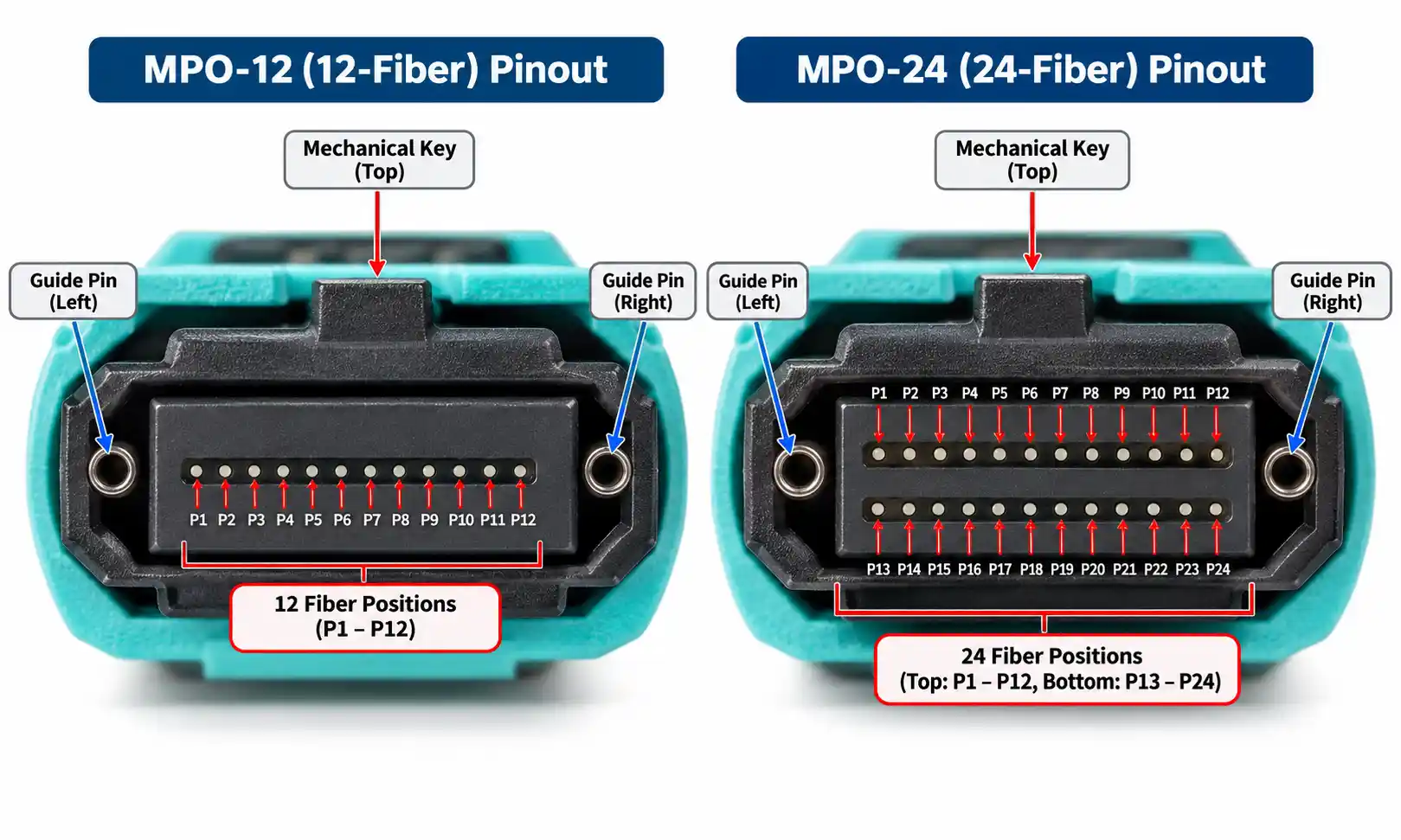
Walk into any modern hyperscale facility, and you'll notice something striking-the absence of cable chaos. Racks stand orderly, pathways remain clear, yet these environments facilitate hundreds of terabits of daily traffic. This transformation stems from multi-fiber connectivity solutions that consolidate 12 to 24 optical strands into interfaces no larger than traditional single-fiber connectors. These compact assemblies have become indispensable as organizations transition from 10G to 400G architectures, where traditional duplex cabling would create unmanageable congestion. The technology addresses three simultaneous pressures: exponential bandwidth growth, physical space constraints, and the operational need for rapid deployment cycles.
The Strategic Value Behind Multi-Fiber Architecture
The fundamental advantage of MTP/MPO technology lies in its capacity multiplication principle. Rather than employing separate cables for each fiber pair, these connectors accommodate 8, 12, 16, or 24 fibers within a single ferrule, creating density improvements that traditional approaches cannot match. Consider the physical reality: a 12-fiber assembly delivers the equivalent throughput of six duplex LC connections while occupying one-sixth the pathway space.
This architectural shift delivers three core operational benefits. First, factory pre-termination eliminates field splicing variability, cutting installation time by up to 75% compared to traditional methods. Consistency improves dramatically when connectors are manufactured under controlled conditions rather than assembled on-site. Second, the push-pull mechanism facilitates tool-free engagement, enabling network reconfigurations without specialized equipment. Third, the modular design supports incremental capacity expansion-organizations can activate additional fiber pairs as bandwidth requirements evolve without complete infrastructure replacement.
The global market reflects this strategic value, expanding from $730 million in 2024 to a projected $2.33 billion by 2033, driven by data center modernization and 5G network deployment. This 13.6% compound annual growth rate indicates that multi-fiber connectivity has transitioned from specialized application to standard infrastructure component.
Data Center Backbone Connectivity
Hyperscale data centers account for approximately 70% of total MTP/MPO demand globally, consuming over 140 million connector units annually. The economics become apparent when examining typical deployments: a mid-sized facility might require 50,000 fiber connections. Using traditional duplex cabling would necessitate 50,000 individual terminations, whereas MTP/MPO trunk cables reduce this to roughly 4,200 pre-terminated assemblies.
The technology supports multiple architectural patterns within data center environments. For duplex backbone applications, 12-fiber or 24-fiber trunk cables form permanent links between distribution areas, then transition to LC connectors at patch panels through cassette modules or hybrid breakout cords. This structured approach maintains backward compatibility with legacy 10G equipment while enabling 40G/100G capacity where needed.
Parallel optics applications represent the second major use case. Technologies like 40GBASE-SR4 and 100GBASE-SR4 transmit simultaneously across multiple fiber lanes-four transmitting and four receiving-making multi-fiber interfaces essential rather than optional. Emerging 400GBASE-SR8 implementations employ 16-fiber configurations, with eight lanes transmitting and eight receiving at 50 Gbps per lane, demonstrating how fiber count requirements scale with bandwidth demands.
A regional cloud services provider with operations across eight facilities illustrates practical deployment. They standardized on 24-fiber trunk cables for inter-floor connectivity, paired with cassette modules at each floor's distribution frame. The modular approach enabled them to activate capacity incrementally-initially deploying 100G links between core switches, then expanding to 400G as traffic patterns evolved. The pre-terminated nature of the system meant technicians completed the upgrade over a weekend without service interruption.
Telecommunications Infrastructure Applications
The telecommunications sector contributes approximately 20% of global MTP/MPO adoption, equating to roughly 40 million connector units annually. The deployment of 5G networks particularly drives demand, as operators require dense network architectures supporting high-capacity backhaul and fronthaul links. The space-saving characteristics prove especially valuable in small cell deployments where equipment cabinets face severe size constraints.
Traditional central office environments face different challenges. As telecommunications providers reconfigure central offices into converged data centers (CORDs), they increasingly deploy 12-fiber and 24-fiber assemblies to achieve the density required for modern service delivery. Single-mode configurations prove particularly relevant for long-distance telecommunications backbones, where narrow-core fibers minimize signal degradation across extended reaches.
The polarity management capabilities become critical in telecom applications. The industry employs three standardized polarity methods-Type A (straight-through), Type B (flipped), and Type C (pair-flipped)-ensuring transmit fibers correctly align with corresponding receive fibers. Recent standards introduce universal polarity methods U1 and U2, which streamline installations by reducing the number of cable types required.
A national telecommunications operator's network modernization project provides context. They replaced aging copper infrastructure across 120 central offices with fiber-based systems. By standardizing on 24-fiber single-mode trunk cables and Type B polarity, they achieved consistent connectivity across all locations. The approach reduced installation errors by 60% compared to their previous field-termination methodology, as technicians no longer needed to verify individual fiber mappings-the factory-terminated cables guaranteed correct polarity.
Emerging AI and High-Performance Computing Environments
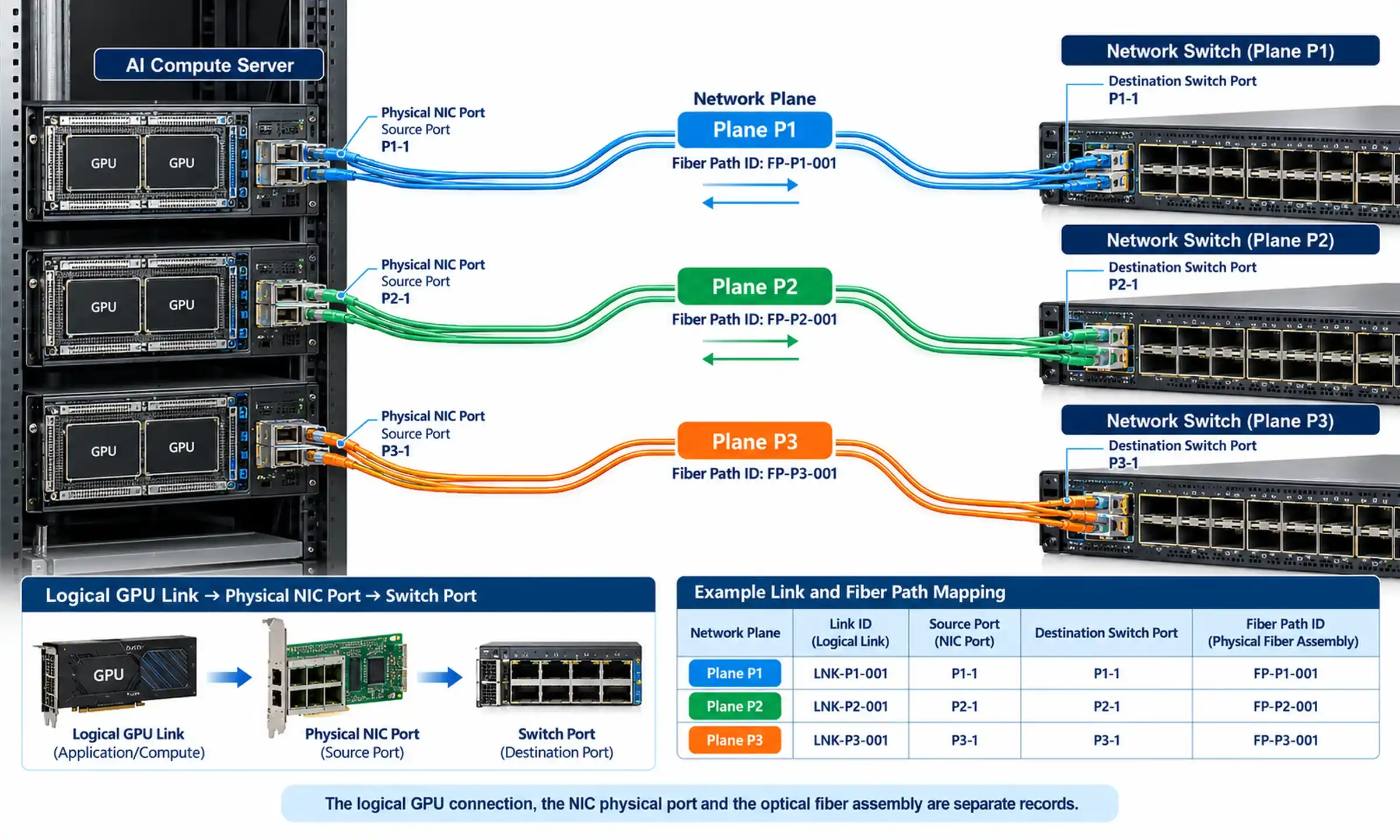
AI hyperscale data centers present unique requirements that position MTP/MPO as essential rather than preferable-these facilities demand low-latency, high-bandwidth connections capable of supporting real-time data processing and machine learning workloads. The training of large language models or computer vision systems generates sustained multi-terabit traffic flows between GPU clusters and storage arrays.
MTP/MPO cables, combined with appropriate transceivers like QSFP-DD and OSFP, offer superior signal integrity and reliability over the 100-300 meter distances typical in these environments. The solution maintains consistent high-speed transmission critical for AI applications, avoiding the signal degradation that affects copper-based alternatives in electromagnetically noisy environments.
The scalability dimension proves equally important. AI infrastructure evolves rapidly as model architectures advance and training datasets expand. Multi-fiber connectors' support for multiple strands in single interfaces enables easier network reconfiguration compared to fixed copper alternatives. When an organization needs to upgrade from 100G to 400G connectivity, they can often achieve this by changing transceivers and activating additional fiber pairs rather than replacing entire cable plants.
A machine learning research institution's deployment demonstrates these principles. They established a 4,000-GPU training cluster requiring 200G connectivity between compute nodes and distributed storage. Using 24-fiber multimode trunk cables with cassette-based distribution, they initially activated 100G links using eight fibers per connection. As their models grew in complexity, they migrated to 200G by utilizing additional fiber pairs and upgrading transceivers. The structured cabling investment remained intact, avoiding the disruption and expense of complete infrastructure replacement.

Enterprise Campus and Building Networks
Large corporate environments employ MTP/MPO solutions to connect multiple floors or buildings within campus settings, providing consistent high-speed connectivity across geographically distributed locations. The pre-terminated characteristic yields particular value in occupied buildings where disruptive on-site termination work would impact daily operations.
The modular architecture enables mixing of different port types within the same rack space-organizations can house multimode alongside single-mode connections, or combine fiber with copper patching in 1U panels. This flexibility accommodates the heterogeneous equipment typical of enterprise environments, where different departments or business units may operate varying network technologies.
Cost analysis increasingly favors pre-terminated solutions in enterprise contexts. When comparing total cost of ownership against field-terminated alternatives, the consistency and quality of factory-manufactured assemblies, combined with reduced installation time, typically generates positive return on investment within 18-24 months.
A professional services firm with 2,400 employees across six buildings exemplifies enterprise deployment patterns. They implemented a structured 12-fiber backbone connecting all locations to a central data room. Each floor's telecommunications room received cassette modules converting the multi-fiber trunk to LC ports for user connectivity. The approach reduced cabling installation from a projected eight weeks to eleven days, enabling them to complete the network upgrade during a planned office renovation rather than requiring separate disruptive cabling projects.
Specialized Military and Aerospace Applications
Military bases, government facilities, and aerospace systems represent approximately 15% of MTP/MPO deployments, valued for reliability in demanding environments. These applications prioritize signal security, electromagnetic interference resistance, and operational resilience under extreme conditions.
The fiber optic medium inherently resists electromagnetic pulse effects and electronic eavesdropping-critical characteristics for sensitive communications. Specialized variants accommodate harsh environmental conditions including extreme temperatures, vibration, and moisture exposure while maintaining low insertion loss below 0.5 dB.
Military communications networks illustrate deployment complexity. A naval installation required secure, high-bandwidth connections between command facilities, communication arrays, and support infrastructure. They specified ruggedized 12-fiber assemblies with IP67-rated protective housings, capable of operating from -40°C to +85°C. The pre-terminated approach proved essential given the facility's remote location-field termination would have required transporting specialized equipment and personnel to an austere environment, whereas pre-terminated cables enabled local technicians to complete installation.
Broadcast and Media Production Infrastructure
High-resolution video production and distribution generate sustained bandwidth demands that make multi-fiber connectivity increasingly common in broadcast environments. 4K and 8K video workflows, along with uncompressed audio channels, can exceed 10 Gbps per stream. Facilities handling multiple simultaneous productions benefit from the density and bandwidth scalability that 12 or 24-fiber assemblies provide.
The low-latency characteristics prove particularly relevant for live production. Signal delay between cameras, production switchers, and broadcast transmitters must remain below perceptible thresholds. Fiber solutions maintain superior signal integrity compared to copper alternatives, ensuring consistent transmission quality essential for professional broadcast standards.
A regional sports broadcasting network's studio complex renovation demonstrates this application. They replaced aging coaxial infrastructure with fiber-based systems capable of supporting both current HD and future 4K distribution. By deploying 24-fiber trunk cables between control rooms, editing suites, and equipment rooms, they created flexibility to allocate bandwidth dynamically based on production schedules. During major events, they can establish multiple 10G paths for simultaneous camera feeds; during routine operations, the same infrastructure supports standard 1G connections with capacity reserved for future expansion.
Healthcare Imaging and Diagnostic Systems
Medical facilities represent an emerging application domain, particularly for institutions employing advanced imaging modalities. MRI scanners, CT systems, and digital pathology platforms generate massive datasets requiring rapid transfer to centralized storage and analysis systems. Healthcare environments benefit from fiber's immunity to electromagnetic interference, crucial when operating adjacent to diagnostic equipment generating powerful electromagnetic fields.
The bandwidth requirements continue escalating as imaging resolution improves. A single cardiac CT scan might generate 2-3 GB of data; a hospital performing 50 scans daily creates 100-150 GB requiring immediate network transfer. Multi-fiber assemblies enable these facilities to establish dedicated high-bandwidth paths between imaging departments and central PACS (Picture Archiving and Communication System) infrastructure.
A regional medical center's diagnostic imaging upgrade illustrates deployment patterns. They established dedicated fiber paths from their cardiology, radiology, and pathology departments to a centralized data center. Using 12-fiber multimode cables with cassette distribution, they created 10G connections for each imaging suite. The approach eliminated previous bottlenecks where large scan results would saturate shared network infrastructure, delaying transmission to radiologists for analysis. The dedicated capacity reduced image availability time from 15-20 minutes to under 2 minutes, directly improving diagnostic workflow efficiency.
Frequently Asked Questions
What fiber count should I choose for my application?
8-fiber assemblies suit applications requiring cost-effective 40G or 100G connectivity with minimal waste. 12-fiber configurations remain the most common for general data center and enterprise use, supporting 40G and 100G with some unused capacity. 24-fiber versions fit 100G-to-100G connections and provide growth capacity for future 400G upgrades. 16-fiber solutions specifically target 400G short-reach implementations using technologies like 400GBASE-SR8.
How do I ensure proper polarity in my installation?
Maintain consistent polarity methodology across your entire infrastructure by selecting one approach-Type A (straight-through), Type B (flipped), or Type C (pairs-flipped)-and documenting it clearly. Use the connector key orientation as reference: when the key faces upward, fiber positions run left-to-right from position 1 to 12. Employ color-coded cables and clearly labeled adapters to prevent misconnections during installation or maintenance.
Can I mix single-mode and multimode in the same infrastructure?
Yes, though careful planning remains essential. Modular panel systems accommodate mixed fiber types within the same rack unit, enabling organizations to house both single-mode OS2 and multimode OM3/OM4 connections as required by different applications. Maintain clear color coding-yellow jackets for single-mode, aqua for OM3/OM4 multimode-and never cross-connect incompatible fiber types. Document your design thoroughly to prevent future configuration errors.
What's the maximum distance these connectors support?
Distance capability depends on fiber type rather than connector design. Multimode OM3 supports 40G transmission up to 100 meters, while OM4 extends this to 150 meters. OM5 maintains 100G performance across 150 meters. Single-mode OS2 fiber enables 10G transmission beyond 40 kilometers and 100G across 10+ kilometers, making it ideal for telecommunications backbones and campus interconnects.
How often should I clean the connectors?
Contamination causes 80% of fiber network problems, according to NTT Advanced Technology research. Inspect and clean connector end-faces before every mating cycle using appropriate cleaning tools-click-style cleaners for male connectors, reel-based cassettes for female versions. In dusty environments, deploy shuttered adapters to protect unused ports and establish quarterly inspection protocols.
Are these connectors suitable for outdoor installations?
Yes, with proper environmental protection. Specialized ruggedized assemblies feature IP67-rated housings that resist moisture, dust, and temperature extremes from -40°C to +85°C. Employ bend-insensitive G.657.A2 single-mode fiber for outdoor runs to accommodate tighter routing paths. Cable jackets should meet environmental requirements-use LSZH (Low Smoke Zero Halogen) in enclosed spaces and outdoor-rated jackets for direct burial or aerial applications.
Understanding the Core Technology Differences
While MTP and MPO connectors serve identical functional purposes, technical distinctions influence performance in demanding applications. MPO represents the generic multi-fiber connector standard defined by IEC 61754-7 and TIA-604-5, accommodating 8 to 72 fibers in a compact rectangular ferrule. Any manufacturer can produce MPO-compliant connectors, making them widely available at competitive price points.
MTP designates a trademarked enhanced version developed by US Conec, incorporating several patented improvements. The connectors employ metal pin clamps rather than plastic, significantly reducing pin breakage during repeated mating cycles. Guide pins feature elliptical rather than chamfered shapes, minimizing wear and debris generation. The floating ferrule design maintains physical contact under applied load, reducing insertion loss. Removable housings enable field rework and gender changes without replacing entire assemblies.
These enhancements translate to measurable performance differences. MTP assemblies typically achieve insertion loss below 0.35 dB compared to 0.5 dB for generic MPO implementations. Return loss exceeds 50 dB versus 40-45 dB for standard versions. For ultra-high-speed 400G/800G applications where every 0.1 dB matters, these margins become operationally significant. However, cost-sensitive deployments or lower-speed environments may find standard MTP MPO connectors entirely adequate.
Installation and Maintenance Best Practices
Successful deployment requires attention to several critical factors beyond basic cable routing. Polarity verification must occur before any mating operation-mismatched connections will physically engage but produce no signal transmission, creating difficult-to-diagnose network problems. Employ polarity checkers or OTDR testing to validate end-to-end continuity during initial installation.
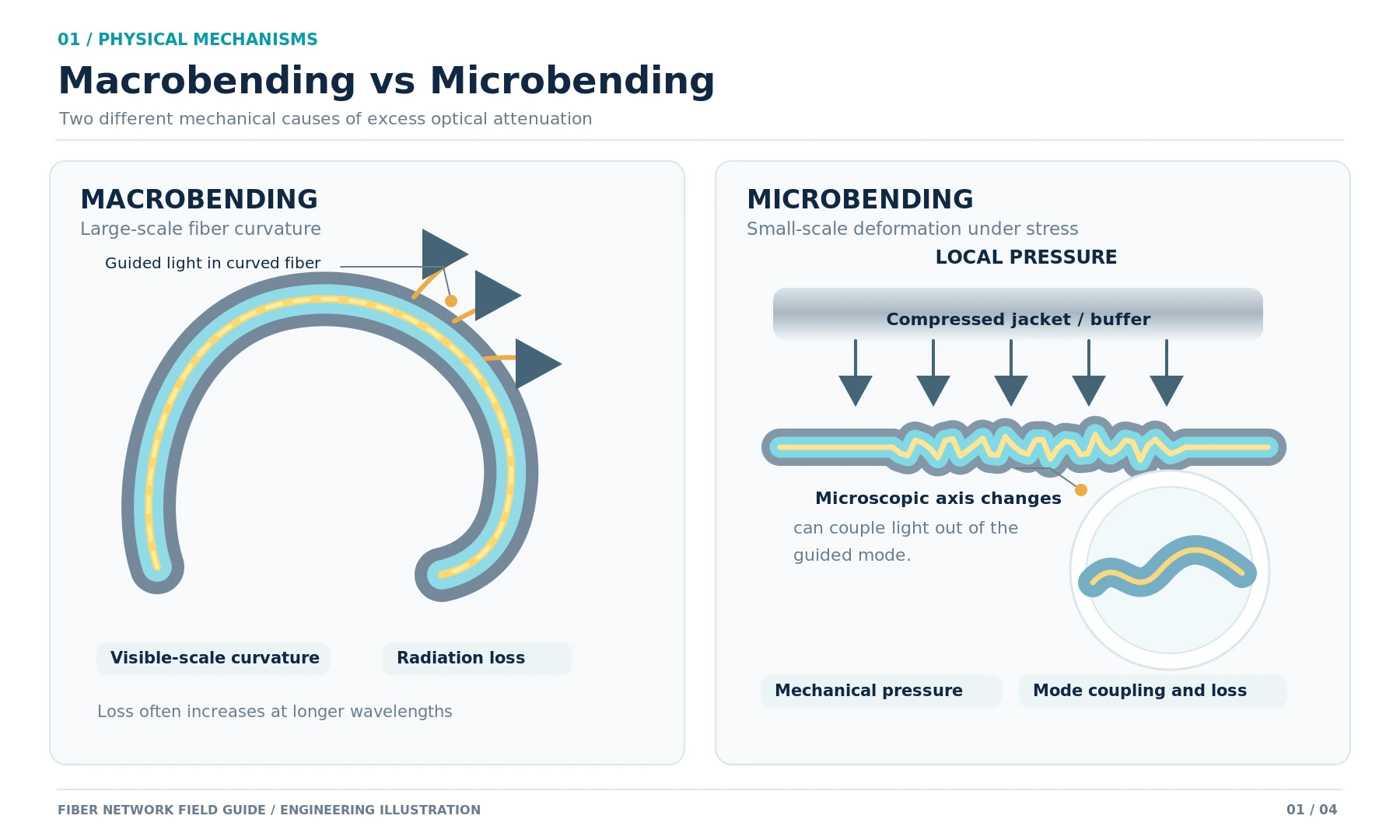
Bend radius management proves particularly important with multi-fiber ribbon cables. Exceeding manufacturer specifications-typically 10-20 times cable diameter for installed cables, 20 times for temporary routing during installation-creates micro-bending losses that degrade signal quality. Utilize proper cable management trays with smooth, looped routing paths rather than sharp corners.
Environmental factors influence long-term reliability. Maintain data center temperature between 15-25°C and relative humidity between 30-60% to prevent condensation and thermal stress on fiber connections. In outdoor or industrial environments, regular inspection cycles every 3-6 months help identify emerging issues before they cause service disruptions.
Technician training makes substantial difference in deployment quality. Field observations indicate that connector cleanliness and proper handling techniques account for more performance variation than equipment specifications. Organizations implementing structured training programs-covering topics like proper cleaning procedures, polarity management, and connector inspection-experience 60% fewer installation-related problems compared to those relying on general network technician knowledge.
Key Takeaways
Multi-fiber MTP/MPO connectors dominate data center environments, accounting for 70% of global demand and enabling 12-24 fibers in single compact interfaces
Telecommunications infrastructure increasingly deploys these solutions for 5G network densification and central office modernization
AI and high-performance computing environments require the low-latency, high-bandwidth characteristics these connectors provide for GPU cluster interconnection
Enterprise campus networks benefit from pre-terminated assemblies that reduce installation time by 75% while improving consistency
Proper polarity management, regular cleaning protocols, and adherence to bend radius specifications prove essential for reliable long-term performance