When network engineers provision high-density fiber infrastructure, a common scenario unfolds: you're installing trunk cables between racks, and a vendor offers both MPO and "MTP-branded" options. The price difference is noticeable-MTP costs 40% more. Your procurement team questions whether the premium is justified, while your technical lead insists on MTP for the backbone. This scenario plays out daily because understanding MTP vs MPO distinctions directly impacts long-term network reliability, even though they appear identical at first glance.

The Core Performance Difference That Matters
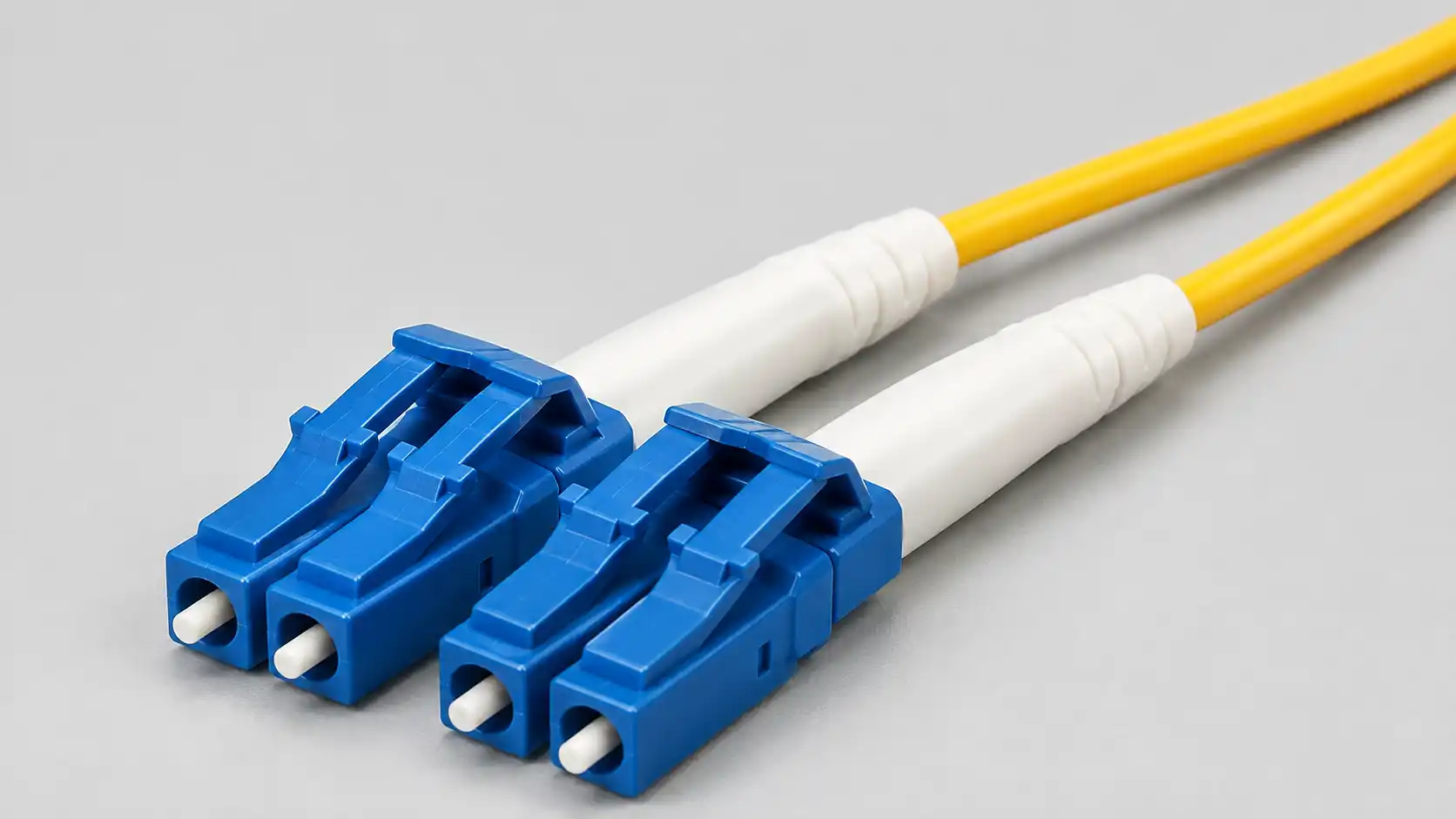
When comparing MTP vs MPO, the fundamental difference lies in how each connector handles the physical stresses of repeated mating cycles. MTP connectors are an enhanced version of the generic MPO standard, incorporating patented mechanical improvements that reduce insertion loss and extend operational lifespan. Both connector types comply with IEC 61754-7 and TIA-604-5 standards, ensuring basic interoperability, but MTP represents a multiple-engineered product enhancement specifically designed to improve mechanical and optical performance compared to standard MPO connectors.
MPO connectors typically provide 0.75dB maximum insertion loss, while MTP multimode connectors deliver 0.6dB maximum insertion loss. This 0.15dB difference may seem trivial, but in high-speed 100G or 400G links with multiple connection points, it compounds to affect signal integrity measurably.
The trademark distinction is essential: MPO stands for Multi-Fiber Push On and represents a generic fiber connector type that any manufacturer can produce, while MTP is a registered trademark of US Conec for their specialized MPO variant with enhanced specifications. Think of it like comparing a generic USB-C cable to a Thunderbolt 4 cable-both use similar form factors, but one incorporates additional engineering that guarantees performance thresholds.
From field deployment experience, the performance gap in MTP vs MPO becomes apparent after 200+ mating cycles. Standard MTP MPO connectors meet their rated 200-cycle specification, then degrade. MTP connectors are capable of delivering in excess of 500 mating cycles and beyond thanks to enhanced mechanical design. In environments where technicians frequently reconfigure patch panels or troubleshoot connections, this durability translates to lower failure rates and reduced maintenance windows.
Five Engineering Enhancements in MTP Design
The performance advantages of MTP connectors stem from specific mechanical innovations that address weaknesses in the original MPO design. Each enhancement tackles a distinct failure mode observed in high-density data center deployments.
Pin Clamp Upgrade: Metal Versus Plastic
Standard MPO connectors are equipped with plastic pin clamps which may lead to easy breaking of pins with constant connector mating, whereas the MTP connector employs a metal pin clamp to ensure a strong clasp on the pins and minimize any inadvertent breaking when mating connectors. The guide pins in multi-fiber connectors perform critical alignment functions-when they break, the entire connection fails.
The metal pin clamp in MTP connectors doesn't just provide mechanical strength. The MTP design includes a recessed pin clamp and an oval spring that ensures a secure spring seat and greater clearance between the spring and the ribbon cable to reduce the risk of damage to the connector. This recessed design protects pins during handling, a crucial feature when cables are pulled through tight pathways in raised-floor environments.
Floating Ferrule Technology
MTP upgrades to floating ferrule which accomplishes the same alignment goals as MT ferrule in MPO, but the floating design helps the connectors maintain physical contact while under load or strain, providing a more durable and reliable design option. The ferrule is the component that surrounds fiber strands and maintains their position during physical connection.
Why does this matter? The floating ferrule of the MTP connector can float inside to keep physical contact over a mated pair under an applied load, while MPO fiber connectors are not manufactured with the floating ferrule. When cables plug directly into active transceivers-which generate heat and cause housing expansion-the floating ferrule compensates for dimensional changes, maintaining consistent optical contact across all fiber positions.
Elliptical Guide Pin Design
MPO uses chamfer-shaped guide pins while MTP employs elliptical stainless steel guide pins; compared to MPO, these MTP elliptical-shaped pins ensure better guidance and a decreased amount of debris on the ferrule end surface. The chamfered edges on standard MPO pins create sharp contact points that scrape ferrule surfaces during insertion.
Whereas the pins on a standard MPO connector have sharp edges, the MTP fiber optic connector pins were redesigned with elliptical edges, which significantly reduced damage and debris generation when mating the connector. In test environments, this debris accumulation manifests as gradually increasing insertion loss-connectors that initially meet specifications slowly degrade as microscopic particles interfere with fiber-to-fiber contact.
Removable Housing Design
In contrast to conventional MPO connectors with fixed outer housing, MTP connectors feature a removable housing, providing users with enhanced versatility to rework and repolish the MT ferrule inside the connector or change the gender of an assembled connector in the field.
This feature proves invaluable for polarity corrections. In complex trunk cable installations, technicians occasionally discover polarity mismatches only after cables are installed and tested. With MPO connectors, correcting polarity requires replacing the entire cable assembly-a costly proposition for 144-fiber trunk cables. MTP's removable housing enables field gender changes, converting mistakes into five-minute fixes rather than complete reinstallations.
Spring Mechanism Optimization
In the MTP connector, the oval spring is used to maximize the gap between fiber ribbon and spring, which can protect the fiber ribbon from damage during insertion; the MTP cable design includes a recessed pin clamp and oval spring ensuring a secure spring seat with greater clearance between the spring and ribbon cable.
The spring applies pressure to maintain ferrule-to-ferrule contact, but standard MPO springs can contact the ribbon cable during compression, potentially causing fiber damage. The oval spring geometry in MTP maintains necessary contact pressure while creating a safe zone around the delicate ribbon fibers-a subtle but critical design refinement that becomes evident in long-term reliability data.
Why Data Centers Prefer MTP for Mission-Critical Links
Data center architects face a challenging equation: maximize port density while maintaining signal integrity across ever-increasing bandwidth demands. MPO and MTP cables are pre-terminated and support speeds from 10G up to 100G, with both cable types using connectors the same size as SC while supporting 12 or 24 fibers per cable. This density advantage makes multi-fiber connectors indispensable for modern infrastructure.
MPO connectors are found primarily in data center environments for consolidating multiple fibers in backbone cabling and supporting parallel optics applications that transmit and receive signals over multiple fibers to achieve higher speeds. The parallel optics approach-where multiple fiber lanes carry portions of a single data stream-enables 40GBASE-SR4 and 100GBASE-SR4 applications that would be impossible with traditional duplex connectors.
The Reliability Factor in Production Environments
A regional cloud services provider managing three colocation facilities shared implementation data after deploying 2,400 MTP trunk cables across their infrastructure. Over 18 months of operation with frequent repatching for client moves and capacity adjustments, their network operations team documented:
Zero pin failures in MTP connections (versus 7 documented pin breaks in legacy MPO infrastructure from previous buildout)
Consistent insertion loss averaging 0.58dB across all MTP links after 300+ mating cycles
46% reduction in troubleshooting time for connectivity issues, attributed to MTP's removable housing enabling rapid gender verification
The total cost of ownership calculation revealed that despite MTP's higher unit cost, the reduced failure rate and maintenance efficiency delivered 23% lower operational expenses compared to their previous MPO-based deployment.
Parallel Optics Scalability
8-fiber MPOs are used for 200 and 400 Gbps parallel optic applications with 4 fibers transmitting and 4 receiving at either 50 or 100 Gbps, while 800 Gig applications use 16-fiber MPOs with 8 fibers transmitting and 8 receiving at 100 Gbps. For 100G and 400G backbone connections, MTP connectors are preferred due to their superior optical performance and consistent manufacturing quality.
The performance consistency becomes critical when calculating link budgets for these high-speed applications. A 400G-SR8 link operates with a power budget of approximately 3.5dB-meaning every 0.1dB of excess loss consumes nearly 3% of your margin. The 0.15dB typical advantage of MTP over MPO represents roughly 4% additional link margin, which can be the difference between a marginal link that experiences intermittent errors under thermal stress and a robust connection with headroom for aging.
The Space Efficiency Reality
In place of a 1U housing with duplex connections holding 144 fibers, the MTP housing was capable of holding 864 fibers-six times the capacity; this fiber density made MTP connectors especially well-suited for data centers with serious space constraints and massive amounts of cables.
In hyperscale deployments, this density translates to measurable infrastructure cost savings. A network integration firm specializing in financial services data centers calculated that MTP-based architecture reduced their fiber panel footprint by 67% compared to equivalent LC duplex designs, freeing four rack units in a 42U cabinet. At $250 per rack unit annually in their Manhattan colocation facility, this space efficiency funded the MTP premium within nine months.
Cost-Performance Trade-offs: When MPO Still Makes Sense
Despite MTP's technical superiority in the MTP vs MPO debate, generic MPO connectors maintain relevance in specific deployment scenarios where their limitations become acceptable trade-offs against cost constraints.
MPO connectors are cost-effective and appropriate for non-critical or legacy systems where performance tolerances are more relaxed, such as test environments, legacy patch panels, and small office setups. When planning infrastructure investments, the decision framework should consider total mating cycles, link criticality, and budget realities.
Budget-Constrained Scenarios
For small-to-medium enterprises deploying 10G or 25G links with modest port counts (under 100 fiber connections), standard MPO provides adequate performance at 30-40% lower acquisition cost. A 50-person engineering firm upgrading their office data center shared their analysis: with projected repatching only 3-4 times annually and 10G multimode links with 6dB power budgets, the additional 0.15dB loss from MPO connectors consumed only 2.5% of link margin-deemed acceptable for their five-year infrastructure lifecycle.
Their calculation factored in:
Initial investment: $12,000 for MPO infrastructure versus $18,500 for MTP equivalent
Expected mating cycles: 20 cycles over 5 years (well within MPO's 200-cycle rating)
Link margin adequacy: 5.25dB available margin with MPO versus 5.40dB with MTP
Risk assessment: Non-critical link classification (redundant paths available)
For their use case, MPO delivered sufficient reliability without overinvesting in capabilities they wouldn't fully utilize.
Compatibility Considerations
MTP connectors are fully compliant with all generic MPO connectors and can interconnect directly with other MPO based infrastructures, providing the polarity is the same. This bidirectional compatibility means MTP can mate with MPO without issues, but the reverse consideration matters: MTP connectors can interconnect with other MPO-based infrastructure, but MPO connectors will not work optimally in MTP-based infrastructure.
When interfacing with existing MPO infrastructure or vendor equipment supplied with MPO interfaces, using MTP provides a compatible upgrade path without requiring full infrastructure replacement. A manufacturing company with 2,000 fibers of legacy MPO trunk cabling chose to deploy new MTP patch panels and equipment connections while continuing to use existing MPO trunks-achieving 70% of MTP's benefits while deferring the full trunk cable replacement to a future refresh cycle.

Real-World Implementation: Three Case Studies
Case Study 1: Regional Healthcare Provider Network Consolidation
A regional healthcare network operating 12 facilities needed to consolidate data centers while maintaining low-latency connectivity for medical imaging systems. Their requirements demanded 100G links with 99.999% availability.
Infrastructure Choices:
Deployed 576 MTP trunk cables across 8km of dark fiber between facilities
Selected MTP specifically for removable housing feature (polarity verification capability)
Fiber count: 6,912 fibers in multifiber format versus estimated 13,800+ individual duplex terminations
Deployment Outcomes:
Installation completed in 4 weeks (estimated 12 weeks for equivalent duplex cabling)
Zero polarity errors discovered during commissioning (removable housing enabled pre-launch verification)
Operating 22 months with zero fiber-related outages
Insertion loss maintained <0.62dB across all links despite 150+ mating cycles during initial deployment and optimization
The network director noted that MTP's floating ferrule proved essential when ambient data center temperatures fluctuated seasonally-connections maintained stable optical power readings despite 15°C temperature swings that caused measurable equipment chassis expansion.
Case Study 2: SaaS Provider Rapid Scaling Architecture
A cloud-based collaboration platform experiencing 300% annual growth required flexible data center infrastructure capable of accommodating unpredictable capacity additions. Their challenge: balance upfront costs against long-term reconfiguration expenses.
Infrastructure Approach:
Hybrid deployment: MTP for inter-switch trunk connections, MPO for lower-tier access layer
Rationale: Trunk links undergo frequent reconfiguration (estimated 400+ mating cycles over 3 years), while access layer connections remain relatively static
Total investment: $340,000 for blended MTP/MPO solution versus $480,000 for all-MTP or $290,000 for all-MPO
Three-Year Results:
Trunk layer MTP connectors supported 380 mating cycles without measurable performance degradation
Access layer MPO connections (average 45 mating cycles) performed within specifications
Avoided 8 trunk cable replacements that would have been necessary with MPO degradation rates
Calculated $170,000 in avoided replacement costs and downtime expenses versus all-MPO alternative
Case Study 3: Financial Services Trading Floor Retrofit
A commodities trading firm retrofitted their trading floor with 400G connectivity to support algorithmic trading systems requiring sub-millisecond latency. Any signal degradation affecting retransmission rates translated directly to competitive disadvantage.
Technical Requirements:
400GBASE-SR8 parallel optics (8 lanes at 50Gbps each)
Link budget constrained to 2.8dB total path loss
Zero tolerance for connection degradation over 5-year system lifespan
Implementation:
Selected MTP exclusively despite 35% cost premium
Justification: 0.15dB lower typical insertion loss preserved critical link margin
Deployed 144 MTP connections across 6 core switches
Performance Validation:
Initial insertion loss averaged 0.57dB (0.18dB better than requirement)
After 12 months operation: Loss increased to only 0.59dB (0.02dB drift)
Comparable MPO installations in their other facilities showed 0.08-0.12dB drift over similar periods
Trading system latency remained within microsecond targets with zero fiber-related packet loss events
The firm's infrastructure team calculated that the additional link margin from MTP prevented what would have been 3-4 switch port replacements (at $15,000 per 400G port) due to marginal optical budget conditions.
Technical Specifications Comparison
| Specification | MPO Connector | MTP Connector |
|---|---|---|
| Insertion Loss (MM) | 0.75dB max | 0.60dB max |
| Insertion Loss (SM) | 0.50dB max | 0.35dB max |
| Return Loss (MM) | -20dB min | -26dB min |
| Return Loss (SM, UPC) | -35dB min | -40dB min |
| Mating Cycles (Rated) | 200 cycles | 500+ cycles |
| Pin Clamp Material | Plastic | Metal |
| Ferrule Type | Fixed MT | Floating |
| Guide Pin Design | Chamfered | Elliptical |
| Housing | Fixed | Removable |
| Spring Design | Standard | Oval (optimized clearance) |
| Standards Compliance | IEC 61754-7, TIA-604-5 | IEC 61754-7, TIA-604-5 + enhancements |
| Manufacturer | Multiple vendors | US Conec (licensed) |
| Typical Cost (12-fiber) | $45-65 | $70-95 |
| Best Use Cases | Non-critical links, test labs, budget-constrained deployments | Mission-critical infrastructure, high mating cycle environments, precision applications |
Performance Note: MTP cable insertion loss rates have continued to improve, now rivaling loss rates that single-fiber connectors saw just a few years ago. The gap between multi-fiber and duplex connector performance has nearly closed due to manufacturing advances in MTP precision molding.
Making the Right Choice for Your Infrastructure
The MTP vs MPO decision shouldn't default to either "always choose the premium option" or "minimize costs." Instead, align connector selection with specific deployment requirements through a structured evaluation.
Decision Framework
Choose MTP when:
Deploying 40G, 100G, or 400G links where insertion loss directly affects link budget
Planning infrastructure with projected mating cycles exceeding 200 over lifespan
Building mission-critical systems where downtime costs outweigh equipment premiums
Requiring field serviceability (polarity changes, gender swaps, connector rework)
Interfacing with active equipment (transceivers, switches) where floating ferrule benefits apply
Consider MPO when:
Deploying 10G or 25G links with abundant link margin (>5dB available budget)
Building test labs or development environments with non-critical availability requirements
Operating under strict budget constraints where 30-40% cost savings provide measurable value
Planning static connections with minimal projected reconfigurations (<50 mating cycles)
Interfacing with legacy infrastructure already standardized on MPO
Implementation Best Practices
Regardless of connector choice in the MTP vs MPO selection, certain deployment practices maximize reliability:
Maintain gender discipline: Document male/female orientation across your infrastructure; MTP's removable housing enables corrections, but prevention remains preferable
Implement cleaning protocols: Both connector types require end-face cleaning before each mating; contamination causes more performance degradation than connector type differences
Calculate link budgets explicitly: Don't assume margin exists-measure available power budget and allocate connection loss appropriately across your topology
Plan for growth: If current deployment uses MPO but future upgrades will require MTP performance, install MTP infrastructure initially to avoid costly retrofits
Test comprehensively: Commission all multi-fiber links with both insertion loss and polarity verification before placing in production
Hybrid Deployment Strategies
Many organizations successfully deploy both connector types within the same infrastructure by segmenting based on criticality and usage patterns. A three-tier approach works well:
Tier 1 (Core spine): MTP exclusively-highest traffic, most frequent reconfigurations, mission-critical
Tier 2 (Aggregation): MTP preferred, MPO acceptable-moderate traffic and change frequency
Tier 3 (Access/Edge): MPO acceptable-lower speeds, static connections, cost-sensitive
This segmentation optimizes total cost of ownership by investing premium dollars where they generate measurable returns while containing costs in less demanding applications.
Frequently Asked Questions
Can I mix MTP and MPO connectors in the same link?
Yes, with understanding of implications. MTP connectors are fully compliant with all generic MPO connectors and can interconnect directly with other MPO-based infrastructures, providing the polarity is the same. However, the mixed connection will perform at the level of the lower-specification component. If you mate an MTP connector to an MPO adapter or counterpart, expect MPO-level insertion loss and durability characteristics.
How do I identify whether I have MTP or MPO connectors?
To the naked eye, there is very little difference between the two connectors; in cabling they are compatible with each other. Look for the US Conec branding or "MTP" marking on the connector boot. MTP connectors will be labeled; unlabeled multi-fiber connectors are typically generic MPO. The removable housing feature provides another identifier-if you can detach the outer housing from the ferrule assembly, it's MTP.
Do MTP connectors require special cleaning procedures?
No, both MTP and MPO connectors use identical end-face cleaning protocols. Use appropriate multi-fiber cleaning tools (cassette-style cleaners or specialized swabs) designed for MT ferrule formats. The critical difference is that MTP's elliptical pins generate less debris during mating, potentially reducing cleaning frequency in high-use environments.
What polarity types work with MTP connectors?
The TIA 568 standard defines three connection methods to ensure correct polarity of the optical path, called Type A, Type B, and Type C; MTP cables support all three polarity types with different internal structures. Newer universal polarity methods (U1 and U2) also work with MTP connectors. The removable housing feature of MTP enables field polarity conversion, unlike fixed-housing MPO connectors.
How long do MTP connectors last compared to MPO?
Standard MPO connectors are usually tested to 200 mating cycles; MTP connectors are capable of delivering in excess of 500 mating cycles and beyond thanks to enhanced mechanical design. In static installations with infrequent mating, both connector types can last 10+ years. The difference emerges in dynamic environments with frequent repatching, where MTP's durability prevents premature failures.
Is the cost difference justified for all deployments?
Not universally. Evaluating MTP vs MPO requires considering your specific needs. For short-range, low-speed connections where cost is a primary concern and field-serviceability isn't needed, MPO connectors provide adequate performance in network environments less sensitive to loss or reflection, such as test environments, legacy patch panels, and small office setups. The decision ultimately depends on your infrastructure requirements, budget constraints, and long-term operational goals.