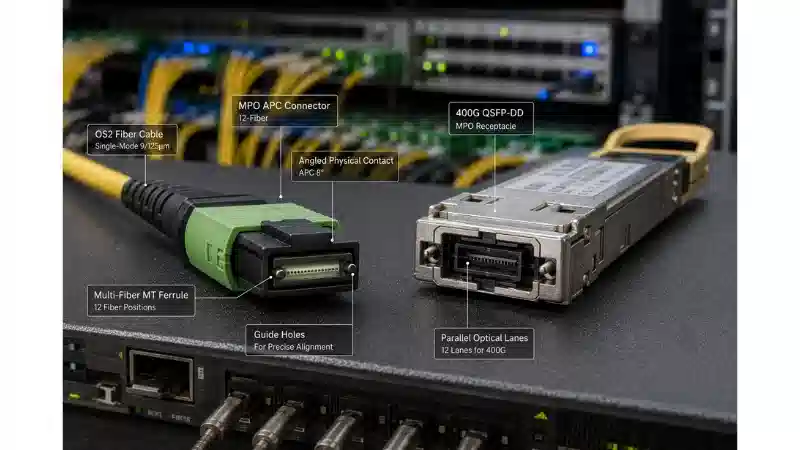
Choosing the right MTP/MPO cable ensures efficient and reliable data transmission in today's fast-paced digital world. As the demand for high-speed connections continues to increase, it is critical to understand the importance of core count in MTP/MPO cables. In this guide, we'll explore the importance of core count and provide valuable insights to help you decide on the right MTP/MPO cable for your specific needs. Whether you are building a data center or upgrading your existing network infrastructure, this article will serve as a comprehensive resource to help you choose the right MTP/MPO cables.
What is MTP/MPO cable?
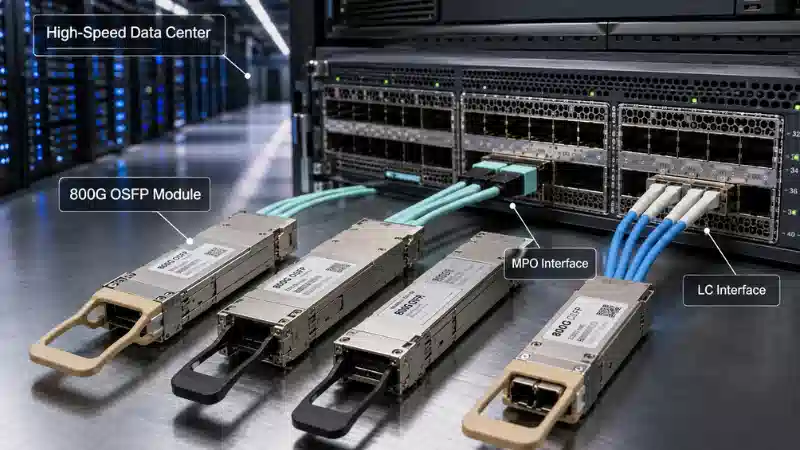
MTP/MPO cables are high-density fiber optic cables commonly used in data centers and telecommunications networks. It is designed to provide a fast and efficient way to connect multiple optical fibers in a single connector.
MPO and MTP cables share many attributes, which is why both are so popular. The key defining feature is that these cables feature pre-terminated optical fibers with standardized connectors. While other fiber optic cables must be carefully routed and installed at every node in the data center, these cables are virtually plug-and-play. Having this convenience while still delivering the highest level of performance makes them the first choice for many data center applications.
How many types of MTP/MPO cables are there?
MTP/MPO cables consist of ready-to-attach connectors and fiber optics. In terms of type, MTP/MPO optical cables are divided into MTP/MPO trunk optical cables and MTP/MPO harness/branch optical cables.
MTP/MPO trunk cable
MTP/MPO trunk cables are typically used to create backbones and horizontal interconnects. They have an MTP/MPO connector on each end and can contain 8 fibers to a maximum of 48 fibers.
MTP/MPO harness/branch cable
Harness/breakout cables are used to separate MTP/MPO connectors into separate connectors for easy connection to equipment. MTP/MPO conversion cables convert between different connector types, such as MTP to LC or MTP to SC.
MTP/MPO cables are also available in different configurations such as 8-core, 12-core, 16-core, 32-core, etc. depending on the specific needs of the application. This configuration flexibility enables users to tailor their options based on the size and performance requirements of their network or data center. As technology advances, MTP/MPO cable configurations continue to evolve to meet the increasing data transmission needs.
How to choose MTP/MPO cable
Choosing the appropriate core count for MTP/MPO cables affects the efficiency and performance of the entire network. In this section, we'll delve into the decision-making factors regarding cable core count.
Network requirements and data transfer goals
Different network applications and data transfer needs may require different numbers of cores. High-density data centers may require more cores to support high-volume data transfers, while smaller networks may require fewer cores.
Compatibility with existing infrastructure
When selecting the core count of MTP/MPO cables, compatibility with existing infrastructure is critical. Ensuring that new cables match existing fiber optic equipment and connectors can help avoid unnecessary compatibility issues.
Consider future scalability
As business grows and technology advances, network needs are likely to increase in the future. Choosing MTP/MPO cables with higher core counts can facilitate future expansion and upgrades.
Budget and resource constraints
Budget and resources also play a role in core number selection. Cables with a higher core count tend to be more expensive, while cables with a lower core count may be more cost-effective. Therefore, it is crucial to find a balance between actual needs and available budget.