Network engineers deploying 100G infrastructure face a recurring challenge: cable congestion threatens to overwhelm data center racks designed for previous-generation equipment. MTP MTP fiber systems offer a transformative solution through multi-fiber architecture that consolidates 8, 12, or 24 fibers within a single connector body. Data centers implementing this technology report space reductions exceeding 50% compared to legacy cabling approaches, while simultaneously achieving faster deployment cycles and enhanced cable management capabilities.
How MTP MTP Fiber Architecture Delivers Space Efficiency
Traditional fiber infrastructure operates on a one-to-one principle: each connection requires discrete connector pairs, separate cable routing, and individual termination points. This approach worked adequately during the 1G and early 10G eras when port densities remained manageable. The mathematics shifted dramatically with 40G and 100G adoption.
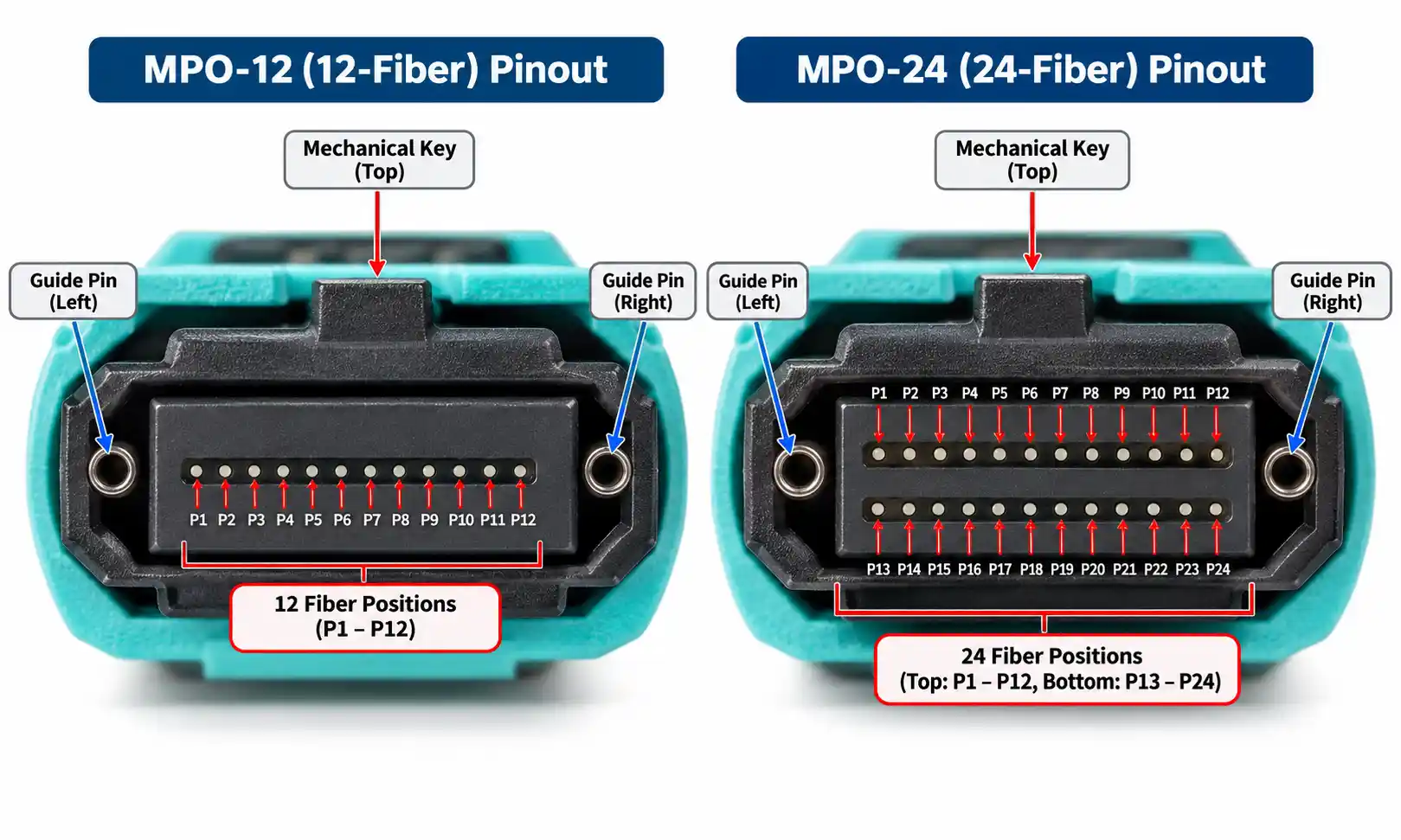
A standard 1U housing using duplex connections accommodates 144 fibers, whereas MTP housing within the same form factor supports 864 fibers-representing a sixfold capacity increase. This density transformation stems from fundamental connector design: although MTP MTP Cable connector dimensions mirror ordinary SC connectors, their internal density multiplies several times over.
Consider the practical implications within a 42U rack cabinet. Using traditional LC duplex connections for a 100G spine-leaf architecture requires approximately 288 individual patch cords to interconnect 24 top-of-rack switches with four spine switches. Each duplex connection occupies roughly 8mm of horizontal cable management space, totaling 2,304mm-or nearly 2.3 meters of linear routing capacity.
The same configuration using 12-fiber MTP connections reduces the physical footprint to 24 trunk cables. Since MTP connectors measure approximately 12mm width, total horizontal space consumption drops to 288mm-an 87% reduction. This liberated space enables better airflow pathways, simplifies moves-adds-changes, and creates headroom for future expansion without infrastructure redesign.
Manufacturing facilities transitioning from copper to fiber face additional constraints. A regional distribution center outside Memphis recently upgraded its warehouse management system backbone from Cat6 copper to fiber optics. The project team initially planned for traditional LC connectivity until space calculations revealed that existing cable trays couldn't accommodate the required fiber count. Switching to MTP MTP fiber trunk cables with breakout modules enabled the installation to proceed within existing infrastructure, avoiding a costly tray expansion project.
Installation Velocity and Labor Economics
Space savings extend beyond physical dimensions into temporal efficiency. MTP systems reduce installation time by up to 75% compared to traditional fiber approaches. This acceleration derives from factory pre-termination: rather than field-terminating hundreds of individual connectors, installers deploy pre-tested trunk assemblies with guaranteed performance parameters.
The labor economics prove substantial. A typical LC duplex termination requires 15-20 minutes per connector pair when performed by experienced technicians, including cleaning, splicing, testing, and documentation. For a 288-connection deployment, this translates to 72-96 hours of skilled labor.
MTP trunk cable installation compresses this timeline dramatically. A 12-fiber trunk connection averages 3-5 minutes, including routing, securing, and verification. The same 288-fiber deployment using 24 MTP trunks completes in 1.5-2 hours-a 97% time reduction. High-density MTP MTP fiber trunk cables can save 80% of traditional fiber installation time, enabling network teams to redirect labor resources toward value-added activities.
A B2B SaaS provider expanding its Chicago colocation footprint experienced this efficiency firsthand. The company's network team faced a 72-hour maintenance window to migrate 48 racks from 10G to 40G connectivity. Initial planning using LC duplex connections indicated the window was insufficient. Redesigning around MTP infrastructure enabled completion within 54 hours, including contingency buffer time.
Financial services organizations particularly value this installation speed. A trading firm deploying low-latency infrastructure for algorithmic operations required precise cable length matching across multiple fiber pairs to maintain signal synchronization. Pre-terminated MTP Elite cables with factory-tested skew parameters eliminated field measurement variables, ensuring consistent performance across all connections while compressing deployment from five days to 18 hours.
Rack Density Optimization Through Multi-Fiber Connectivity
Space efficiency cascades into thermal benefits. Cable congestion restricts airflow patterns within equipment racks, forcing HVAC systems to compensate through increased cooling capacity. Reducing cable complexity with higher fiber density MTP cables allows air to flow more efficiently around data centers, reducing cooling requirements.
Thermal dynamics within high-density racks follow predictable patterns. Hot air rises from equipment exhaust ports, ideally exiting through top-mounted vents into hot aisle containment systems. Cable obstructions create turbulent flow zones where hot air mixes with cool supply air, degrading overall cooling efficiency. Every 1°C temperature increase at server intakes correlates with approximately 2-3% elevated fan power consumption.
A manufacturing company operating an edge computing deployment in Phoenix discovered this relationship during summer peak temperatures. Their 10-rack facility experienced thermal alerts when ambient temperatures exceeded 42°C, despite adequate HVAC capacity. Investigation revealed that dense cable bundles blocked 35% of rear exhaust area, creating hot spots that triggered equipment throttling. Converting to MTP infrastructure with organized vertical cable management restored proper airflow, eliminating thermal alerts and reducing HVAC runtime by 18% during peak periods.
The space-to-cooling relationship becomes critical in high-density computing environments. A hyperscale provider deploying GPU-accelerated AI training clusters faces power densities approaching 30kW per rack-triple the typical data center average. The provider's infrastructure team adopted 24-fiber MTP trunk cables with vertical cable managers, maintaining clear horizontal airflow channels between equipment rows. This design choice enabled operation within existing cooling infrastructure rather than requiring supplementary cooling units.
Scalability Frameworks for Growth Planning
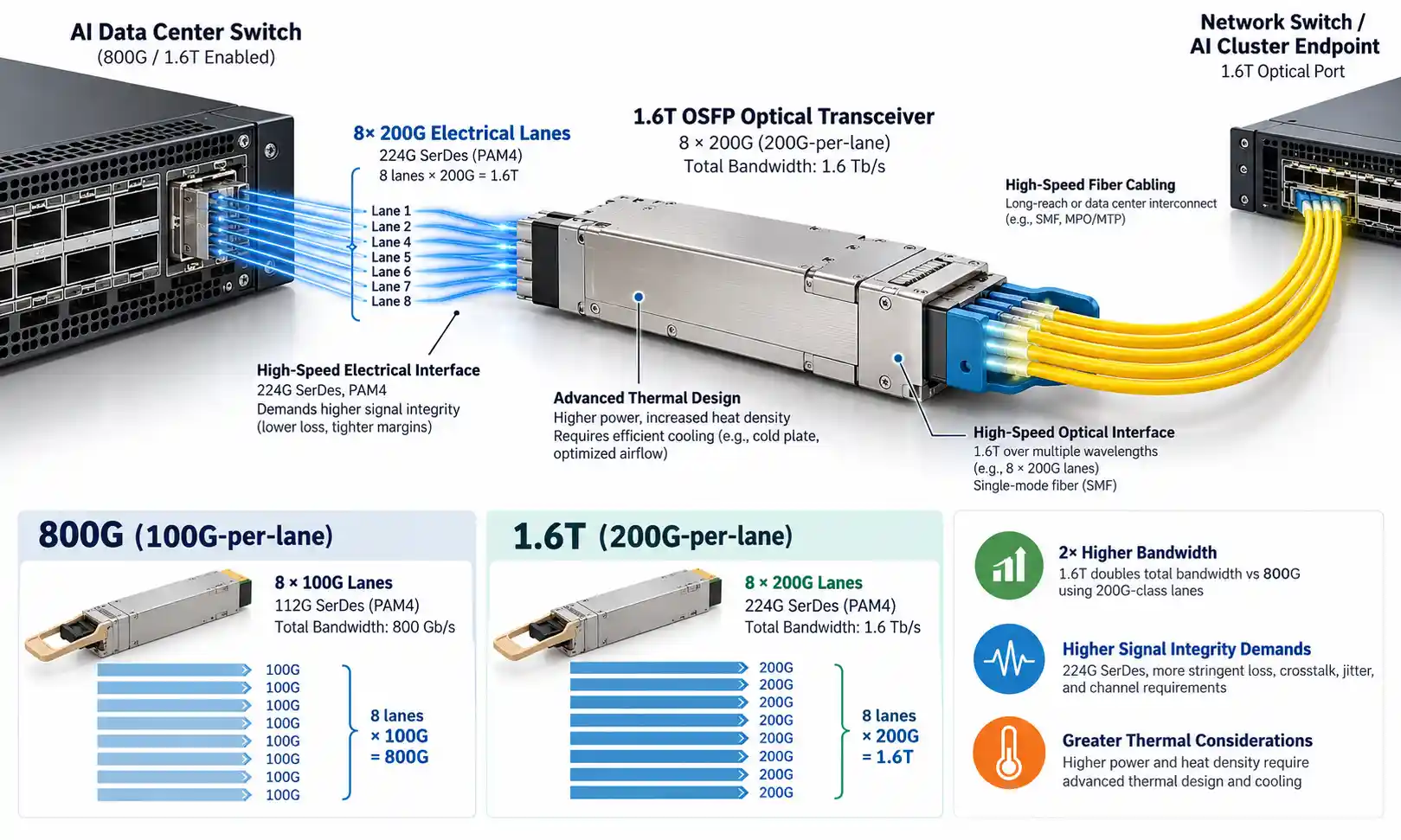
Network infrastructure decisions made today constrain options five years forward. MTP systems provide evolutionary pathways that traditional cabling cannot match. The modular architecture enables bandwidth upgrades without complete infrastructure replacement-a critical consideration as data rates advance from 100G toward 400G and 800G standards.
Migration patterns follow established progressions. Organizations typically deploy 10G access layer connectivity, 40G aggregation links, and 100G core infrastructure. Future expansions require upgrading aggregation to 100G and core to 400G. Using traditional cabling, this transition demands replacing every cable, connector, and patch panel-effectively rebuilding the entire structured cabling system.
MTP's modular construction allows simple upgrades and expansions without major infrastructure alterations. A 12-fiber trunk cable supporting four 10G connections today can support a single 40G connection tomorrow using the same physical infrastructure. Changing transceivers and breakout modules enables the bandwidth upgrade without touching backbone cabling.
A professional services firm with offices in twelve North American cities illustrates this flexibility. The company standardized on 12-fiber MTP trunk cables during a 2022 infrastructure refresh, initially operating at 10G between floors. As specific departments adopted data-intensive applications, network teams upgraded those segments to 40G by swapping MTP-to-LC breakout cassettes for direct MTP-to-transceiver connections. Total upgrade time per location averaged four hours, with zero impact on adjacent infrastructure still operating at 10G.
Educational institutions demonstrate another scalability dimension. A university system's main campus deployed MTP infrastructure across 45 buildings in 2020, initially lighting 25% of available fiber capacity. Annual enrollment growth and research program expansion gradually increased bandwidth requirements. Rather than planning for peak capacity upfront-tying up capital in unused infrastructure-the phased approach activated additional fibers incrementally, aligning capital expenditure with actual demand growth.

Polarity Management and Signal Integrity
Space efficiency means little if signal quality degrades. MTP systems maintain performance through standardized polarity management methods that ensure transmit fibers align correctly with receive fibers across the entire signal path.
Three standard polarity methods exist: Type A uses straight-through configuration with key-up to key-down connectors; Type B employs reversed polarity key-up to key-up; Type C utilizes pairs-based configuration. Each method addresses specific network architectures, though Type B dominates data center deployments due to its compatibility with most transceiver configurations.
Polarity errors represent a primary failure mode in multi-fiber installations. A single reversed fiber pair within a 12-fiber array renders the entire connection non-functional, and troubleshooting requires methodical testing of each fiber combination. Pre-terminated MTP trunk cables eliminate this failure vector through factory testing-every cable ships with optical verification confirming correct polarity and acceptable insertion loss across all fiber positions.
Signal quality extends beyond polarity into insertion loss performance. MTP Elite connectors reduce insertion loss by up to 50% compared to standard MTP and traditional MPO connectors. This improvement proves critical for extended-reach applications where accumulated loss across multiple connection points threatens link budgets.
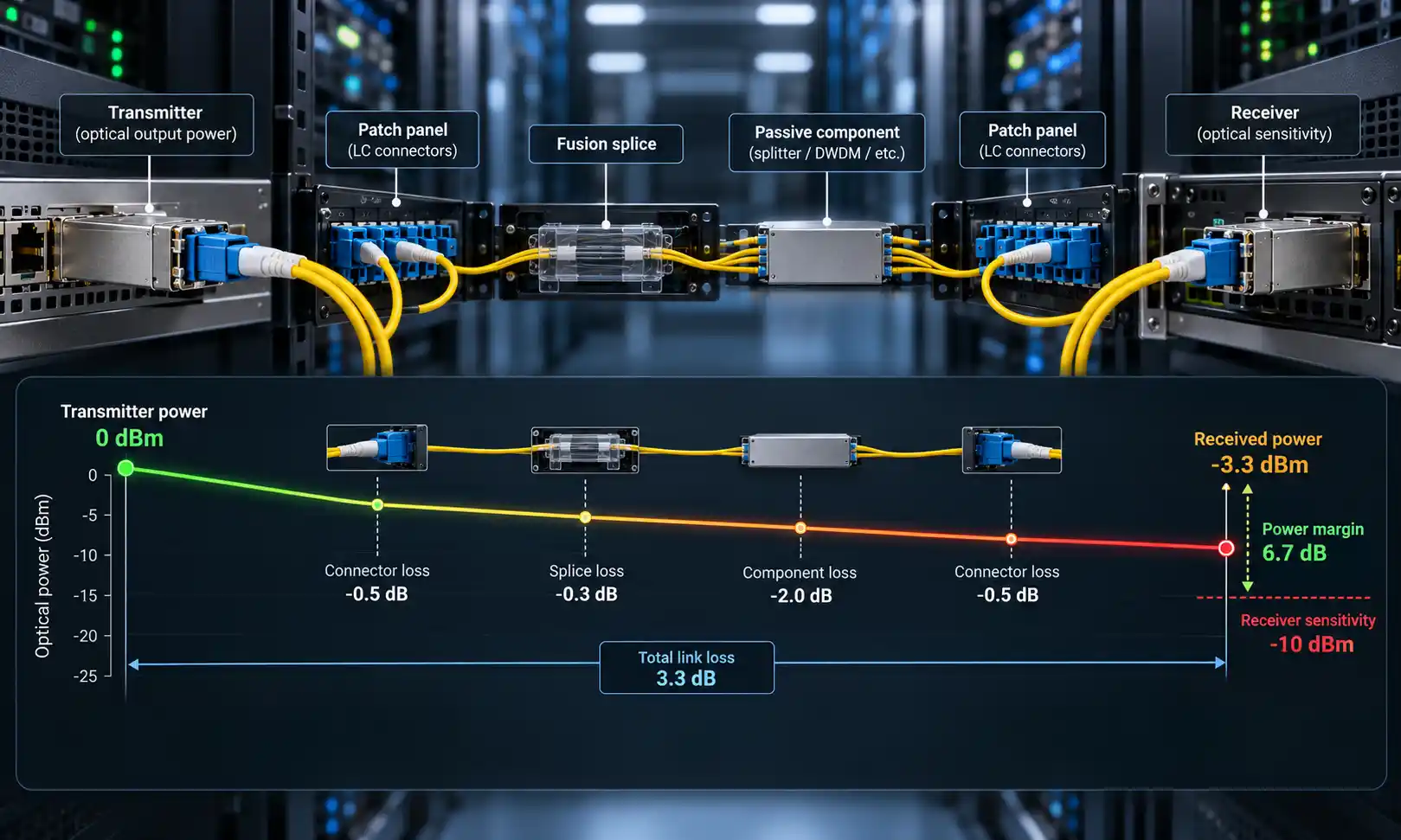
A telecommunications provider operating metro fiber networks between urban centers demonstrates this requirement. Their 40G wavelength-division multiplexing system spans 80km between aggregation points, approaching the maximum reach for 40GBASE-LR4 optics. Each connector pair contributes approximately 0.5dB insertion loss using standard MTP connectors. With six connection points across the span, total connector loss reaches 3dB-consuming nearly half the available 6.8dB link budget.
Upgrading to MTP Elite connectors reduced per-connection loss to 0.25dB, dropping total connector contribution to 1.5dB and restoring sufficient link margin for reliable operation across environmental temperature variations. This performance improvement enabled the provider to deploy planned infrastructure rather than engineering around loss limitations through dispersion compensation modules or inline amplification.
Cost-Benefit Analysis Across Deployment Scales
Space savings translate into financial returns through multiple channels. Direct costs include cabling materials, installation labor, and testing equipment. Indirect costs encompass floor space utilization, power consumption for cooling, and long-term maintenance overhead.
Material costs favor MTP systems despite higher per-connector pricing. A 12-fiber MTP trunk cable costs approximately 2.8x more than a single LC duplex cable, but replaces six duplex connections-yielding 53% material cost reduction per fiber. This advantage amplifies with higher fiber counts: 24-fiber trunks achieve 68% cost reduction compared to equivalent duplex cabling.
Labor savings compound material benefits. Pre-terminated cables eliminate thousands of hours of labor, simplifying network deployment and improving air flow while reducing cooling expenses. For large deployments, labor typically represents 60-75% of total installation cost, meaning even modest time reductions generate substantial savings.
A mid-sized enterprise with 800 employees relocated headquarters to a new facility in 2024. The network design called for 1,200 fiber connections supporting 300 network drops across four floors. Using traditional LC duplex methodology, the structured cabling contractor quoted $180,000 for materials and $320,000 for installation labor-a total project cost of $500,000.
An alternative bid using MTP infrastructure reduced material costs to $140,000 and labor to $95,000, totaling $235,000-a 53% cost reduction. The savings funded advanced features originally deferred, including fiber-to-desk connections for designated collaboration spaces and redundant uplink paths between distribution frames. The project completed two weeks ahead of schedule, enabling earlier occupancy and reducing temporary office lease costs by $40,000.
Operational expenses follow similar patterns. Reduced cable density improves cooling efficiency, directly lowering power consumption. A regional cloud provider operating five edge data centers calculated that HVAC systems consumed 38% of total facility power before infrastructure optimization. Converting high-congestion areas to MTP cabling improved airflow characteristics, reducing HVAC load by 12% facility-wide. At $0.09/kWh commercial rates and 4.5MW total HVAC draw, this translated to $425,000 annual savings across all locations.
Implementation Considerations for Existing Infrastructure
Organizations with established fiber plants face integration challenges when introducing MTP technology. Legacy systems use LC or SC connectivity exclusively, creating compatibility gaps that require bridging strategies.
Breakout cables solve this transition challenge. MTP breakout cables bridge existing 10G or 40G systems with newer 40G/100G infrastructure, featuring an MTP connector on one end and breakouts of LC connectors at the other. This enables phased migrations where backbone infrastructure converts to MTP while endpoint connections maintain LC compatibility until equipment refresh cycles enable full transition.
Hybrid architectures represent practical middle ground. Main distribution areas and inter-building links deploy MTP trunks for maximum space efficiency, while telecommunications rooms retain LC connectivity for compatibility with existing active equipment. As switches reach end-of-life, replacement units with native MTP ports eliminate breakout modules, progressively simplifying the infrastructure.
A healthcare system spanning eight hospital campuses adopted this approach during a multi-year network modernization. Core data centers converted to pure MTP infrastructure in year one, establishing high-capacity backbone connections between facilities. Years two and three focused on departmental networking equipment upgrades, gradually replacing buildings' edge switches with MTP-native models. By year four, 70% of the network operated on end-to-end MTP connectivity, with remaining LC segments concentrated in specific clinical areas where equipment lifecycles extended beyond the project timeline.
Physical space constraints in existing facilities require careful planning. Telecommunication rooms designed around traditional patch panels may lack the vertical clearance for MTP trunk cables' minimum bend radius requirements. G.657.A1 bend-insensitive fiber allows 10mm minimum bend radius, suitable for tight enclosures and sharp routing turns, but even this specification demands more generous cable management than older installations typically provide.
Renovation planning must account for these requirements. A financial institution upgrading aging regional branch locations discovered that existing wiring closets provided only 50mm clearance behind equipment racks-insufficient for traditional MTP routing. The solution involved installing slim-profile cable managers and selecting 2.0mm diameter trunk cables rather than standard 3.0mm variants, creating adequate bend radius compliance within space constraints.

Frequently Asked Questions
How much physical space do MTP systems actually save compared to traditional fiber?
High-density MTP fiber systems save more than half the cable routing space compared to traditional cabling approaches. A typical implementation reducing 288 LC duplex cables to 24 MTP trunks achieves approximately 85-90% space reduction in cable management pathways. This translates to measurably improved airflow and additional capacity for future infrastructure additions without requiring physical expansion.
Can MTP infrastructure support future bandwidth upgrades without replacement?
Yes, the modular design enables bandwidth evolution. A 12-fiber trunk cable initially supporting 40G connectivity can accommodate 100G upgrades by changing transceivers and breakout modules while retaining the same physical cabling. This future-proofing capability protects infrastructure investments as network speeds advance, avoiding the complete rewiring that traditional duplex cabling requires during major bandwidth transitions.
What installation time savings can organizations realistically expect?
Installation time reductions reach up to 75% compared to traditional fiber systems. Practical deployments typically see 60-70% time savings after accounting for project planning, testing, and documentation. A deployment requiring 80 hours using LC duplex connections generally completes in 20-25 hours with MTP infrastructure, enabling faster project delivery and reduced labor costs.
How does MTP cabling affect data center cooling efficiency?
Reducing cable density with MTP systems allows air to flow more efficiently around equipment, decreasing cooling requirements. Organizations report HVAC load reductions ranging from 8-18% in high-density areas after converting to MTP infrastructure. These savings compound over time through reduced power consumption and extended HVAC equipment lifespan due to lower runtime hours.
What are the cost implications of deploying MTP versus traditional fiber?
Despite higher per-connector costs, MTP systems typically reduce total project costs by 40-55% through material consolidation and labor efficiency gains. A $500,000 traditional fiber project often completes at $225,000-$300,000 using MTP infrastructure, with savings derived from reduced cable quantity, compressed installation timelines, and eliminated field termination labor. Operational cost reductions through improved cooling efficiency and simplified maintenance provide additional long-term value.
How do organizations manage the transition from existing LC infrastructure to MTP?
Hybrid architectures using MTP-to-LC breakout modules enable gradual migration aligned with equipment refresh cycles. Core infrastructure converts to MTP for maximum efficiency while edge connections maintain LC compatibility until switches and routers naturally reach replacement age. This phased approach avoids forced equipment upgrades while progressively capturing MTP benefits as the transition advances.
Strategic Infrastructure Planning for High-Density Environments
The decision to deploy MTP infrastructure extends beyond immediate space considerations into long-term network architecture strategy. Organizations must evaluate not only current requirements but projected growth trajectories, technology evolution timelines, and operational flexibility needs.
Capacity planning requires different methodologies for MTP versus traditional fiber. Legacy approaches size infrastructure for peak anticipated demand, installing sufficient duplex connections to accommodate maximum projected port count. This leads to substantial overbuilding since growth rates rarely match initial projections, leaving significant dark fiber capacity that ties up capital without delivering return.
MTP infrastructure enables just-in-time capacity deployment. Installing trunk cables with higher fiber counts than currently needed costs marginally more than lower counts, yet provides growth runway without additional installation projects. A 24-fiber trunk costs approximately 15% more than 12-fiber, but accommodates double the connections-enabling phased activation that aligns capital expenditure with actual bandwidth consumption rather than speculative projections.
Risk management considerations favor distributed capacity. Rather than concentrating all spare capacity in core infrastructure, MTP systems enable distributing growth headroom across the network. This approach reduces single points of failure while maintaining flexibility to redirect resources as usage patterns evolve. A manufacturing operation discovered unexpected bandwidth demands from IoT sensor deployments in production areas originally planned for minimal connectivity. Available dark fibers in existing MTP trunks enabled activation of additional capacity without rewiring, supporting the unplanned expansion within operational timelines.
The convergence of storage, computing, and network infrastructure demands creates additional planning complexity. Converged infrastructure architectures require tight integration between fiber connectivity and equipment deployment patterns. MTP systems' high density aligns naturally with blade server chassis, top-of-rack switching fabrics, and software-defined storage arrays where port densities concentrate in small physical footprints.
Key Takeaways
The evidence clearly demonstrates that MTP MTP fiber systems deliver substantial space savings across multiple dimensions. Multi-fiber connectors provide 6x density improvement over traditional duplex connections within equivalent physical space, dramatically reducing cable congestion in high-density environments. Installation time reductions approaching 75% accelerate deployment schedules while cutting labor costs through factory pre-termination and simplified field installation processes. Space efficiency improvements exceeding 50% in cable routing pathways enhance airflow characteristics, reducing cooling requirements by 8-18% in dense data center deployments. The modular architecture enables bandwidth evolution from 10G through 400G and beyond without replacing physical infrastructure, protecting capital investments against technology obsolescence. Organizations implementing MTP MTP fiber technology achieve cost reductions of 40-55% across complete projects through material consolidation, labor efficiency, and operational savings.