I'll give you the answer everyone wants: Yeah, it can. But here's what nobody tells you before you spend $40K on adapters and cassettes...
Last Tuesday I got a call from a data center manager-let's call him Dave because that's actually his name-and he's freaking out. His team just finished installing what they thought would be a "simple" MTP adapter solution. Three racks. Should've taken a day. Took them four, and half the connections aren't working.
Why? Because Dave watched a YouTube video about MTP adapters reducing complexity and figured "how hard can it be?"
Pretty hard, turns out.

The Thing About Adapters That Spec Sheets Won't Tell You
I've been elbow-deep in fiber for almost nine years. Started when 10G was still considered fast, which dates me. And the whole MTP adapter conversation has changed a lot since then, but one thing hasn't: people conflate "fewer cables" with "less complexity."
They're not the same thing.
An MTP adapter is literally just a sleeve that mates two MTP Connector ferrules together. That's it. Mechanically, it's stupid simple-two female sides (usually), alignment sleeves inside, done. The complexity isn't in the adapter itself. It's in everything around it.
Here's where it gets messy. Most people hear "MTP adapter" and think they're buying a complete solution. What they're actually buying is one component of a system that includes:
Trunk cables (which better have the right polarity)
Breakout cables or cassettes (more on this disaster in a second)
Patch panels or enclosures
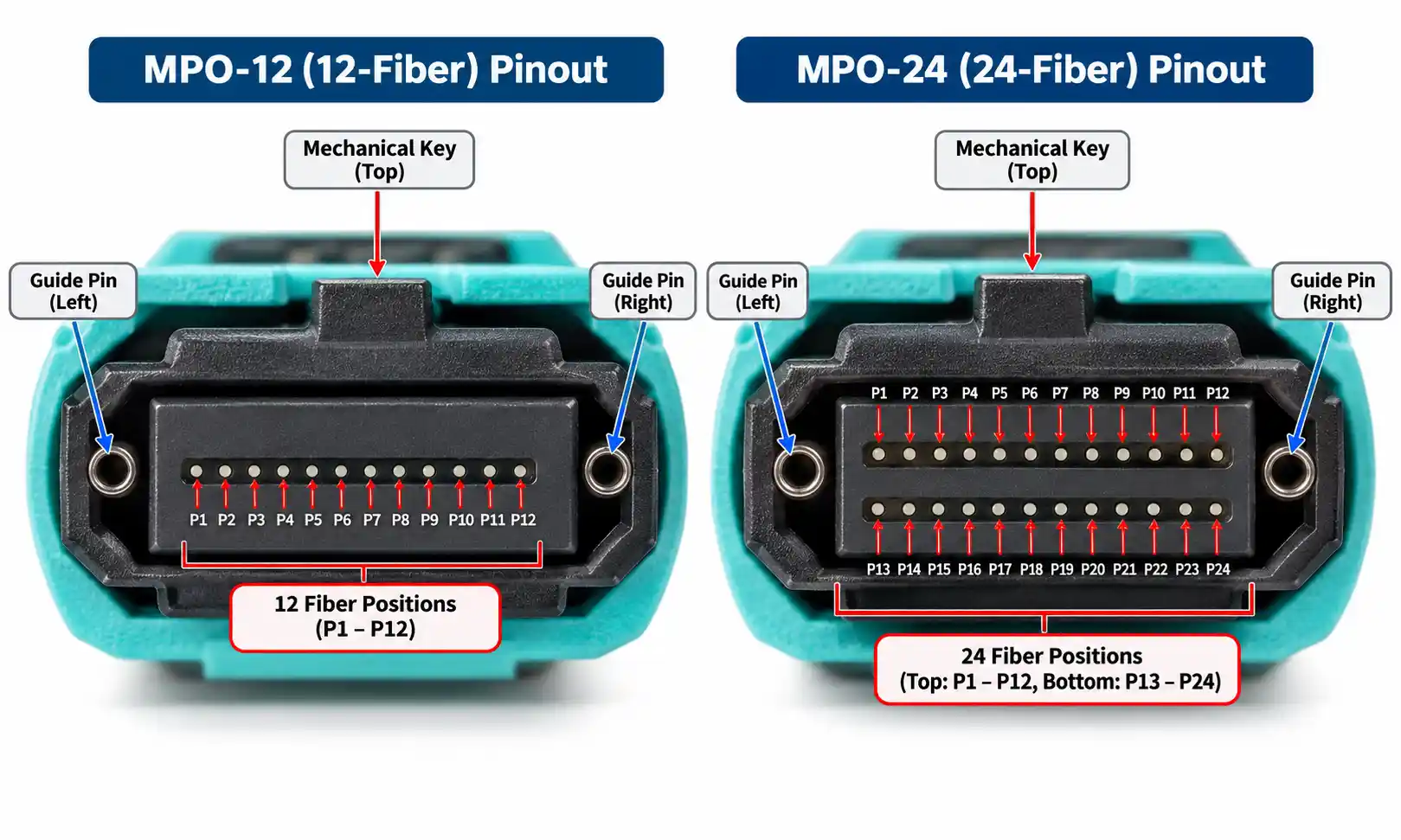
Potentially different connector types depending on whether you're doing 12-fiber or 24-fiber
And God help you if you mix up male and female connectors because your vendor sent you the wrong thing.
That Time We Accidentally Ordered $15K of Wrong Adapters
This was maybe 2019, I was working on a campus network buildout. Big university, multiple buildings, all going to be connected with OM4 trunk cables. Smart move, right? Future-proofed for 40G, 100G, whatever they'd need.
We speced out mtp cassette modules for the IDFs-the 12-fiber type because the initial deployment was 10G and we figured we'd populate them gradually. Ordered a bunch of mtp coupler adapters to go with them.
Then the switches showed up. 40G ports. QSFP+ optics with... wait for it... MTP-24 interfaces.
You see where this is going?
Our entire cassette infrastructure was 12-fiber. The switch optics needed 24-fiber connections. We ended up having to order all new cassettes, different breakout cables, and yes, different adapters. The 12-fiber mtp coupler units we'd already mounted? Useless for this deployment.
Cost overrun: about $23K once you factor in the rush shipping and labor to swap everything out.
The lesson? MTP adapters reduce complexity IF-and this is a big if-you actually understand your entire signal path from switch port to switch port. One wrong assumption about fiber count and you're screwed.
When Adapters Actually Make Your Life Easier
Okay, enough horror stories. Let's talk about when this stuff actually works.
I did an installation last summer, distributed antenna system for a stadium. Needed to run fiber to 40+ antenna nodes, all connecting back to a centralized headend. Each node needed 4 fibers (duplex pairs for redundancy).
Traditional approach? 40 separate duplex LC cable runs. That's 80 LC connectors to terminate, 40 cables to route and manage, and a patch panel that looks like someone threw a handful of fishing line at it.
What we actually did: Ran three 24-fiber trunks using mtp 24 connectors on both ends. At the headend, broke them out using cassettes to LC. At the remote ends, same thing-cassettes converting from MTP to LC for the antenna equipment.
Total installation time: Maybe 60% of what it would've been with individual cables. Cable management? Night and day difference. Three thumb-thick trunk cables vs 40 individual patch cables.
Did it reduce complexity? Hell yes. Because the complexity we eliminated-physical cable routing, termination time, connector count-was the complexity that was actually killing us on that job.
The Cassette Conversation Nobody Wants to Have
Here's something that irritates me about how MTP adapters get marketed: everyone focuses on the adapter itself and ignores the cassettes, which is where most of the actual connection magic happens.
An mtp cassette is basically a little module that converts your multi-fiber MTP connection into individual LC or SC ports. You've got the MTP side facing the backbone, LC ports facing your equipment. Inside, it's a bunch of fiber mapping that (hopefully) maintains the correct polarity.
The problem is there are different cassette types-Type A, Type B, Type C-and they handle polarity differently. Mix them up and... well, you won't have a good time.
I've seen techs grab whatever cassette is sitting on the shelf without checking the type, install it, and then spend three hours troubleshooting why the link won't come up. The adapter worked fine. The cassette was just mapping Tx to Tx instead of Tx to Rx.
And don't even get me started on the mtp 16 configuration that one vendor tried to push a few years back. Sixteen fibers. Who asked for that? Not twelve, not twenty-four, but sixteen. It died pretty quickly because nobody wanted to stock three different cassette types, but for a while there it caused a lot of confusion.

What Actually Reduces Complexity (Spoiler: It's Not Just Hardware)
You want to know what really reduces complexity in an MTP system? Documentation.
I know, boring answer. But it's true.
I've walked into data centers with beautiful MTP infrastructure-proper density, good cable management, the works-but zero documentation. Nobody knows which trunk cable goes where, what polarity method was used, or even how many fibers are in use vs available.
So when they need to add capacity, they can't use the existing infrastructure because they don't trust it. They end up running new cables alongside the MTP stuff, defeating the entire purpose.
Compare that to a facility I worked with last month. Mid-size, maybe 8 racks total. They're using MTP adapters, but they've got:
Every trunk cable labeled with source, destination, and fiber count
Polarity method documented on the patch panel
A simple Excel sheet tracking which fibers are in use
Photos of the cassette types installed in each location
When they needed to add three new switch connections, took us maybe 30 minutes. Looked at the docs, found available fibers, installed the right breakout cables, done.
That's complexity reduction. Not because the adapter is magic, but because the system is understood.
The Dirty Secret About Port Density
Marketing materials love to talk about how MTP adapters give you amazing port density. "Fit 12 connections in the space of one!" And yeah, technically true.
But here's what they don't mention: at some point, that density becomes a problem.
I was in a facility last year-won't name names-where they'd gone all-in on density. Rack after rack of high-count cassettes, everything packed as tight as possible. Looked impressive.
Then something failed. A switch port went bad, needed to replace the cassette. The tech couldn't even get their fingers in there to release the latch. Had to power down adjacent equipment just to get access.
And don't talk to me about trying to clean MTP connectors when they're mounted in high-density configurations. You need those special cleaning tools, but there's no room to actually use them properly when everything's crammed together.
Sometimes a little wasted space is actually a feature, not a bug.
So Should You Use MTP Adapters or Not?
Depends. And I know that's the most annoying answer possible, but it's true.
If you're building out a backbone infrastructure connecting multiple floors or buildings? Absolutely use MTP. The adapter and cassette approach makes total sense. You're consolidating hundreds of potential fiber pairs into manageable trunk cables.
If you're connecting switches in adjacent racks and you're only talking about 20-30 fiber connections? Maybe just use duplex LC and call it a day. The added component cost and complexity of MTP might not be worth it.
The question isn't "do MTP adapters reduce complexity?" The question is "do they reduce complexity FOR MY SPECIFIC SITUATION?"
And honestly? Sometimes the answer is no. I've ripped out MTP infrastructure, including MTP24 setups that were over-engineered for the deployment, and replaced it with simple duplex cables. Made everyone's life easier.
Things I Wish I'd Known When I Started
If you're going down the MTP adapter path, here's my actual advice:
Pick your fiber count and stick with it. Don't mix 12 and 24-fiber infrastructure unless you absolutely have to. Yes, adapters exist to convert between them, but every conversion is another point of potential failure.
Buy cleaning supplies at the same time you buy the adapters. Not later. Same time. MTP connectors are way more sensitive to contamination than LC. I've had connections fail because someone sneezed near an open adapter port. (Okay, maybe exaggerating slightly, but you get the point.)
Label everything. And I mean everything. Even if you think you'll remember. You won't.
Test your polarity before you install. Have a test jumper and verify the cassette or breakout cable does what you think it does. Testing after installation when you can't see the ferrule end faces is miserable.
Budget for training. If your team doesn't know how to work with MTP, the complexity reduction you're hoping for will evaporate the first time something needs troubleshooting.
Oh, and one more thing: keep spares on hand. Having an extra cassette or two can save your ass when someone inevitably damages a ferrule. Ordering replacements takes time. Downtime costs money.

Final Thought
MTP adapters are tools. Good tools, usually. But like any tool, they can make things better or worse depending on how you use them.
They'll reduce physical complexity-fewer cables, better density, cleaner cable management. But they might increase operational complexity if your team isn't prepared for them.
After all these years, my rule of thumb: if you're asking whether MTP adapters will make things simpler, the answer is probably yes for the installation and no for the maintenance unless you invest in training and documentation.
Make of that what you will.
By the way, I've been saying "MTP adapter" throughout this because that's what everyone calls them in the field. Technically MTP is US Conec's trademark and the generic term is MPO. But if I said "MPO adapter" half the people reading this wouldn't know what I was talking about, so... MTP it is.