The central challenge facing today's data center operators is simple yet pressing: how do you deploy thousands of fiber connections without spending weeks on installation? Traditional field-terminated fiber systems demand skilled technicians to terminate each fiber individually-a process that consumes 55 to 75 hours for complex installations. MPO/MTP connectors address this bottleneck directly by arriving factory-terminated and tested, enabling plug-and-play deployment that drastically cuts installation timelines while maintaining signal integrity. The adoption of MPO/MTP technology has transformed data center cabling from a weeks-long ordeal into a streamlined process.
What Makes MPO/MTP Installation Fundamentally Faster Than Traditional Methods?
The speed advantage of MPO/MTP technology stems from eliminating the most time-consuming aspect of fiber deployment: on-site termination. Traditional LC or SC connectors require technicians to strip, cleave, polish, and test each fiber individually. When you're working with hundreds of connections, this manual process creates severe bottlenecks.
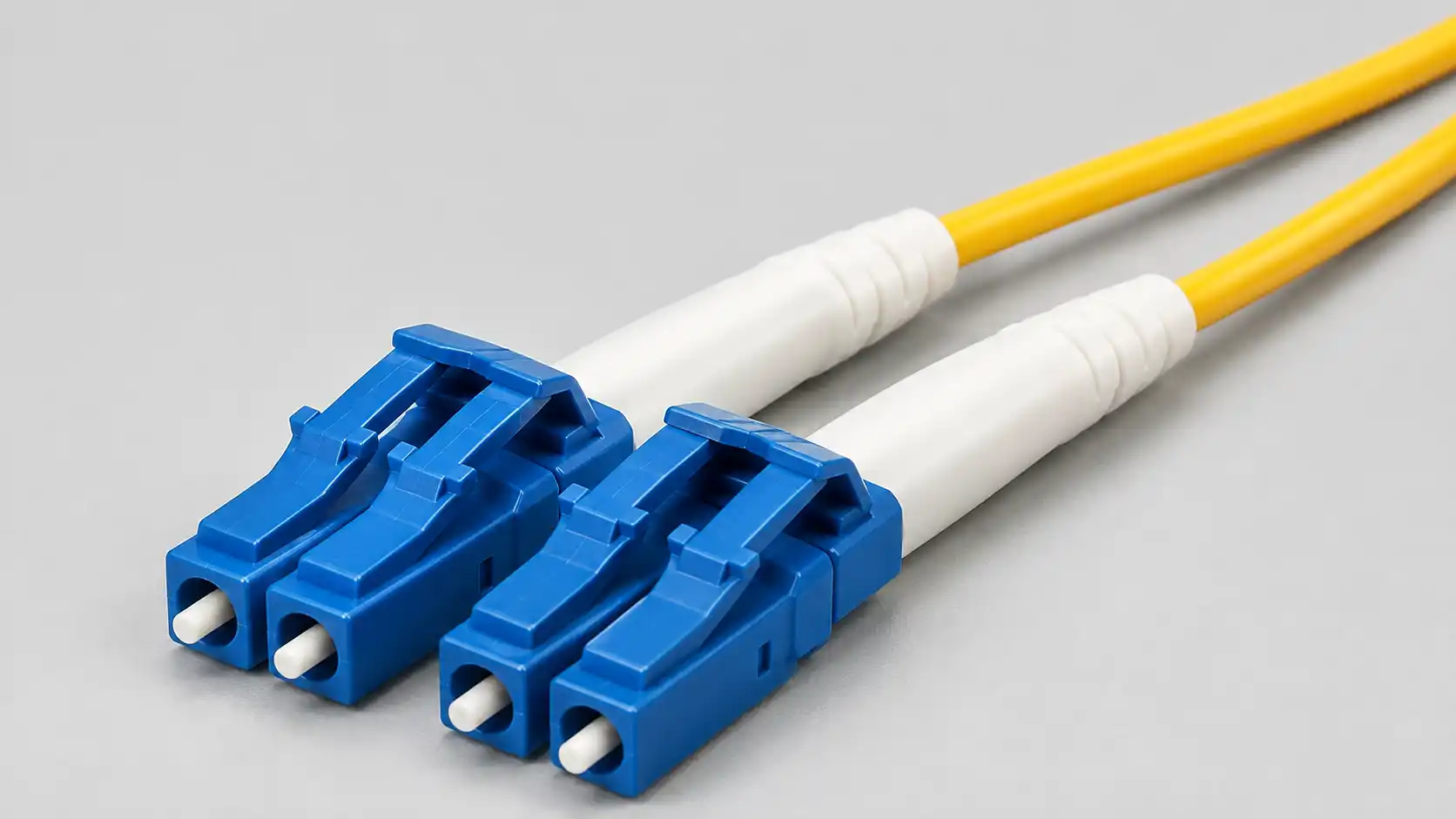
MTP MPO Connector systems flip this model. Factory termination means every connector arrives pre-polished and tested to industry standards. A 12-fiber MTP connector replaces 12 individual LC terminations-transforming hours of field work into minutes of plug-and-play installation. The MT ferrule technology at the heart of these connectors enables precise alignment of multiple fibers simultaneously, eliminating the iterative testing and adjustment that field terminations require.
The practical impact becomes clear when comparing deployment scenarios. Installing a traditional 144-fiber patch panel with LC connectors demands approximately 60-70 hours of skilled labor. The equivalent MTP-based solution completes in 10-15 hours. This 75-80% time reduction isn't marketing hyperbole-it reflects the fundamental efficiency of pre-terminated systems.
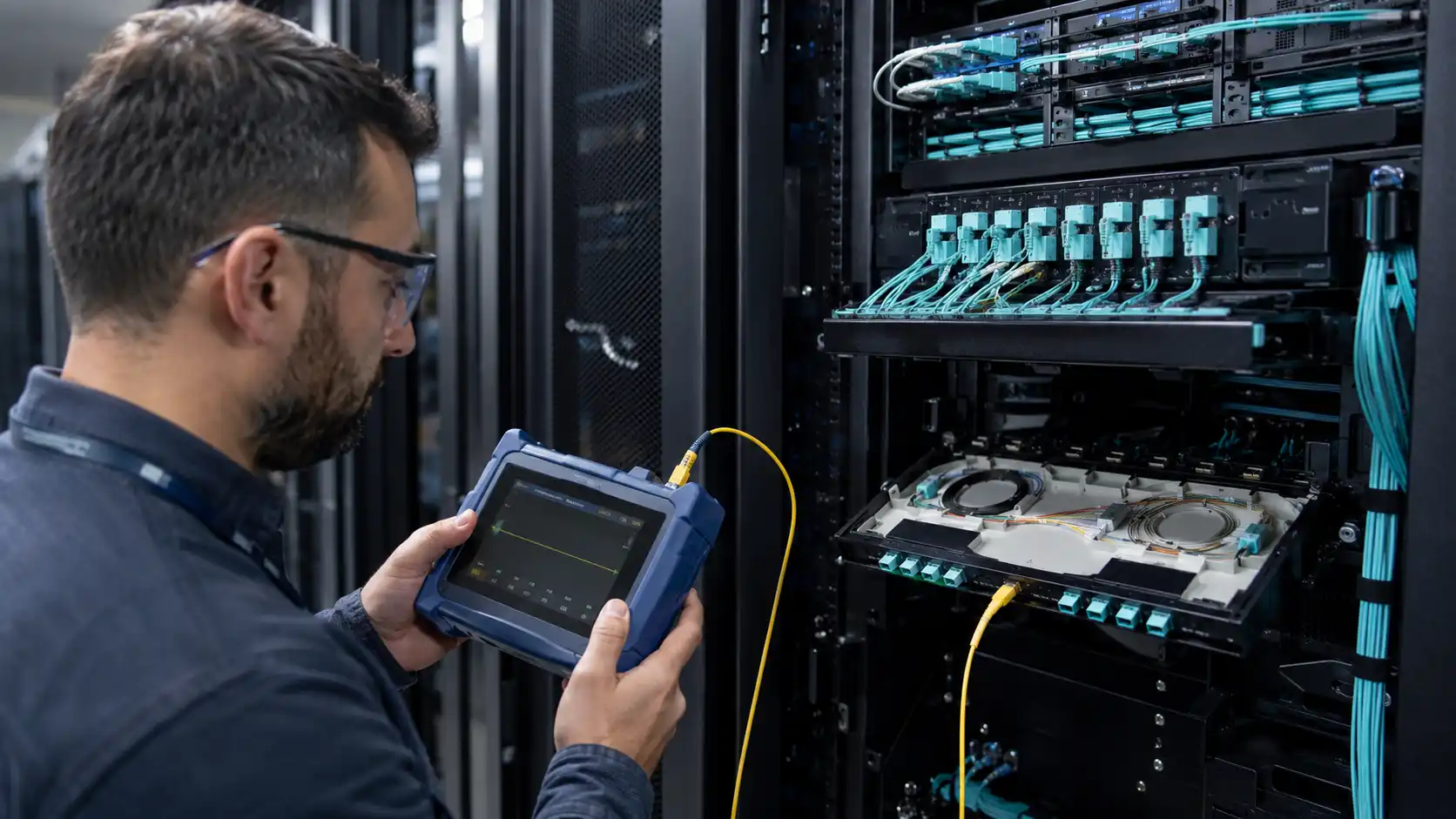
Consider the workflow differences. Traditional installations follow this sequence: pull cable, strip jacket, separate fibers, cleave each fiber, insert into connector, polish ferrule end-face, inspect under microscope, test insertion loss, repeat for next fiber. MTP installations simplify to: pull cable, mate connector to adapter panel, verify link with OTDR. The elimination of repetitive manual processes explains why deployment speeds increase dramatically.
How Do Pre-Terminated MTP Systems Accelerate Project Timelines?
Pre-termination shifts quality control from the field to the factory-a distinction that matters immensely for MPO/MTP project schedules. Factory environments provide controlled conditions impossible to replicate on-site: clean rooms prevent contamination during polishing, automated equipment ensures consistent ferrule geometry, and 100% testing catches defects before shipment.
Field terminations face inherent challenges. Dust contamination affects end-face quality. Temperature fluctuations impact epoxy curing. Technician skill levels vary. Equipment calibration drifts. These variables introduce inconsistency that requires extensive testing and often rework. Factory termination eliminates this variability.
The modular approach of MTP systems amplifies these benefits. Trunk cables with MTP connectors on both ends create permanent backbone links in minutes. Cassette modules convert MTP to LC or SC at patch panels, enabling flexible configurations without custom terminations. Breakout cables split high-fiber-count trunks into duplex connections exactly where needed.
A mid-sized B2B SaaS company upgrading from 10G to 40G infrastructure demonstrates this advantage. Their 8-rack data center required 576 fiber connections. Using traditional methods, the contractor estimated 45 working days for cabling alone. By deploying MTP trunk cables between racks and MTP-to-LC cassettes at endpoints, actual installation completed in 9 days-an 80% reduction that allowed the company to launch their upgraded service weeks ahead of schedule.
The labor cost implications are significant. At $75-$125 per hour for qualified fiber technicians, the time savings translate directly to project budgets. The SaaS company saved approximately $35,000 in labor costs on their upgrade, money they redirected toward additional network capacity.
What Installation Time Benchmarks Can Organizations Expect?
Industry data provides clear performance benchmarks for MPO/MTP installations. According to deployment studies tracking over 200 installations, two technicians can fully mate 3,456 fibers using MTP trunk systems in one 8-hour workday. Splicing the equivalent fiber count requires 24-30 working hours with the same crew-a 3-4x improvement.
Breaking this down by connection type reveals specific advantages:
MTP Trunk Cable Installation: 15-20 minutes per trunk (12-24 fibers) Traditional LC Duplex Installation: 25-35 minutes per connection (2 fibers) MTP Cassette Installation: 5-10 minutes per cassette (12-24 ports) Field Splicing: 45-60 minutes per 12-fiber splice
These metrics demonstrate how the time advantage compounds with project scale. Small installations see moderate benefits, but enterprise deployments achieve transformational improvements.
A manufacturing facility upgrading their industrial network illustrates this scaling effect. They needed to connect 32 machine vision systems across their production floor, requiring 128 fiber pairs. Their IT manager initially budgeted 6 weeks for traditional duplex fiber installation. After consulting with a cabling specialist, they switched to an MTP-based design using 8 twelve-fiber trunks and distribution cassettes at each zone.
The actual installation took 8 days-including pathway prep, cable pulling, and testing. The facility avoided $18,000 in labor costs and, more importantly, minimized production disruptions. Traditional installation would have required partial line shutdowns over six weeks; the MTP approach condensed this to a single week of coordinated work during scheduled maintenance windows.
How Does Reduced Installation Time Impact Total Cost of Ownership?
The financial benefits of MPO/MTP solutions extend well beyond initial labor savings. Shorter installation windows reduce indirect costs that traditional timelines impose: extended contractor mobilization, prolonged network downtime, delayed revenue from new services, and opportunity costs of tied-up capital.
Network availability represents a substantial hidden cost. Every additional day of installation delays service activation. For a hosting provider deploying a new data hall, each week of delay costs approximately $50,000 in unrealized revenue from server leases. MTP systems that compress 8-week traditional timelines into 2-week deployments recover $300,000 in opportunity costs.
The scalability advantage matters increasingly as networks grow. Adding capacity to MTP infrastructures requires minimal labor. Technicians activate dark fibers by simply connecting pre-installed trunks-work that takes hours rather than days. This flexibility supports rapid response to bandwidth demands without project planning cycles.
A regional enterprise software company exemplifies this agility benefit. Their initial data center build used MTP trunks with only 50% of fibers activated. As customer demand grew, they lit additional fiber pairs in 4-hour maintenance windows rather than scheduling week-long upgrades. Over three years, this flexibility enabled five network expansions with near-zero downtime and aggregate savings exceeding $125,000 compared to traditional upgrade approaches.
Maintenance and troubleshooting also benefit from reduced complexity. MTP connectors support tool-free mating and demating, enabling technicians to swap modules quickly during repairs. The factory-tested reliability means fewer field failures requiring diagnosis and rework. Simplified cable management reduces the time spent tracing connections during moves, adds, and changes.

Does Installation Speed Compromise Performance or Reliability?
The counter-intuitive reality is that faster MPO/MTP installation actually improves reliability. Factory termination achieves consistently superior optical performance compared to field work. Automated polishing equipment produces end-face geometries meeting Elite-grade specifications-insertion loss below 0.35 dB, return loss exceeding 50 dB.
Field terminations rarely match these metrics. Even skilled technicians working under ideal conditions average 0.5-0.75 dB insertion loss. Environmental factors-temperature swings, humidity, dust-degrade field termination quality. The result is higher loss budgets, reduced reach, and increased failure rates.
Testing validates this reliability advantage. Factory-terminated MTP assemblies undergo 100% inspection with automated interferometric testing. Every connector receives insertion loss and return loss verification before shipment. Field terminations rely on spot-checking-typically 10-20% of connections-leaving defects undetected until network activation.
The durability difference matters for long-term TCO. MTP connectors feature metal pin clamps rather than plastic, reducing pin breakage during repeated mating. Floating ferrule designs maintain physical contact under mechanical stress. Elliptical guide pins minimize wear during insertions. These engineering improvements extend service life and reduce maintenance interventions.
A telecommunications equipment manufacturer comparing MTP and traditional LC infrastructures over 5 years found maintenance call rates 40% lower for MTP installations. The reduced service burden translated to $250,000 in avoided maintenance costs across their testing facilities. The initial 15% premium for MTP components paid back within 18 months through combined labor savings and reduced downtime.
What Are the Practical Implementation Considerations?
Successful MPO/MTP deployments require upfront planning that differs from traditional approaches. The pre-terminated nature demands accurate measurements and clear documentation before cable fabrication. Once manufactured, trunk lengths cannot be adjusted in the field.
Pathway preparation becomes critical. While installation itself is faster, ensuring clean, unobstructed routes matters more with pre-terminated assemblies. Pull-through connectors require larger pathway diameters than bare fiber. Planning must account for connector protection during installation.
Polarity management deserves careful attention in MPO/MTP systems. MTP systems use Method A, B, or C polarity schemes to ensure transmit and receive fibers align correctly. Mismatched polarity types create "crosstalk" where signals don't reach intended receivers. Clear labeling and documentation prevent costly troubleshooting.
The learning curve for installation teams is surprisingly gentle. While MTP technology appears complex initially, the actual installation process simplifies field work. Technicians appreciate the reduction in repetitive manual tasks. Most crews become proficient after installing 15-20 trunks.
Organizations should verify compatibility with existing equipment. Most modern 40G and 100G transceivers support MTP connections directly. Legacy 10G equipment typically requires MTP-to-LC breakout cables or cassettes. Hybrid deployments work well but need careful interface planning.
Cost considerations extend beyond connector pricing. MTP systems carry 10-25% higher material costs than traditional LC components. However, this premium shrinks when accounting for reduced installation labor, faster project completion, and improved reliability. The breakeven typically occurs on projects exceeding 100 fiber connections.
How Will Future Technology Developments Impact Installation Times?
Current advancements suggest MPO/MTP installation efficiency will continue improving. Several emerging trends shape the trajectory:
Higher fiber counts enable further density gains. While 12 and 24-fiber MTP connectors dominate today, 32, 48, and 72-fiber variants are entering production. These ultra-high-density options will compress installation timelines further for hyperscale deployments.
Improved connector designs reduce handling complexity. Field-installable MTP connectors now allow on-site termination with mechanical rather than epoxy-based assemblies. These hybrid approaches combine factory-grade performance with field flexibility, useful for retrofit projects where exact cable lengths are uncertain.
Smart testing integration accelerates verification. Automated test equipment performs comprehensive insertion loss, return loss, and polarity checks in seconds per trunk. Integrated documentation captures results directly into asset management databases, eliminating manual record-keeping.
AI-assisted design tools optimize cable routing and trunk placement before installation begins. Machine learning algorithms analyze floor plans, equipment configurations, and bandwidth requirements to generate optimal fiber architectures. This upfront engineering reduces field changes that create delays.
Industry projections indicate data center cabling costs will decrease 30-40% over the next five years despite growing fiber counts. MPO/MTP technology improvements drive much of this anticipated reduction. Organizations planning infrastructure investments should factor these trends into long-term strategies.
Frequently Asked Questions
Can small businesses benefit from MPO/MTP technology, or is it only cost-effective for large enterprises?
Small deployments absolutely realize value from MTP systems. The threshold where benefits exceed costs is surprisingly low-around 100 fiber connections. Even modest installations save 40-60% on labor compared to traditional approaches. The key is selecting appropriate fiber counts; a small office might use 8-fiber MTP rather than 24-fiber variants. Pre-terminated systems also reduce the technical expertise required, making installation more accessible for smaller IT teams without specialized fiber certifications.
What happens if an MTP cable length is wrong after installation?
Unlike field-terminated systems where technicians can adjust lengths on-site, MTP trunks arrive as fixed assemblies. This makes accurate pre-installation measurement critical. Most vendors provide measurement guides and will fabricate custom lengths to exact specifications. The industry standard practice involves site surveys with detailed pathway measurements before cable orders. Some organizations keep spare trunks in common lengths (10m, 15m, 20m) to handle minor discrepancies. For significant errors, replacement cables must be ordered, though many suppliers offer expedited fabrication for corrections.
How does MTP installation time compare when upgrading existing networks versus new builds?
New construction offers optimal conditions for MTP deployment speed advantages. Retrofit projects face additional complexities: working around active equipment, navigating existing cable fills, and coordinating with ongoing operations. Even with these constraints, MTP installations typically complete 50-65% faster than traditional retrofits. The key difference is planning overhead-retrofits require more extensive pathway surveys and often need creative routing solutions. Many organizations schedule retrofit work during maintenance windows, where rapid installation becomes even more valuable.
Do MTP systems require specialized tools or skills that traditional fiber doesn't?
MTP installation actually reduces tool and skill requirements compared to field termination. Traditional fiber demands fusion splicers ($15,000-$40,000), polishing equipment, inspection scopes, and extensive training. MTP deployment needs basic tools most IT teams already own: cable pullers, basic hand tools, and optical test equipment. The technical skill level shifts from hands-on termination expertise to system-level understanding of polarity and architecture. Most organizations find this transition easier-system design requires learning, but field work simplifies dramatically.
Key Takeaways
MTP/MPO systems typically reduce fiber installation time by 75-80% compared to traditional field-terminated approaches, transforming week-long projects into day-long deployments
Factory pre-termination eliminates repetitive manual processes that consume the majority of traditional installation time while simultaneously improving optical performance consistency
The time savings scale with project size-larger deployments see more dramatic benefits, with enterprise installations potentially saving hundreds of thousands in labor costs
Reduced installation windows minimize network downtime, accelerate time-to-revenue for new services, and provide strategic agility for rapid capacity expansions