MTP cables combine multiple fiber strands in a single connector, delivering up to 12 times the density of traditional fiber connections while reducing installation time by 75%. These high-performance multi-fiber solutions address the space constraints and bandwidth demands of modern data centers through factory-terminated, plug-and-play connectivity that supports speeds from 40G to 400G and beyond.
The Density Advantage That Changes Data Center Economics
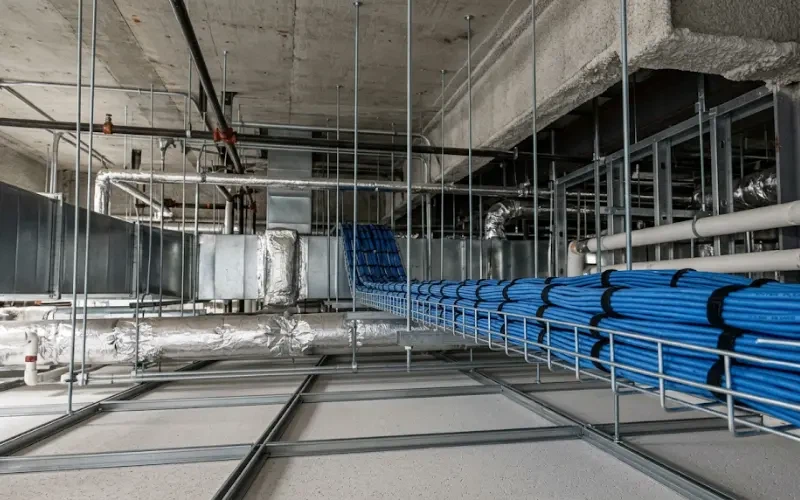
Traditional fiber optic cabling creates a physical problem. When you're running hundreds or thousands of individual fiber connections, you face cable congestion that blocks airflow, complicates troubleshooting, and wastes valuable rack space. MTP Cable systems flip this equation.
A single MTP connector handles 12 or 24 fibers in roughly the same physical footprint as a standard SC connector with just two fibers. Data centers can now fit 864 fibers in a 1U housing compared to 144 fibers with traditional duplex connections-six times the capacity in the same space. This density improvement isn't just about saving space. Better cable organization improves cooling efficiency by allowing air to flow more freely around equipment racks, which directly reduces cooling costs in facilities where temperature management consumes significant power.
The space savings translate to real infrastructure flexibility. When you can pack more connectivity into each rack unit, you're either fitting more equipment in existing facilities or reducing the physical footprint required for new builds. Either way, the economics shift in your favor.

Installation Speed Creates Operational Value
Installation time matters more than many budget spreadsheets account for. Before MTP connectors emerged, terminating and testing 144 fibers typically required two skilled installers working a full day. With MTP connectors, that same job now takes just a few hours.
The math gets more dramatic when you look at larger deployments. Pre-terminated MTP cable installations take 2 to 3 hours compared to 55 to 75 hours for field-terminated traditional cables. That time compression delivers several benefits beyond the obvious labor cost savings.
First, you're minimizing downtime during upgrades or expansions. Every hour of installation work in an active data center carries risk and opportunity cost. Cutting installation time from days to hours means less disruption to running services.
Second, factory termination dramatically reduces field errors. When technicians terminate individual fibers on-site, each connection point introduces potential mistakes-incorrect polarity, contaminated end faces, poor alignment. MTP cables arrive pre-terminated and tested from the factory, with polarity and performance already verified. You're essentially outsourcing precision work to controlled manufacturing environments where quality control is consistent.
Third, the skill requirements change. Field termination of fiber optic cables demands trained specialists who understand proper cleaving, polishing, and testing procedures. MTP's plug-and-play approach requires less specialized skill, making installation more accessible while reducing dependence on expensive expert labor.
Technical Performance Where It Counts
The engineering improvements in MTP connectors show up in performance metrics that matter for high-speed networks.
MTP Elite connectors reduce insertion loss by up to 50% compared to standard MTP connectors and traditional MPO connectors. Lower insertion loss means signals maintain strength across connections, which becomes increasingly critical as network speeds climb and fiber paths involve multiple connection points.
The connector design includes several mechanical enhancements. MTP connectors feature floating ferrules that maintain physical contact between mated components even when housings shift relative to each other. This addresses a major weakness in earlier multi-fiber connectors where cable strain or vibration could degrade optical contact and introduce signal loss.
Guide pin design also evolved. MTP connectors use elliptical-shaped guide pins that significantly reduce wear and debris generation from repeated connections. Traditional chamfered pins can chip ferrule material over time, introducing contaminants into the optical path. The elliptical design minimizes this problem, extending connector life and maintaining performance through more mating cycles.
Material choices reflect similar attention to durability. MTP connectors use metal pin clamps instead of plastic, preventing pins from breaking during cable mating. The difference seems minor until you're troubleshooting connectivity issues caused by damaged alignment pins-then the improved mechanical robustness becomes very relevant.
Scaling Networks Without Starting Over
Data center bandwidth requirements don't decrease. The infrastructure you install today needs to accommodate tomorrow's higher speeds without requiring complete replacement.
MTP cabling supports this evolution naturally. MPO/MTP systems are pre-terminated and support speeds from 10G up to 100G, with both cable types using connectors the same size as SC while supporting 12 or 24 fibers per cable. As network equipment upgrades to higher speeds, the physical cabling infrastructure remains unchanged. You're replacing transceivers and switches, not rewiring the entire facility.
Breakout cables provide another flexibility dimension. MTP-LC breakout cables enable older 10G equipment to connect with newer 40/100G systems by using an MTP connector on one end and multiple LC connectors on the other. This allows gradual migration where budget or operational requirements prevent immediate wholesale upgrades. Legacy equipment continues operating while new high-speed infrastructure gets added incrementally.
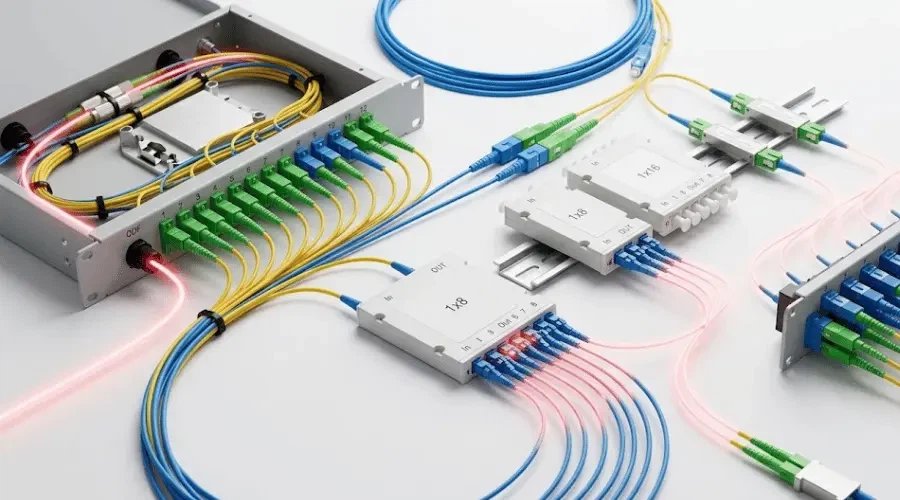
The modular approach extends to system reconfiguration. Pre-manufactured adapter panels and cassettes guide fiber strands into organized segments rather than requiring meticulous manual arrangement of every fiber. When you need to change configurations-add capacity, reroute connections, or repurpose sections of the network-the organized structure makes changes faster and less error-prone.

Cost Analysis Beyond Purchase Price
Direct comparison of cable costs misses the complete financial picture. MTP systems typically carry higher upfront material costs than traditional fiber cabling, but the total cost of ownership tells a different story.
Installation time for MPO/MTP solutions can be reduced by up to 75% compared to traditional fiber cabling systems, which translates directly to labor cost savings. When you're paying skilled technicians by the hour, time compression has immediate bottom-line impact.
Ongoing maintenance costs also shift favorably. Better cable organization makes troubleshooting faster. When issues arise, technicians can trace connections more easily through structured MTP systems than through tangled masses of individual fiber cables. Faster troubleshooting means shorter downtime, which matters considerably more than cable costs in environments where service interruptions carry financial penalties.
The space efficiency creates economic value that doesn't show up on cable invoices. Every rack unit you save by using higher-density MTP cabling is either rack space available for additional equipment or reduced physical data center footprint. In facilities where space costs measure in hundreds of dollars per square foot annually, these savings accumulate substantially over multi-year planning horizons.
Cooling efficiency improvements add another cost dimension. Reducing cable volume with higher-density MTP cables allows air to flow more efficiently around data centers, reducing cooling requirements. Better airflow means less energy consumption for cooling systems, which represents a significant operational expense in any data center.
The AI and High-Performance Computing Angle
The explosive growth in AI workloads and high-performance computing clusters is reshaping data center connectivity requirements. These applications demand something traditional cabling struggles to deliver efficiently.
As AI clusters encompass hundreds or thousands of interconnected GPUs operating at 100 Gigabit speeds and above, demand for multimode and singlemode MPO/MTP connectors has reached unprecedented levels. GPU interconnects require extremely high bandwidth with minimal latency, and MTP's multi-fiber architecture delivers exactly this combination.
The density advantages become even more pronounced in AI infrastructure. Modern GPU servers often require multiple high-speed connections per unit. Cabling these systems with traditional fiber approaches creates immediate congestion problems. MTP cables consolidate these connections into manageable bundles that maintain the organized structure needed for effective system management.
MTP/MPO cables offer superior scalability and flexibility compared to Direct Attach Cables and Active Optical Cables, with MTP/MPO connectors supporting multiple fiber strands in a single connector for higher density cabling and easier upgrades. This flexibility proves essential in AI environments where hardware configurations evolve rapidly as new GPU generations arrive and workload requirements shift.
Market Momentum and Industry Adoption
Industry deployment patterns reveal strong preference trends. Optical fiber captured 60% of the data center wire and cable market in 2024 and is forecast to grow at an 8.3% CAGR through 2030. Within fiber deployments, MTP/MPO connectivity continues gaining share as speeds increase and density requirements intensify.
Hyperscale facilities held 49% of the data center wire and cable market in 2024, and these facilities overwhelmingly favor MTP connectivity solutions. When companies like Microsoft, Google, and AWS-who operate at massive scale and optimize costs ruthlessly-standardize on MTP cabling, that signals clear technical and economic advantages that other organizations can leverage.
The supply chain reflects this demand shift. Manufacturers are experiencing extended lead times due to unprecedented demand for MPO/MTP connectivity as data centers implement AI clusters. While supply constraints create procurement challenges, they also confirm that MTP represents the direction modern infrastructure is heading.
Edge computing deployments are following similar patterns. Edge and micro data center deployments are expanding at a 9.1% CAGR through 2030, and these facilities face even more acute space constraints than traditional data centers. MTP's density advantages become even more valuable when you're working with limited physical space in edge locations.
Practical Implementation Considerations
Making MTP systems work requires attention to several technical details that don't matter with simple fiber pairs.
Polarity management becomes essential. The industry primarily uses three polarity configurations-Type A (straight-through), Type B (reversed), and Type C (pair-flipped)-to ensure transmitters properly connect to receivers across multi-fiber connections. Getting polarity wrong means signals go to incorrect destinations, creating connectivity failures that can be frustrating to diagnose. Most implementations standardize on one polarity method throughout the facility to prevent confusion.
Proper testing procedures differ from single-fiber approaches. You need equipment that can verify all fiber channels in an MTP connector simultaneously while checking polarity correctness. Visual inspection of connector end faces remains critical-contamination affects MTP connectors just as severely as traditional fibers, but you're inspecting arrays of fiber ends rather than individual strands.
When establishing MPO connections, you must use one male connector and one female connector plus an MPO adapter-male-to-male or female-to-female connections don't function because fibers won't align without pins. This seems obvious once you understand the mechanical design, but it's a common mistake that causes immediate deployment problems.
Cable management infrastructure needs adaptation for MTP systems. Standard fiber management products don't always accommodate the different form factors and bend radius requirements. Planning the physical routing and support structure requires understanding MTP cable specifications and limitations.
Making the Decision
Choosing MTP cables makes sense when specific conditions exist in your environment. High-density requirements practically demand MTP-if you're implementing 40G or faster speeds with significant port counts, traditional fiber approaches become impractical. The cable management challenges and space consumption make alternatives unworkable.
Organizations planning infrastructure with 3-5 year horizons should consider where network speeds are heading. If your current deployment uses 10G or 25G but you'll likely need 40G or 100G within your planning window, installing MTP infrastructure now avoids a second round of cabling projects. The physical infrastructure remains compatible even as electronic equipment upgrades.
Budget considerations need realistic assessment. MTP systems cost more for materials but less for installation labor. The crossover point depends on local labor rates and project complexity. Large installations with many connection points favor MTP economics; small deployments with just a few connections may not generate sufficient labor savings to offset higher component costs.
Existing infrastructure creates path dependencies. If your facility already uses traditional LC or SC connections extensively, wholesale conversion to MTP may not justify disruption costs. However, new sections or expansions provide natural opportunities to implement MTP while maintaining compatibility with existing systems through breakout cables and adapter panels.

Understanding What You're Actually Getting
MTP is a specific implementation of the broader MPO connector standard. MTP is a registered trademark of US Conec for an enhanced version of MPO connectors that complies with MPO specifications but includes multiple engineered product improvements for better optical and mechanical performance. All MTP connectors are MPO connectors, but not all MPO connectors meet MTP specifications.
The distinction matters because performance characteristics differ. Generic MPO connectors may use plastic pin clamps, chamfered guide pins, and lack floating ferrules-all features that MTP specifically improves. When specifications call for "MPO" connectivity, verify whether you're getting genuine MTP components or generic alternatives. The price difference reflects real performance and durability variations.
Connector configurations also require attention. MTP systems come in various fiber counts-8, 12, 16, 24, and higher options exist. The most common configurations use 12 or 24 fibers, which align with standard transceiver interfaces for 40G and 100G applications. Matching fiber counts between cables, cassettes, and transceivers is essential for system compatibility.
Single-mode versus multimode fiber selection follows the same logic as traditional fiber but applies at scale. Single-mode MTP cables support longer distances and higher speeds but cost more. Multimode works well for shorter data center distances at lower cost. Most data center implementations use multimode for internal connectivity and reserve single-mode for building-to-building links or particularly long runs.
The Operational Reality
Day-to-day management of MTP-based infrastructure differs from traditional fiber systems in ways that affect operational efficiency. The higher density and multi-fiber nature create both advantages and complications.
Troubleshooting becomes more structured but also more complex. When a single MTP connection fails, you're potentially affecting 12 or 24 fiber paths simultaneously. The organized structure helps isolate problems to specific trunk cables or breakout points, but you need appropriate testing equipment to diagnose issues within multi-fiber assemblies. Visual fault locators and power meters designed for MTP systems become essential tools.
Documentation assumes greater importance. With traditional fiber, you might track individual fiber pairs through handwritten labels or basic spreadsheets. MTP systems demand more rigorous documentation to maintain understanding of which fibers within each trunk cable serve which connections. Polarity tracking and port assignments require systematic recording. Organizations that neglect documentation quickly find themselves confused about connectivity relationships.
Physical handling requires more care. MTP connectors are more mechanically complex than simple LC or SC connectors. The multiple fibers, alignment pins, and precision ferrules mean damage from rough handling has larger consequences. Training staff on proper MTP handling and cleaning procedures becomes necessary-you can't treat these cables with the casual approach that might work for rugged patch cords.
Inventory management changes when you stock MTP components. You need to maintain various configurations-different fiber counts, different polarities, different lengths. A traditional fiber inventory might stock just a few types of patch cables in various lengths. MTP inventory requires tracking more variables, which demands better inventory systems and more careful procurement planning.
Choosing MTP cables ultimately hinges on whether their advantages align with your specific operational context. For high-density environments running modern speeds, the benefits in installation efficiency, space utilization, and performance make MTP systems increasingly difficult to justify avoiding. The initial complexity of implementation gives way to long-term infrastructure advantages that support evolving network requirements.
Frequently Asked Questions
What speeds do MTP cables support?
MTP cables support network speeds from 10G through 400G, with the same physical infrastructure accommodating different speeds as networking equipment upgrades. The multi-fiber design enables parallel optics that achieve higher aggregate bandwidth than traditional fiber pairs.
Can I use MTP cables with existing LC equipment?
Yes, through MTP-to-LC breakout cables and adapter cassettes. These interface components convert between the multi-fiber MTP connector and individual LC connectors, allowing gradual migration and compatibility between new and existing infrastructure.
How do I know if I need Type A, B, or C polarity?
Type selection depends on your network architecture and equipment requirements. Most data centers standardize on Type B polarity for simplicity, but specific transceiver and equipment specifications may dictate particular polarity requirements. Consult equipment documentation and maintain consistency throughout your installation.
Are MTP connectors more fragile than regular fiber connectors?
MTP connectors are more complex but engineered for durability. The metal pin clamps and floating ferrule design actually improve mechanical robustness compared to generic alternatives. However, proper handling and cleaning procedures remain essential-the precision alignment requires protection from contamination and physical damage.