What is Cat6?
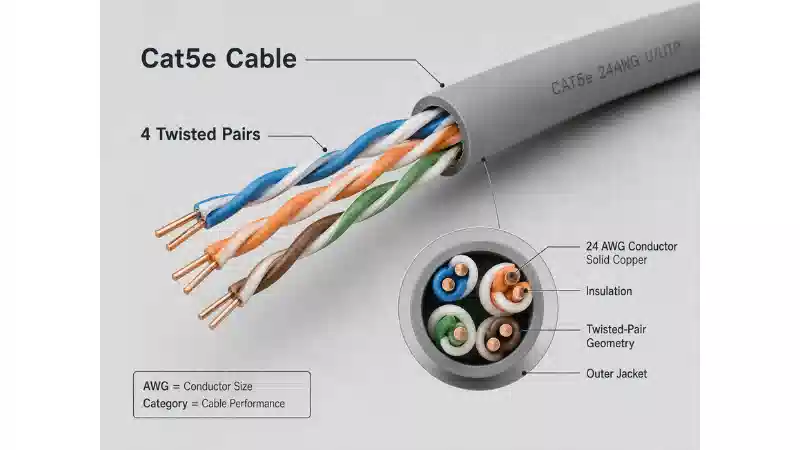
Cat6 is the abbreviation of Category 6 network cable. Its predecessor is Cat5e network cable. Compared with Cat5e, Cat6 adds a cross-plastic core and uses a thicker plastic cladding. The added plastic core can isolate the crosstalk between internal wire pairs, and the thicker plastic cladding can better resist external EMI interference.
This type of copper cable has superior performance, with a maximum transmission rate of up to 10Gbps, which is 10 times that of Cat5e. The cost of Cat6 cable with the same shielding is only about 30% higher than that of Cat5e cable.
In summary, for today's gigabit network conditions, cat6 cable is the most cost-effective.
What is fiber optic?
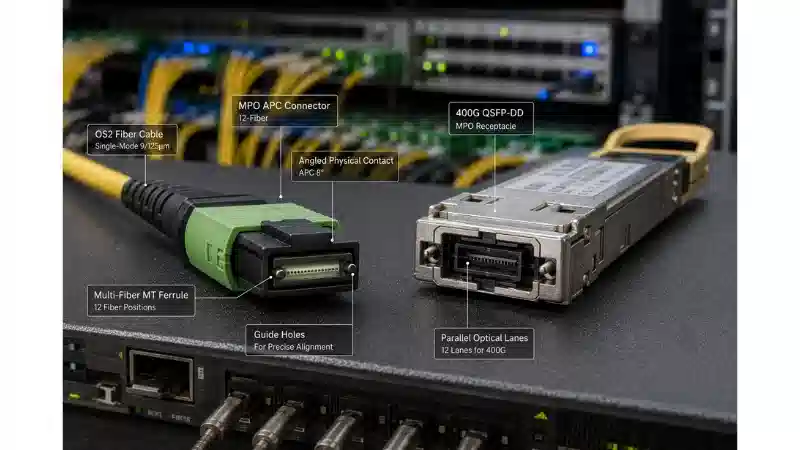
The core of a fiber optic cable is made of glass or plastic, which is naturally resistant to electromagnetic interference. Compared to copper cables, fiber optic cables are smaller and lighter. Fiber optic cables have superior data transmission speeds because data signals are transmitted in the form of light pulses in fiber optic cables. Most importantly, fiber optic cables can transmit over long distances, such as several kilometers and tens of kilometers. In contrast, the maximum transmission distance of copper cables is limited to 100 meters.
Cat6 vs. Fiber: What's the difference?
Transmission distance
The maximum transmission distance of single-mode fiber at 1Gps is 180km, while the maximum transmission distance of Cat6 cable at 1GBPS is 100m.
Transmission rate
The maximum transmission rate of Cat6 cable is 10Gbps, while the maximum transmission rate of fiber optic cable is 40Gbps or even 80Gbps.
Cost
In general, fiber optic cable is more expensive than cable because it is made more precisely. The price of a 100-meter single-mode fiber optic patch cord on our official website is about twice that of a 100-meter Cat6 network patch cord, and the price of a multi-mode fiber optic patch cord will be more expensive.
Future-oriented
For now, cat6 network cable technology will not be further upgraded, and the transmission speed will not increase, unless you choose a higher-grade network cable, such as cat7, cat7a, cat8, etc. According to the current trend of network transmission speed, cat6 network cable can no longer meet the needs of higher speeds in the future.
Anti-interference
Copper is a metal conductor. Electrons flowing in copper generate electromagnetic fields, which are easily interfered by external electromagnetic fields. Even shielded CAT6 cables are strong enough to completely shield electromagnetic interference. In contrast, optical fiber uses the principle of total reflection of light to transmit signals and is not affected by electromagnetic interference.
Cat6 vs. optical fiber: How to choose?
If your home only needs gigabit speed and has a limited budget, then Category 6 network cable will be the best choice. However, optical fiber is the trend of the future. If you want higher speed and longer laying distance, optical fiber will be more suitable.