The following is an analysis from four dimensions: technical principles, system architecture, application scenarios and cutting-edge progress:
1. Technical principles: the cornerstone of polarization multiplexing and anti-interference capabilities
Birefringence effect and polarization maintenance mechanism
Polarization-maintaining fiber introduces a strong birefringence effect through geometric structure design (such as panda type and bow tie type), so that the propagation constants of two orthogonal polarization states differ significantly (the beat length can be as short as several millimeters). This design can lock the polarization state of the optical signal in a specific axis and suppress polarization mode coupling caused by interference such as external stress and temperature changes. For example, Changfei's small mode field polarization-maintaining fiber (mode field diameter 4μm) achieves a single-link splicing loss of ≤0.22dB by optimizing the waveguide structure, meeting the high-sensitivity coupling requirements of silicon photonic chips and lithium niobate modulators.
Physical basis of polarization multiplexing technology
In 1.6T systems, polarization multiplexing (PDM) is the core means to double the spectral efficiency. Polarization-maintaining fiber uses a stable birefringence axis to ensure that the signals of the two orthogonal polarization states (X/Y axis) do not interfere with each other during transmission. For example, Huawei's coherent optical communication system uses ePDM-QPSK modulation to modulate two independent 100G signals to X/Y polarization states respectively. After transmission through polarization-maintaining fiber, the receiving end uses a polarization beam splitter to restore the original signal.
Polarization Mode Dispersion (PMD) Suppression
The PMD of ordinary optical fiber will cause random changes in polarization state, limiting the transmission rate. Polarization-maintaining fiber reduces the PMD coefficient to below 0.01ps/√km (conventional single-mode fiber is about 0.1ps/√km) through a strong birefringence effect, thereby supporting ultra-long distance (such as more than 1000km without electrical relay) transmission required by the 1.6T system. For example, in China Mobile's 800G hollow-core fiber test network in Shenzhen-Dongguan, the PMD tolerance was increased by 3 times through the collaboration of polarization-maintaining fiber and DSP technology.


2. System architecture: full-process adaptation from device to link
Cooperative design of optical module and polarization-maintaining fiber
Silicon photonics integration technology: Yilanwei's silicon-based hybrid integrated optical engine adopts heterogeneous integration of silicon nitride and thin-film lithium niobate, and achieves low-loss coupling (insertion loss ≤ 0.3dB) through polarization-maintaining fiber, supporting single-wave 400G modulation rate.
Low-power DSP chip: Accelink's 1.6T OSFP224 DR8 module is equipped with a 3nm DSP chip. After the signal transmitted through the polarization-maintaining fiber is processed by DSP, the bit error rate can be controlled below 1E-15, meeting the stringent requirements of AI training clusters.
Anti-interference optimization of optical fiber links
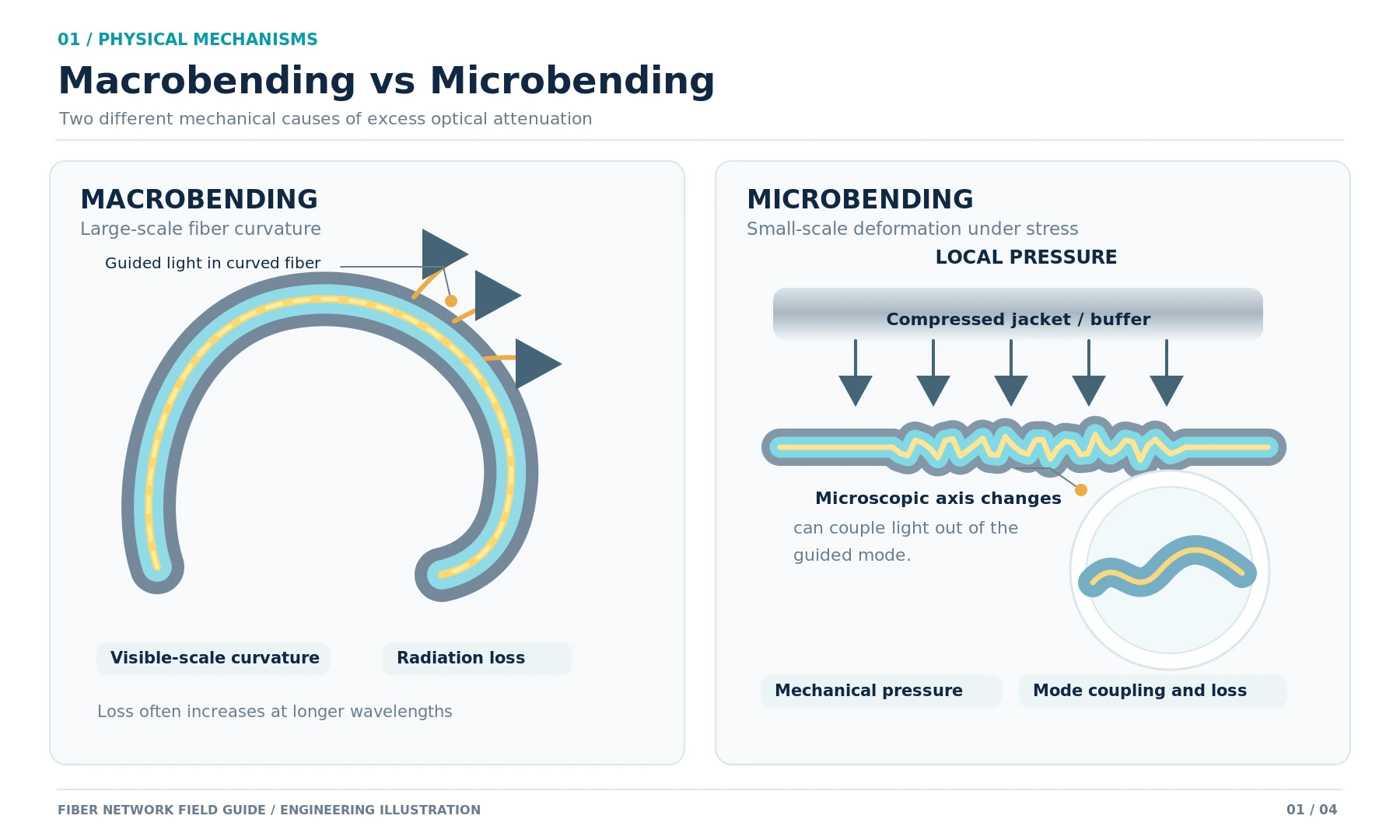
Bending performance: Changfei's R5mm bend-resistant polarization-maintaining fiber has a macro-bending additional loss of <0.1dB under 10 turns of 5mm bending radius, which is suitable for high-density wiring in data centers.
Temperature stability: The thermal expansion coefficient of polarization-maintaining fiber matches the coating material, and the polarization extinction ratio fluctuation is less than 1dB in the range of -40℃~+85℃, ensuring the stability of intercontinental submarine cables.
Complementary applications with hollow-core fiber
In the stage when hollow-core fiber is not yet fully mature, polarization-maintaining fiber is still the mainstream choice for 1.6T systems. For example, China Mobile's G.654.E ultra-low-loss fiber combined with polarization-maintaining jumpers has achieved a single-fiber 80T capacity between eight hub nodes, providing reliable physical layer support for the 1.6T system.
3. Application scenarios: Full coverage from data centers to backbone networks
Internal interconnection in data centers
Short-distance scenarios: Polarization-maintaining fiber combined with VCSEL optical modules can extend the 400G transmission distance from 30m to 1km, meeting the high-density interconnection requirements between computer buildings in intelligent computing centers.
Liquid cooling: The temperature resistance of polarization-maintaining fiber supports a fully immersed liquid cooling solution. At an energy efficiency of PUE≤1.05, a single cabinet can support a 200kW heat dissipation load.
Metro and backbone network transmission
Long-distance non-electrical relay: The low PMD characteristics of polarization-maintaining fiber combined with the phase compensation algorithm of DSP can achieve a single-wave 1.6T signal transmission over 1000km on G.654.E fiber without the need for an electric relay station.
Ultra-wide spectrum expansion: Polarization-maintaining fiber supports expansion to the E/S band (1360~1530nm). Combined with the 24THz theoretical bandwidth of hollow-core fiber, ultra-large-scale transmission of 1.6T×24 waves in a single fiber can be achieved in the future.
Special communications and military fields
The anti-electromagnetic interference characteristics of polarization-maintaining fiber make it irreplaceable in military communications such as radar and sonar. For example, the 1550nm coherent wind laser radar uses a polarization-maintaining fiber link, which can achieve a wind speed measurement accuracy of 0.1m/s in a complex electromagnetic environment.
4. Frontier progress: material innovation and system-level optimization
Research and development of new polarization-maintaining fibers
Photonic crystal polarization-maintaining fibers: Through the design of air hole arrays, the birefringence can be increased to the order of 10^-3, supporting higher-order modulation formats (such as 128QAM).
Fluoride polarization-maintaining fibers: achieve ultra-low loss (<0.01dB/km) in the infrared band (2~5μm), providing a new path for astronomical observation and quantum communication.
Integration with AI technology
Intelligent PMD compensation: Credo's 1.6T DSP chip integrates an AI algorithm, which can monitor the polarization state changes of polarization-maintaining fibers in real time, dynamically adjust compensation parameters, and reduce the system bit error rate by 50%.
Optical computing architecture: Polarization-maintaining fiber combined with silicon photonic neuron chip can build an optical domain neural network and achieve ultra-low power reasoning of 0.6W/Gbps.
Standardization and industry chain collaboration
The China Communications Standards Association (CCSA) is formulating standards such as "Technical Requirements for Polarization-Maintaining Fiber" to promote the standardization of interfaces between polarization-maintaining fiber and silicon photonic modules and thin-film lithium niobate modulators. For example, Yilanwei's 45-degree convex fiber array has achieved low-loss fusion with polarization-maintaining fiber (loss < 0.1dB), laying the foundation for large-scale mass production.
5. Challenges and future trends
Cost and scale bottleneck
The manufacturing process of polarization-maintaining fiber is complex, and the cost is 3 to 5 times that of ordinary single-mode fiber. In the future, it is necessary to reduce costs through technologies such as photonic crystal fiber and preform drawing automation.
Competition with hollow-core fiber
The nonlinear effect of hollow-core fiber is extremely low, and the theoretical transmission capacity is more than 10 times that of solid-core fiber. However, the PMD problem of hollow-core fiber has not been completely solved, and polarization-maintaining fiber will still dominate the 1.6T market in the short term.
Technology evolution direction
Ultra-high-speed modulation: Combining 200Gbaud baud rate and 128QAM, the single-wave capacity can exceed 1.6T, and polarization-maintaining fiber needs to further improve the polarization extinction ratio (>30dB).
Quantum communication: The polarization state stability of polarization-maintaining fiber can be used for quantum key distribution, and in the future it may be combined with quantum relay technology to build a global quantum communication network.
Through the above technical path, polarization-maintaining fiber is upgrading from a "polarization state guardian" to an "ultra-high-speed communication enabler", providing solid physical layer support for the commercial deployment of 1.6T Ethernet.