In today's rapid development of things, optical fiber communication has achieved the development of the fifth generation of optical fiber from now on. It has experienced OM1 / OM2 / OM3 / OM4 / OM5 fiber. Under the promotion of many factors, OM5 fiber has shown good performance. Prospects. Let us review the development process of optical fiber communication and look forward to the future development trend of OM5 optical fiber.
The first generation optical fiber communication system
1966-1976 was the development stage of optical fiber from basic research to practical application. At this stage, a multimode (0.85μm) optical fiber communication system with a short wavelength of 850nm and a low rate of 45 MB / s and 34 MB / s was realized. In the case of an amplifier, the transmission distance can reach 10km.
The second generation optical fiber communication system
From 1976 to 1986, the research goal was to increase the transmission rate and increase the transmission distance, and vigorously promote the development stage of the application of optical fiber communication systems. At this stage, the optical fiber has developed from multimode to single mode, and the operating wavelength has been developed from a short wavelength of 850nm to a long wavelength of 1310nm / 1550nm, and a single-mode optical fiber communication system with a transmission rate of 140 ~ 565 Mb / s has been achieved without relay amplifiers. The lower transmission distance can reach 100km.
The third generation optical fiber communication system
From 1986 to 1996, the stage of research on new technology of optical fiber was to take super large capacity and super long distance as research goals. At this stage, a 1.55μm dispersion shifted single-mode optical fiber communication system is realized. The optical fiber uses external modulation technology (electro-optical device) and its transmission rate can be as high as 10 Gb / s, and the transmission distance can be as high as 150km without a relay amplifier.
The fourth generation optical fiber communication system
1996-2009 was the era of synchronous digital system optical fiber transmission network. The optical fiber communication system introduced optical amplifiers, thereby reducing the need for repeaters, and using wavelength division multiplexing technology to increase the optical fiber transmission rate (up to 10Tb / s) Up to 160km.
Note: In 2002, ISO / IEC 11801 officially promulgated the standard grade of multimode optical fiber, which classified the multimode optical fiber into OM1, OM2 and OM3 optical fiber. In 2009, TIA-492-AAAD formally defined OM4 optical fiber.
The fifth generation optical fiber communication system
The optical fiber communication system introduces the optical soliton technology, which uses the nonlinear effect of the optical fiber to make the pulse wave resist the dispersion while maintaining the original waveform. 1570nm extends to 1300nm ~ 1650nm. In addition, at this stage (2016), OM5 fiber was officially launched.
Future development of OM5 fiber
With the rapid development of optical fiber communication systems and the popularity of optical fiber use, data center integrated wiring has set off a heat wave all over the world and is gradually moving towards high-speed connections. At present, most data centers are mainly based on the 10G transmission rate, and some large data centers or most data centers (aware of high-speed development) have gradually begun to shift to 40G and 100G.
If the optical fiber needs to withstand 40G / 100G transmission rate, which requires high transmission capacity of the optical fiber. In the face of high speed requirements, OM1, OM2, OM3, and OM4 fiber cannot meet its requirements. In general, OM5 fiber has a great advantage in performance. It can reduce the number of parallel fibers by at least four times. Only two-core fibers (not eight-core) can sustain 40Gb / s and 100Gb / s transmission rates. The rate may even be as high as 400G / s, 800G / s. In this way, OM5 fiber not only reduces the number of fibers, but also achieves a higher transmission rate. In addition, the geometry of OM5 fiber (50μm core wire, 125μm cladding) is the same as the shape of OM3 and OM4 fiber, which is backward compatible with these types of fiber.
The trend of optical fiber communication has undoubtedly played a huge role in promoting the construction of data centers. The excellent transmission performance of optical fibers is the top priority of high-speed data center construction. Series OM5 optical fiber data center construction solutions, for example, CommScope developed LazrSPEED OM5 broadband multimode fiber integrated wiring solution to improve data transmission rate. OM5 multimode fiber. In 2017, R & M launched OM5 optical fiber solution (NetScale ultra-high density optical cable management solution R & M inteliPhy) at the Data Center World Conference.
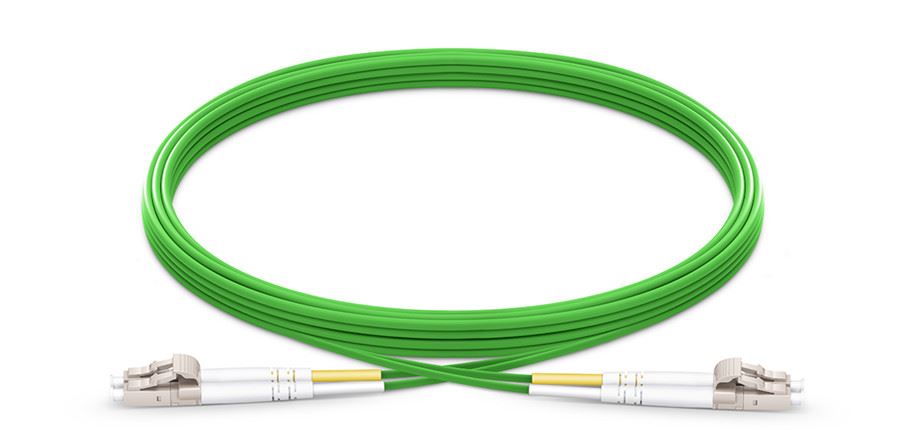
In order to meet the needs of high-speed data center construction, FOCC has specially developed OM5 bandwidth multi-mode optical fiber, which uses short wavelength division multiplexing (SWDM) technology to multiplex multiple signals on a single fiber for transmission, reducing the number of parallel fibers by at least four times The bandwidth is increased by at least four times to achieve high-speed transmission rate while saving a lot of space.

Conclusion
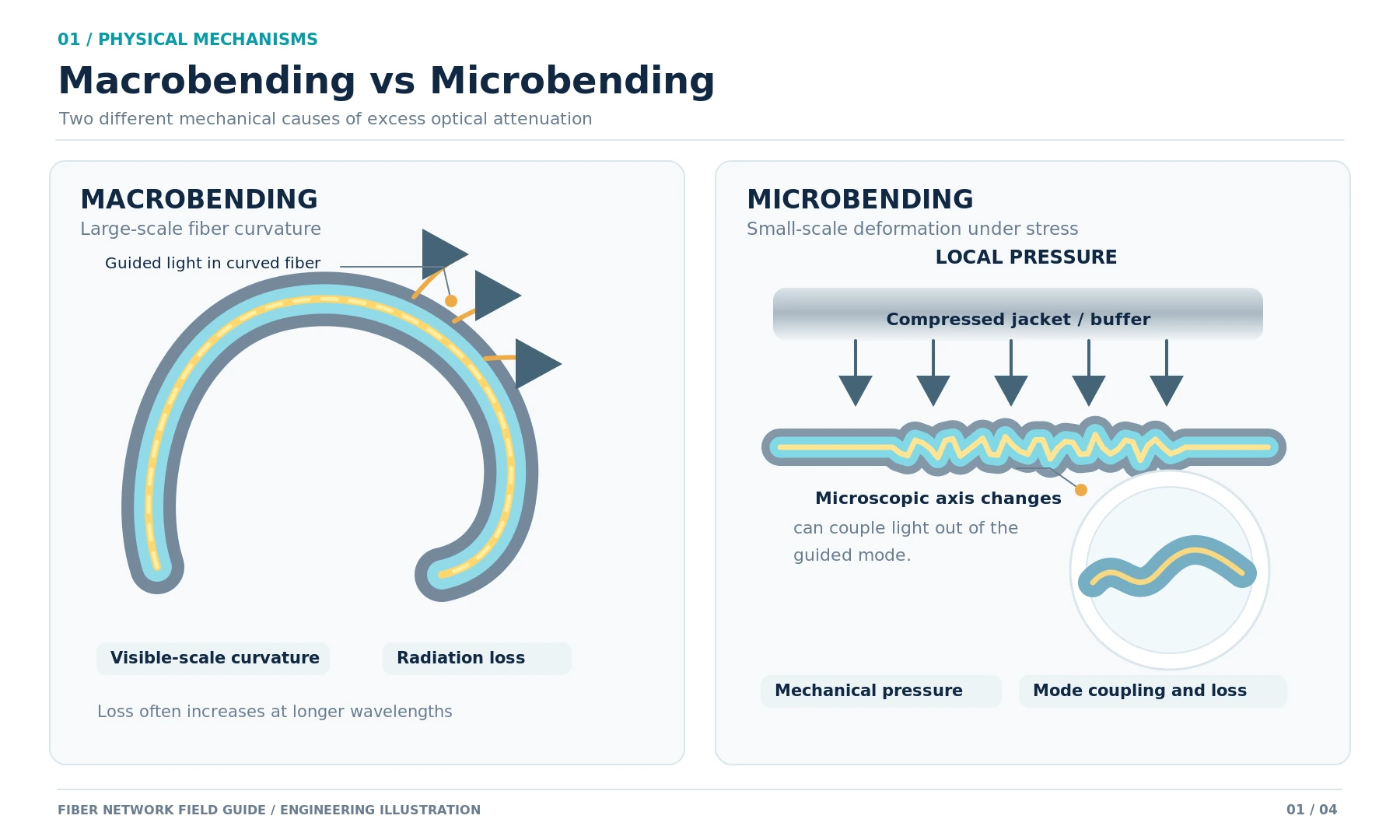
Although the penetration rate of OM5 fiber has not been high since its launch in 2016, with the evolution of data center network requirements towards higher performance and greater capacity, it is believed that OM5 fiber will be popularized in data centers in the future. FOCC OM5 fiber not only has strong short-wavelength division multiplexing technology, but also uses a combination of graded refractive core and groove design, which can effectively reduce light scattering and light signal leakage when the fiber is bent, ensuring stable transmission of network signals