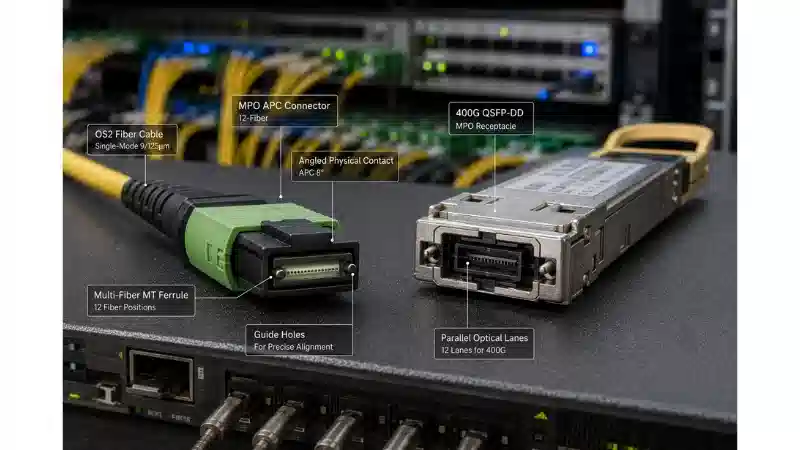
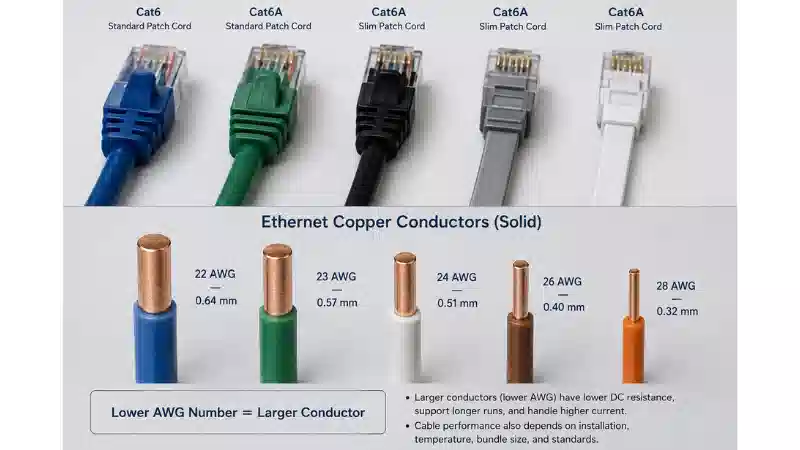
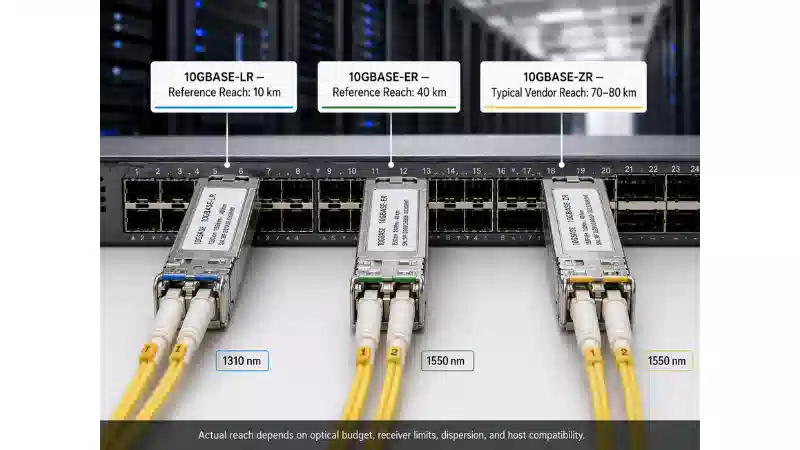
In fiber optic communication systems, the light wave frequency is far higher than that of radio waves, and the fiber loss is far lower than that of coaxial cables/waveguides. Therefore, compared with cable/microwave communication, fiber optic communication has the following characteristics:

Very wide permissible frequency band and very large transmission capacity: Currently, the light wave frequency is 10³10⁴ times higher than microwave frequency, and the communication capacity can increase by 10³10⁴ times; theoretically, two optical fibers can transmit millions of telephone calls and hundreds of television programs.

Very small loss, very long repeater spacing, and very small bit error rate:
The transmission loss of quartz optical fiber at 1.31μm and 1.55μm wavelengths is 0.50dB/km and 0.20dB/km respectively (or even lower), and the repeater spacing is much longer than that of cables/waveguides;
1.55μm dispersion-shifted single-mode system: repeater spacing reaches 150km at 2.5Gbit/s and 100km at 10Gbit/s;
With optical fiber amplifiers and dispersion compensation fiber, repeater spacing can be increased, and the bit error rate is extremely low (10⁻⁹ or even smaller);
Suitable for long-distance trunk networks and access networks, which is the main reason for low system cost per kilometer per channel.
Light weight and small volume: Optical fibers are lightweight and have small diameter; optical cables with the same number of cores are much lighter and smaller in volume than electrical cables.

Good anti-electromagnetic interference performance, no "crosstalk":
Optical fiber is a non-metallic light-guiding fiber, with no induced voltage or current in strong electromagnetic field/nuclear explosion electromagnetic interference environments, which is beneficial for transmitting dynamic images;

Can be laid close to high-voltage transmission lines and electrified railways without interference, suitable for factory automation and monitoring systems, areas with many thunderstorms, aircraft, and high-security military and government units;
Signals are confined to transmission within the optical fiber, with no crosstalk between fibers, and are not easily wiretapped.
Abundant resources, conservation of non-ferrous metals and resources, good economic benefits:
The core and cladding materials of optical fiber are silicon dioxide (abundant resources, low price), while cables require copper and aluminum (limited resources);

Manufacturing 1×10⁴km of single-tube coaxial copper wire consumes 2.64×10¹¹J of energy, equivalent to 9×10⁵kg of standard coal;
Large capacity, long repeater spacing, metal conservation, convenient installation, and significant economic benefits.
Corrosion-resistant and not afraid of moisture: Water ingress/moisture in the outer protective layer of optical fiber does not affect light transmission (metal wires would ground/short circuit), no spark hazard, and good safety.