How do fiber optic communications cables really work?
At its most basic, a communications optical fiber cable is composed of glass strands, like threads, about the diameter of human hair, each of which can transmit messages modulated onto light waves at the speed of light. They offer greater bandwidth than copper wire cable and have become the go-to option to meet the demands of the age of the internet where large amounts of data (e.g., streaming apps) must be distributed to thousands of subscribers, miles away and instantaneously. Fiber optic cables are not only found in communications systems, they are also used in industrial networks, sensing, and avionics applications.
The first step to understanding how fiber optic works is to understand what happens when you send light through air or water. Light travels as a wave. When it passes through the air, the wave loses some energy and becomes more spread out. The result is that the light beam gets wider and less intense. This loss of intensity is called attenuation.
When light enters the water, however, it does not lose any energy. Instead, it bends around the water molecules, making it easier for the light to pass through. Water also slows down the light's velocity by a factor of 1/v2 where v is the speed of light in water. This means that light traveling through water will travel farther than if it were traveling through air. Optical fibers use these principles to carry data from one point to another.

Most optical fibers in use today consist of glass strands (the core) made of pure silica surrounded by cladding material made of doped silica. The core is so small that only a single ray of light at a particular wavelength can travel through to the end. These are called single-mode fibers. In this design, the cladding layer has a lower refractive index and acts like a mirror to keep the mode inside the core. This phenomenon is known as total internal reflection.
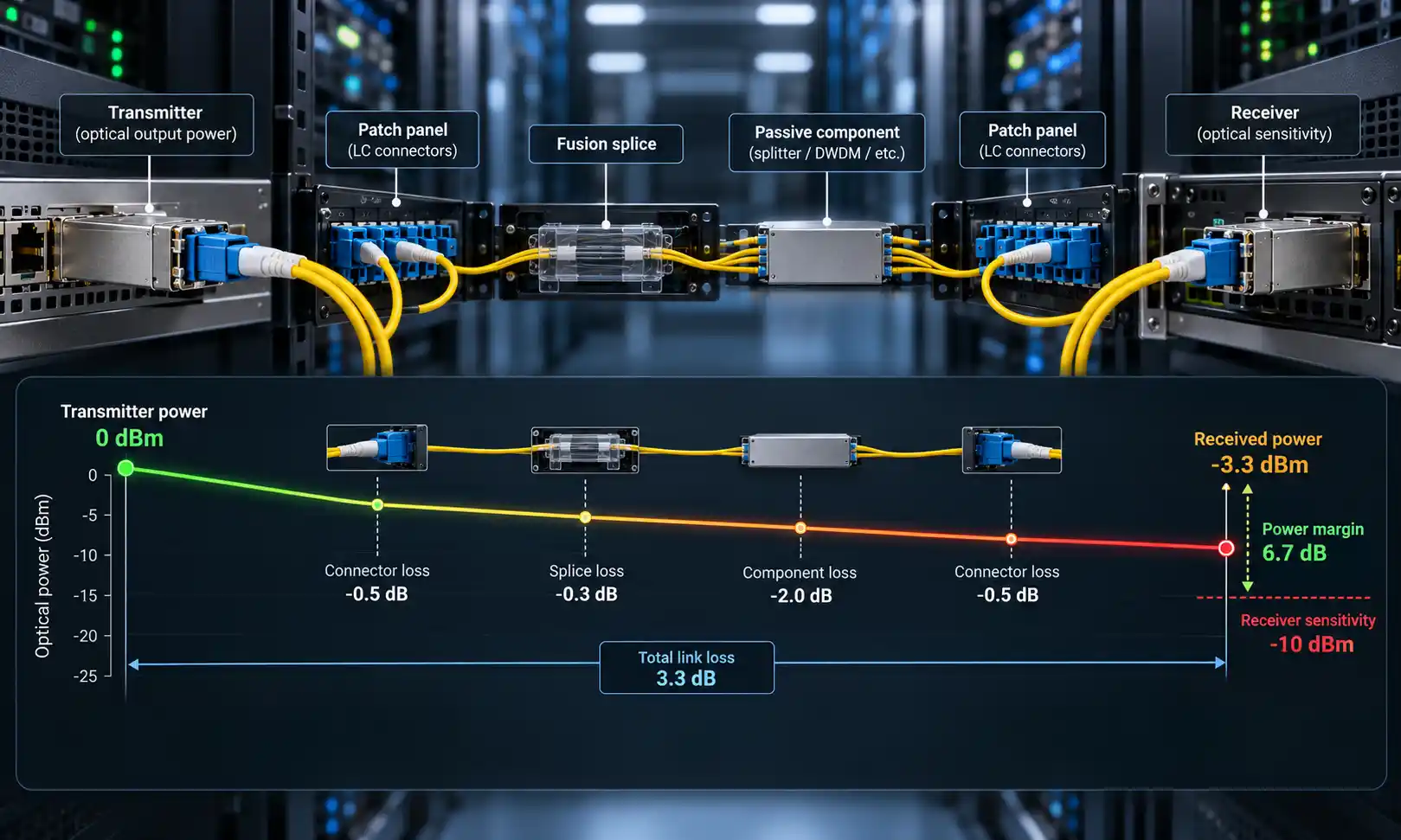
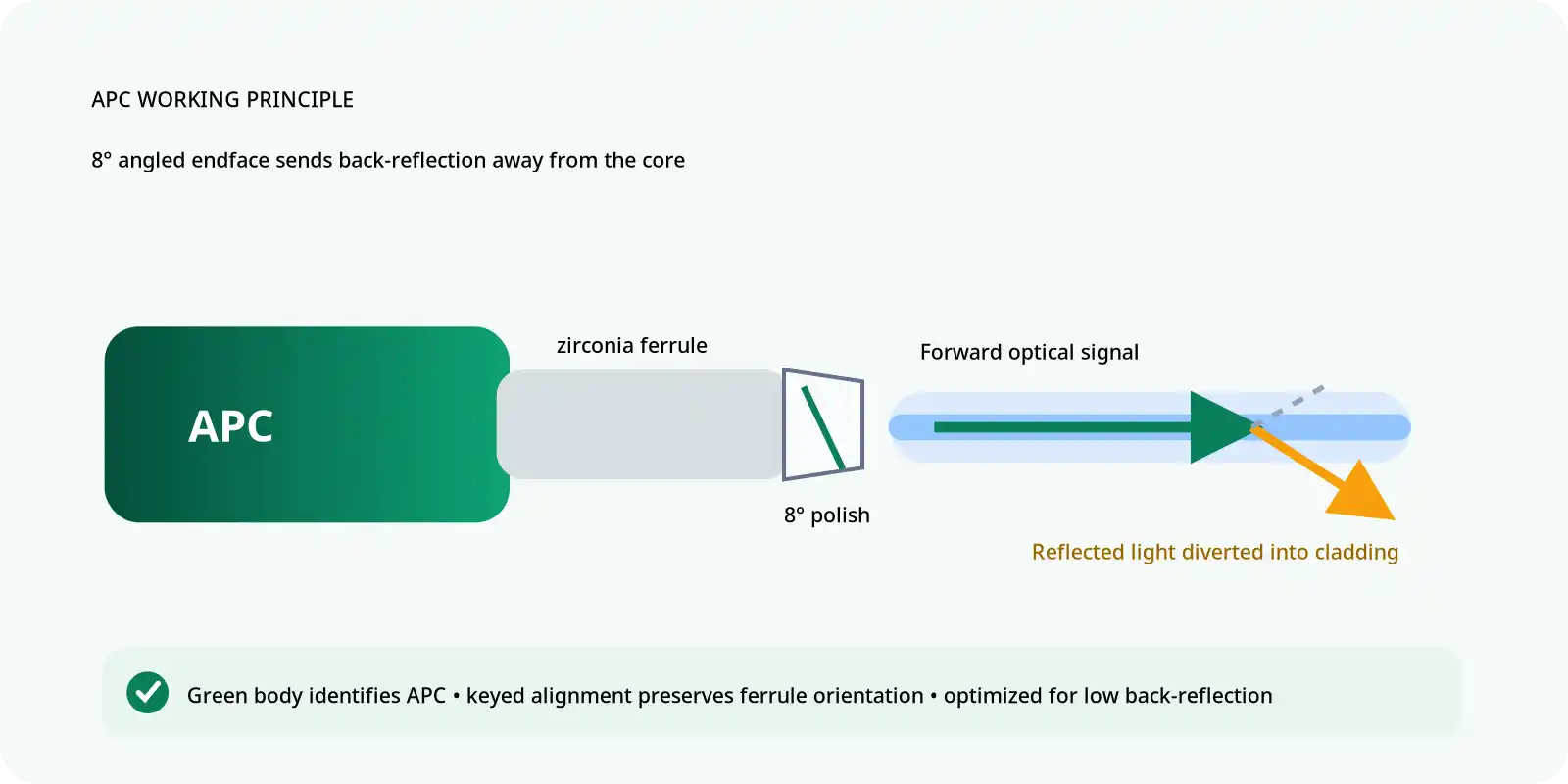
The performance of optical fibers depends on how well they can transmit light. One way to measure this is by measuring the return loss (also called insertion loss) of the fiber. Return loss is defined as the ratio between the power in the forward direction and the power in the reverse direction. If the return loss is high, more light will be lost when traveling through the fiber than if the return loss was low.
Advantages of Fiber Optic Cables
Optical fibers have many advantages over traditional copper wires:
1.Ultra-high-speed transmission performance
Optical fiber media transmits signals through photon pulses, and its transmission rate can reach a thousand times that of copper cables (typically 100+ Gbps), which is particularly suitable for application scenarios with strict real-time requirements such as 4K/8K streaming media transmission and cloud computing services. Single-mode optical fiber has achieved a breakthrough transmission rate of 1 petabit/s in laboratory environments.
2.Ultra-large bandwidth capacity
Thanks to the mature application of wavelength division multiplexing (WDM) technology, a single optical fiber can simultaneously carry optical signals of different wavelengths such as C-band (1530-1565nm) and L-band (1565-1625nm). Through dense wavelength division multiplexing (DWDM) technology, more than 96 channels of single-fiber parallel transmission can be achieved, theoretically reaching hundreds of Tbps-level bandwidth capacity.
3.Ultra-low loss transmission characteristics
Quartz optical fiber has an attenuation coefficient of 0.2dB/km in the 1550nm window. With the erbium-doped fiber amplifier (EDFA) technology, it can achieve a relay-free transmission distance of more than 100km. In comparison, the loss of Cat6A copper cable is 21.3dB per 100 meters at 100MHz.
4.Electromagnetic immunity characteristics
Optical fiber uses SiO₂ dielectric waveguide structure to transmit signals, which fundamentally avoids the electromagnetic interference (EMI) and radio frequency interference (RFI) problems faced by copper cables. This feature makes it irreplaceable for wiring in strong electromagnetic environments such as high-voltage substations (≥500kV) and medical MRI equipment rooms.
5.Transmission security mechanism
The information leakage risk of optical fiber system mainly exists in the termination equipment. There is no electromagnetic radiation during transmission. The OTDR technology can monitor the optical loss anomaly at the level of 0.01dB in real time. According to the NIST SP800-53 standard, the physical layer security of the optical fiber channel reaches the Class III protection level, which far exceeds the Class I level of copper cable.
Types of Communication Fiber Optic Cable
There are 2 basic types of fibers, single mode and multimode. Single-mode optical fiber is smaller in core diameter (8.3-10 microns) and holds advantages in terms of bandwidth and reach for longer distances, while multimode optical fibers have larger core diameters (50 microns or larger) and easily support most distances required in enterprise and data center networks, at a cost typically less than single-mode installations.
Optical fiber technology is used in many ways today. It is used for transmitting voice and video signals, carrying computer data, and for sending information across long distances.
Optical fibers are used to manufacture endoscopes which allow doctors to view inside the human body and perform surgery without the need for invasive scalpel procedures. Large core fibers can carry laser energy to facilitate the removal of tattoos, the cleaning of historical monuments, and the powering of laser-directed defense systems.
Distributed fiber optic sensing (DFOS) allows for the entire length of an optical fiber to be used as a sensing device. Structures like fuel pipelines, bridges, and aircraft wings can have optical fibers embedded into them to detect such parameters as strain, temperature or sound and help ensure their structural integrity.