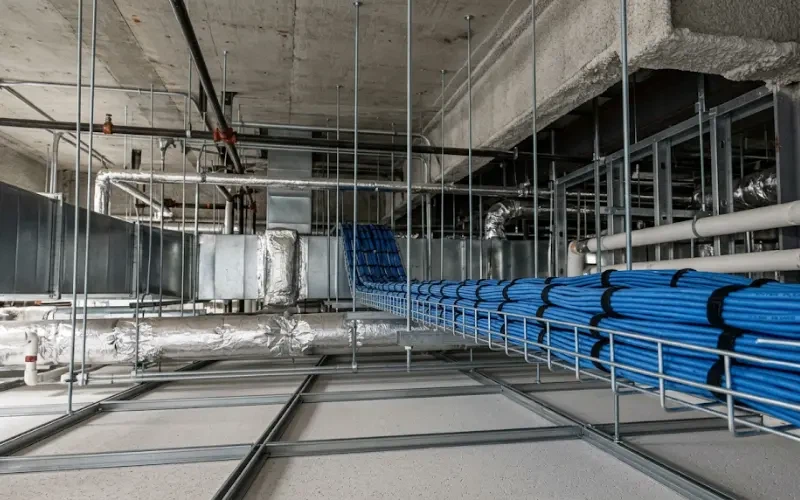
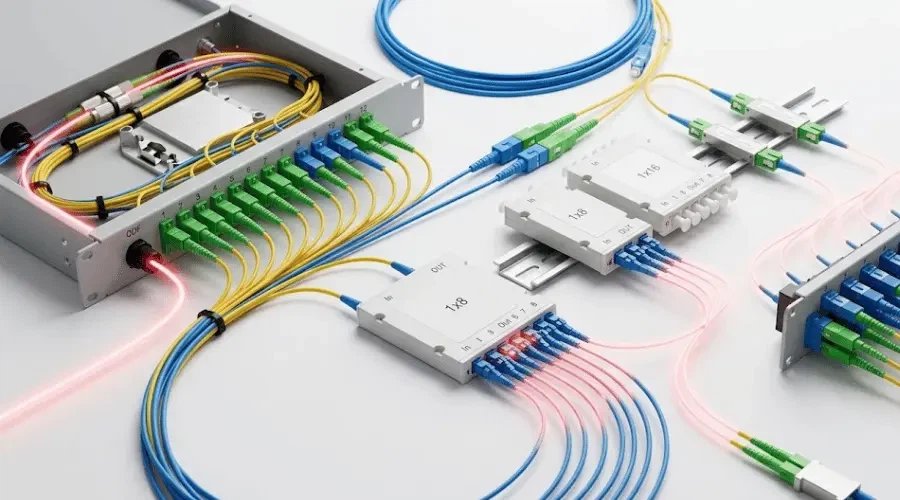
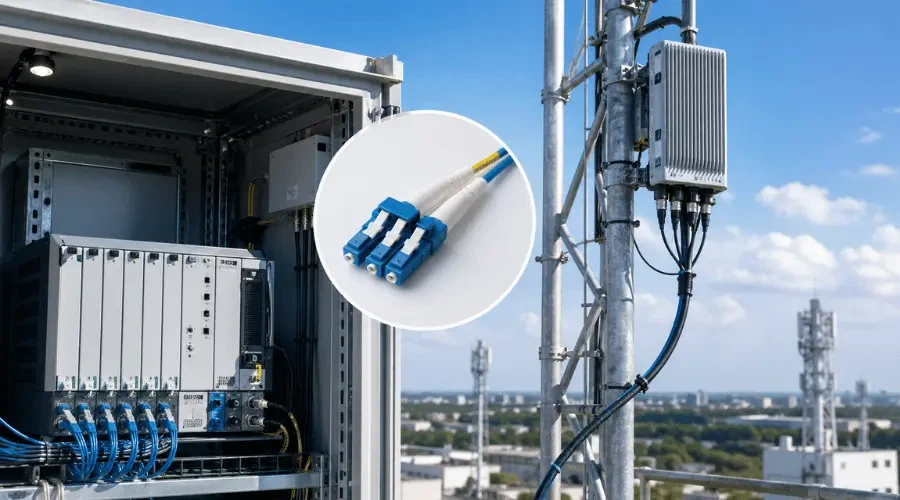
The central challenge facing network engineers isn't whether fiber MTP connectors work-it's whether their promise of simplified deployment holds true under real-world conditions. MTP connectors enable technicians to connect 8 to 12 fibers simultaneously with a single insertion, transforming installations that once required a full day into tasks completed within hours. Yet this efficiency claim demands scrutiny: what determines whether your deployment succeeds effortlessly or devolves into troubleshooting nightmares?
The answer lies not in the connector itself, but in the preparation architecture surrounding it. MTP technology employs high-precision glass-filled polymer ferrules and mechanical alignment systems that, when properly implemented, facilitate reliable physical contact across all fiber positions. Understanding the distinction between connector capability and deployment reality proves essential for anyone evaluating these systems.
The Mechanical Reality Behind MTP Ease of Use
Fiber MTP connectors utilize a slidable locking structure combined with elliptical guide pins that maintain ferrule contact under external force, with the elliptical pin design specifically reducing wear from repeated insertions. This engineering addresses what plagued earlier multi-fiber systems: degraded performance after multiple mating cycles.
The physical mechanism operates through three synchronized elements. Metal pin clamps eliminate lost pins while spring designs maximize ribbon clearance, and thermoplastic ferrules maintain constant guide hole diameter across temperature variations. These components work in concert, but their effectiveness depends entirely on pre-deployment conditions.
What actually makes connection easy:
The push-pull coupling mechanism mirrors familiar SC-style connectors, requiring no specialized dexterity. Alignment pins with dimensions controlled to industry standards (IEC 61754-7, TIA-604-5) ensure that compliant connectors intermate reliably when male and female interfaces match correctly. You hear or feel a click at proper seating-an unmistakable tactile confirmation absent in some connector technologies.
MTP connectors achieve ferrule float capability, allowing mated ferrules to sustain physical contact even under applied loads, a feature protected by US Patent 6,085,003. This means the connection doesn't fail when cables experience normal installation stress-a critical factor often overlooked in connector comparisons.
Pre-Termination: The True Ease Factor
The transformation from complexity to simplicity occurs at the factory, not in your hands. Factory-verified, pre-engineered MTP fiber connector cables eliminate field termination requirements, dramatically reducing skill prerequisites while simplifying future infrastructure modifications. This represents the fundamental shift that separates MTP deployments from traditional approaches.
Time studies involving over 200 installations demonstrated that two technicians can fully mate 3,456 fibers at both cable ends within an eight-hour workday. Compare this to splicing operations: splicing equivalent fiber counts with experienced labor demands 24-30 working hours, plus consumables and heightened polarity management risks.
The plug-and-play architecture eliminates:
Field termination. Splicing operations. Individual fiber testing. Polarity mapping at deployment. Pre-terminated design removes field termination, splicing, and testing steps that typically consume more project time than any other installation phase. Your role shifts from technical execution to verification-a qualitatively different skill requirement.
Installation time decreases by up to 75% compared to traditional fiber systems, with removable housing enabling ferrule reworking and quick gender transitions even after assembly. This field-reconfigurability addresses real-world scenarios where initial specifications change during deployment.
Configuration Complexity: The Hidden Challenge
Ease of physical connection tells only half the story. Proper polarity configuration ensures each transmit fiber corresponds correctly to its receive fiber-critical for functional data transmission but more complex with multi-fiber components. This represents where many "easy" deployments encounter unexpected difficulty.
Three standard polarity methods exist (Type A, B, C), each employing different fiber position mappings. Since fiber MTP connectors are available in 12-fiber and 24-fiber configurations, you cannot connect a 12-strand connector to a 24-strand connector-a crucial compatibility requirement. Matching these specifications correctly determines whether your carefully installed connectors actually transmit data.
Gender and pin configuration add layers:
All equipment ports are male, requiring female connectors on any cable connecting to equipment, with alignment pins critical for ensuring proper fiber strand alignment with minimal loss. A common installer mistake involves attempting to mate two female connectors using a coupling-they fit together, but no light passes because alignment pins are absent on one coupling half.
This isn't connector difficulty; it's system design complexity. The physical connection remains straightforward once you understand the architecture. Method B polarity installation simplifies the process by ensuring correct transmit-receive alignment while minimizing error opportunities, but only if specified correctly during procurement.
Cleaning Requirements: Non-Negotiable Prerequisites
Fiber cleaning in MTP connectors follows a mandatory three-stage process: inspect, clean, and reinspect, using microscopes to ensure no contamination exists in either mating connector, since dirt migrates between contaminated surfaces. This requirement doesn't disappear because connectors are "easy."
Specialized MPO cleaning equipment and inspection tools designed specifically for multi-fiber interfaces save time and enhance accuracy compared to single-fiber cleaning methods. The Fluke Networks FI-3000, for instance, provides automated PASS/FAIL results compliant with IEC 61300-3-35 standards-precision that manual inspection cannot match.
Why cleaning matters more with MTP:
Multi-fiber arrays expose 12 or 24 fiber end-faces simultaneously. Contamination on any single position compromises that channel, but contamination migrates from one connector to another during mating, potentially degrading the entire array. A single-fiber connector contaminates one channel; a fiber MTP connector can compromise a dozen.
You employ specialized cassette cleaners or IBC click cleaners designed for both male (pinned) and female (unpinned) interfaces. Traditional lint-free wipes with isopropyl alcohol work, but proprietary cleaning solutions offer refillable options that reduce long-term costs per cleaning. This preparation step occurs before every mating-easy to execute, impossible to skip.

Real-World Deployment Scenarios
Data center rack installations: MTP HD connectors feature push-pull tabs enabling easy installation or removal within crowded fiber patch panels, eliminating the need to remove surrounding cables for access. In practice, this means navigating congested 1U spaces where traditional connectors require sequential cable removal-a 15-minute task becoming a two-minute operation.
Data centers exploit MTP capacity for high-density deployments and rapid data rates, with modularity enabling easy reconfiguration in dynamic networks. The ease factor here isn't just physical connection but logical infrastructure adaptation-provisioning new racks without rewiring entire segments.
Telecommunications backbone: MTP features provide critical backbone infrastructure reliability and versatility, supporting diverse communication applications while efficiently managing high traffic volumes. Telco environments demand carrier-grade performance across decades of use-fiber MTP connectors meet stringent Telcordia standards for carrier-grade demands and extended operational lifespans.
Field technicians report that backbone connections, once requiring specialized training for fusion splicing, now employ standardized MTP insertion procedures learnable in hours rather than weeks. The difficulty moved from the field to the manufacturing facility, where controlled environments guarantee quality.
Inter-building data center links: The Fast Track MTP connector enables pre-connectorized cables accommodating up to 3,456 fibers in a 4-inch conduit with waterproof, 600-pound tensile strength pulling grips. After conduit installation, the pulling grip is removed, presenting pre-connectorized ribbon fibers already labeled and ready for housing adapter installation-no furcating, splitting, or tools required.
This scenario illustrates where "easy" manifests: not during the physical mating (which remains simple) but in eliminating the 30 hours of splicing work that would otherwise follow cable placement. Your skill requirement shifts from optical expertise to mechanical installation-a fundamentally different capability threshold.
Comparing Connection Difficulty: MTP vs Traditional Approaches
Traditional single-fiber connectors (LC, SC) require individual termination and testing for each fiber. Installing 144 fibers means 144 individual operations, each demanding precision and verification. MTP cables enable faster deployment and straightforward scalability, dramatically decreasing installation time and difficulty while providing enhanced bandwidth support and more dependable links.
The comparison isn't between two connector types-it's between architectural philosophies. Where traditional systems required a full workday, MTP implementations using plug-and-play cables compressed timelines to mere hours, with less skill required for installation. This represents a 70-80% time reduction in typical scenarios.
The trade-off emerges in planning:
MTP deployments shift complexity from field installation to procurement specification. You must correctly specify polarity, gender, fiber count, and cable length before manufacturing. To maintain performance, using similar components is recommended to avoid complications, with fiber MTP connector-to-MTP connections preferred over mixed component types.
Traditional approaches allow field corrections-discover you need different polarity during installation, and you can adjust. Pre-terminated MTP cables lock in specifications, meaning errors require cable replacement rather than field modification. The connection ease comes at the cost of planning precision.
Performance Considerations That Affect Usability
MTP Elite connectors represent the highest-performing multi-fiber connectors available, manufactured under more stringent quality standards than regular MTP connectors for superior pin and hole alignment. MTP Elite features ultra-low insertion loss around 0.10 dB and withstands over 1,000 mating cycles without significant performance degradation.
This durability directly impacts ease of use. Connectors that degrade after 50 mating cycles force careful handling and limited reconfigurations. Fiber MTP connectors are designed for over 1,000 matings without noticeable degradation, providing repeatability-friendly performance-you can reconfigure without anxiety about compromising connection quality.
Insertion loss consistency matters:
Generic MPO connectors may show performance degradation over time and under load, potentially compromising high-performance signal transmission, while MTP manufacturing improvements reduce insertion losses that remain stable across temperature fluctuations. Easy initial connection becomes irrelevant if performance degrades unpredictably.
Industrial MPO MTP Field connectors achieve typical insertion loss of 0.5dB in both multimode and singlemode, with durability rated for 500 mating/unmating cycles with changes less than 0.2 dB. These specifications define the practical boundaries of "reusable" connections-understood limitations rather than unexpected failures.
When MTP Connections Become Difficult
Contamination: The most common difficulty isn't mechanical but environmental. Field conditions introduce dust and debris that compromise ferrule end-faces. Ferrule and alignment pin damage or contamination requires lint-free wipes with anhydrous ethanol, with components completely dry before proceeding. Skip this step, and your "easy" connector refuses to achieve acceptable insertion loss.
Polarity mismatches: Following standard polarity methods (Method A, B, or C) ensures correct fiber alignment, preventing connectivity issues. Discover mid-deployment that your cassettes employ Method A while your trunks use Method B, and no amount of connection ease solves the incompatibility.
Physical space constraints: Installation should avoid bending or stress on cable at any point, with cable ties or Velcro straps used to attach cables to structures while maintaining proper bend radius. Tight spaces that force sharp bends compromise even properly installed connectors-the mechanical ease can't overcome installation geometry problems.
Component quality variation: Companies frequently receive calls about performance and quality issues discovered during installation due to non-MTP solutions being supplied. Different MPO brands deliver different performance levels due to varying component mixes and manufacturing tolerances. Genuine fiber MTP connectors cost more but maintain specified performance; generic equivalents may fit physically yet fail optically.
The Skill Threshold Reality
Less skill was required for MTP installation compared to traditional approaches, while future updates, additions, and structural cabling changes were dramatically simplified. This statement requires context: "less skill" doesn't mean "no skill."
You need understanding of polarity conventions, gender requirements, cleaning protocols, and testing procedures. Inspect cables and connectors for visible damage or contamination, using suitable cleaning tools to remove dust or debris that may affect performance at both ends of each connector. Verify that fiber polarity and sequence inside MTP connectors align properly with network equipment and patch panels, essential for signal integrity preservation.
The actual skill shift:
Traditional installations required optical expertise-fusion splicing, loss budgeting, fiber preparation. MTP deployments require system comprehension-polarity mapping, component matching, verification procedures. It's not easier; it's different. MTP/MPO connectors offer plug-and-play solutions usable by any fiber technician, but "any technician" presumes baseline knowledge of fiber optics and careful adherence to procedures.
Infrastructure Implications
In place of a 1U housing with duplex connections holding 144 fibers, MTP housing handles 864 fibers-six times the capacity. This density transformation affects connection ease indirectly: managing 864 individual connectors in 1U space would be practically impossible, while managing multiple MTP connections in the same space remains feasible.
Fiber MTP connectors are famous for versatility in data center applications, easily integrating into various cable solutions. The ease factor here manifests in infrastructure flexibility. Pre-terminated MTP cables are plug-and-play, eliminating field termination to provide user-friendly deployment with faster implementation times and less complexity.
Scalability through simplicity:
Shortened installation time through pre-terminated MTP assemblies makes the installation process easier, reducing downtime and labor costs while improving maintenance during troubleshooting. Easy connections enable aggressive scaling strategies that traditional approaches couldn't support-provisioning hundreds of fibers in hours rather than weeks.
MTP connectors significantly speed up deployment in data centers and high-capacity networks requiring large numbers of fiber connections, with reduced on-site connection time and labor costs through pre-assembled cables. The economic equation changes: labor cost per fiber drops dramatically, making high-fiber-count deployments economically viable for mid-size organizations, not just hyperscale operations.
Testing and Verification Simplified
Testing for integrity and performance employs Optical Power Meters and Light Sources or Optical Time-Domain Reflectometers (OTDR), with all connector ends cleaned before testing to prevent contaminants from affecting measurements. The testing architecture mirrors single-fiber approaches but addresses multiple channels simultaneously.
Test insertion loss on connectors of interest and conduct back reflection tests determining minimal reflectivity causing interference. Document measurements for insertion loss and back reflection levels, recording installation date, equipment used, and observations made during installation.
Multi-fiber testing considerations:
You test all channels in the array, not just representative samples. Connection should be firm without applying excessive force that might harm connectors due to excessive pressure. Over-tightening damages ferrules; under-tightening causes intermittent connections. The tactile click provides feedback, but verification remains essential.
Testing ease comes from standardization. Automated PASS/FAIL inspection results compliant with IEC 61300-3-35 eliminate subjective judgment from connector quality assessment. You don't interpret results; you read them. This standardization enables less experienced personnel to execute verification procedures that once required expert judgment.
Emerging MTP Technologies
Latest generation fiber MTP connectors bring novel features simplifying field configurability, enabling easy gender and polarity changes in the field without requiring specialized skill sets or connector engineering expertise. The MTP PRO connector offers quick and effective polarity and pin reconfiguration in the field while maintaining product integrity and performance.
This represents the technology's evolution trajectory: moving remaining complexity from planning to field-adjustable configuration. For quick ribbon identification while patching, each plastic boot is labeled with its respective connector number-small details that accumulate into significant usability improvements.
Fast Track MTP connector technology enables high-density packaging and connector protection for buried conduit installation, fully eliminating splicing while providing the same optical performance and ease-of-use as traditional MTP connectors. These innovations address use cases where standard MTP struggled-outdoor deployments, long-distance inter-facility links, extreme-density applications.
Frequently Asked Questions
Do MTP connectors require special tools for connection?
No specialized insertion tools are needed. MTP connectors employ push-in and pull-out plug-in mechanisms, making the installation process simpler and faster compared to traditional connectors. However, you do need proper cleaning equipment (lint-free wipes, isopropyl alcohol) and inspection tools (microscope or automated inspector) to ensure connector cleanliness before mating.
Can beginners install MTP connectors successfully?
Pre-engineered factory-terminated MTP cables meant that less skill was required for installation while simplifying future additions and infrastructure changes. Beginners can execute physical connections after brief training, but should work under experienced supervision for polarity verification, testing procedures, and troubleshooting. The mechanical operation is straightforward; the system understanding requires guidance.
What's the main difference between MTP and MPO connector ease?
Fiber MTP connectors belong to the broader MPO group but offer superior optical performance through better alignment accuracy and reduced insertion loss. MTP is a proprietary family from US Conec manufactured under more stringent tolerances and specific designs that deliver higher maintained performance. Both use the same push-on mechanism, but MTP's tighter manufacturing tolerances reduce troubleshooting and performance issues-indirectly making deployments easier.
How do I avoid the most common connection mistakes?
Verify gender compatibility before attempting connection-equipment ports are male, requiring female connectors on connecting cables. Never attempt mating two female connectors with a coupling; while they physically fit, no light passes because alignment pins are absent. Always clean both mating interfaces immediately before connection, and confirm polarity method compatibility across your system.
Is cleaning really necessary before every connection?
Yes, absolutely. MTP connector cleaning processes always proceed through three stages: inspect, clean, and reinspect, with microscope verification ensuring no contamination in either mating connector since dirt migrates between surfaces. Contamination prevention is critical-cleaning all connector ends before testing prevents contaminants from affecting measurements. Skipping this step is the most common cause of connection failures attributed to "difficult" connectors.
What determines if my deployment will be easy or difficult?
To maintain performance, using similar components is recommended to avoid complications, with MTP-to-MTP connections preferred. Ease correlates with proper specification during procurement: correct polarity, matching gender, compatible fiber counts, and genuine MTP components. Physical connection remains straightforward regardless; system compatibility determines whether connections function correctly once made.
Key Takeaways
Fiber MTP connectors employ push-pull mechanisms enabling 8-12 fiber connections through single insertions, transforming day-long installations into hour-long operations
Physical connection ease stems from factory pre-termination eliminating field splicing, not from simplified connector mechanics
Deployment success requires correct polarity specification (Method A/B/C), gender matching (male equipment ports need female cable connectors), and fiber count compatibility (12-strand cannot connect to 24-strand)
Mandatory cleaning protocols using specialized equipment for both mating surfaces prevent contamination-related performance degradation across multi-fiber arrays
MTP Elite connectors maintain sub-0.15dB insertion loss across 1,000+ mating cycles, enabling confident reconfigurations without performance anxiety