Armored Fiber Optic Cable: Protection Levels and Use Cases
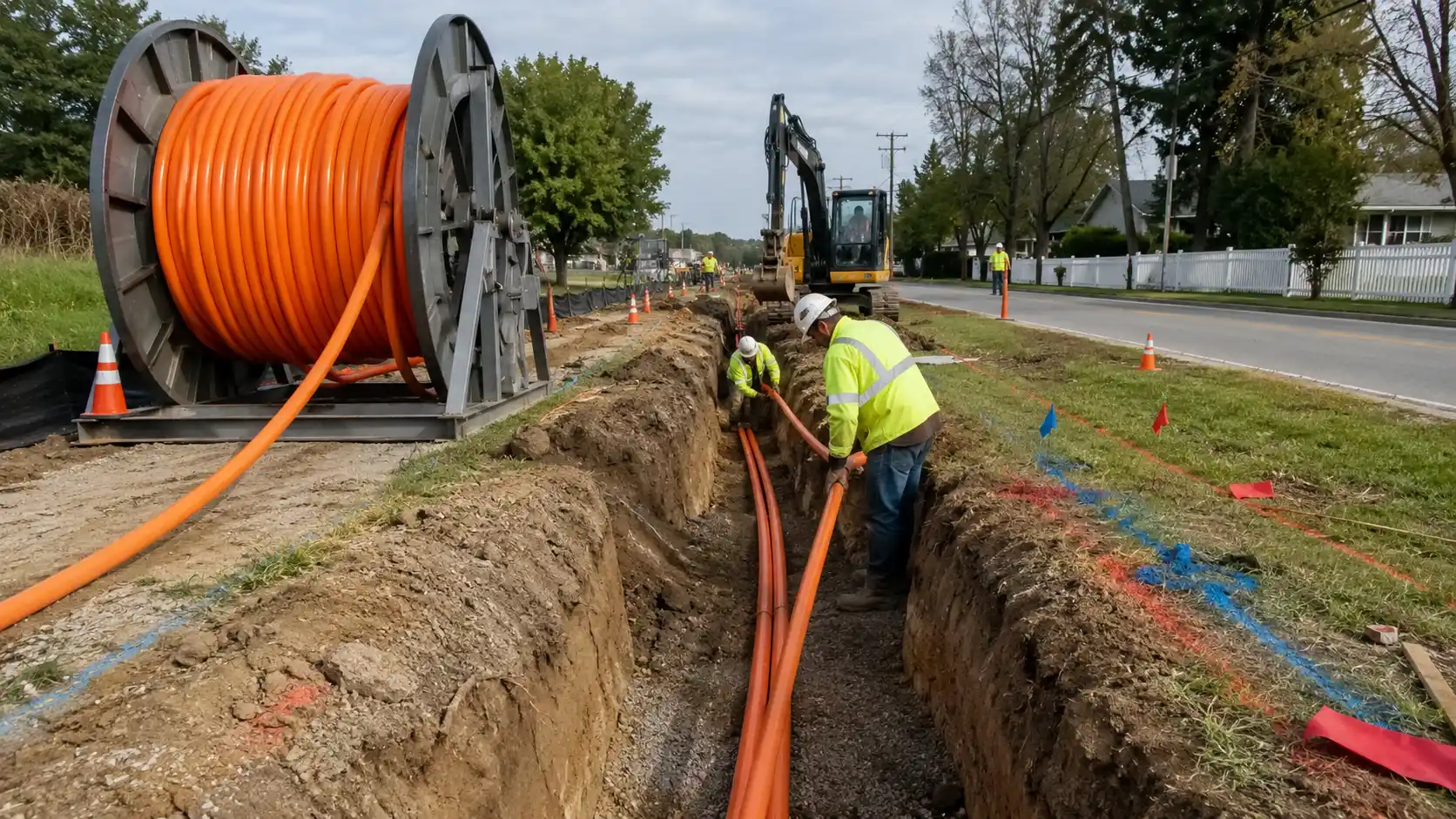
Last fall we helped troubleshoot an industrial park project in Nevada. The contractor insisted on using interlocking aluminum armor for a 12-kilometer direct burial run, kept saying data centers use it all the time, would save money. I pushed back, explained that outdoor direct burial is completely different from raised floor environments. Engineering department got convinced by the contractor's pitch, overruled my spec recommendation. Less than three months later, rodents chewed through the cable at multiple points. I honestly don't remember exactly how many breaks, somewhere between five and eight. The repair bill plus the client's downtime claim came to over $127,000. The original cost difference to spec corrugated steel tape instead? Around four grand. At the project post-mortem, engineering sat there saying nothing. Procurement took the blame.

I'm writing this because we keep seeing the same pattern. Procurement teams look at crush resistance numbers on datasheets and assume they understand protection levels. They don't.
What Actually Matters With Armor Selection
I've been doing this for about fifteen years now, and armor specification is probably my strongest area. Let me clear up the biggest misconception first: interlocking aluminum armor does not protect against rodents. A lot of people get fooled by that "7x crush resistance" marketing number and think aluminum armor handles everything. It doesn't. Aluminum is soft. Rodents have time. The spiral wrap structure actually gives their teeth something to grip.
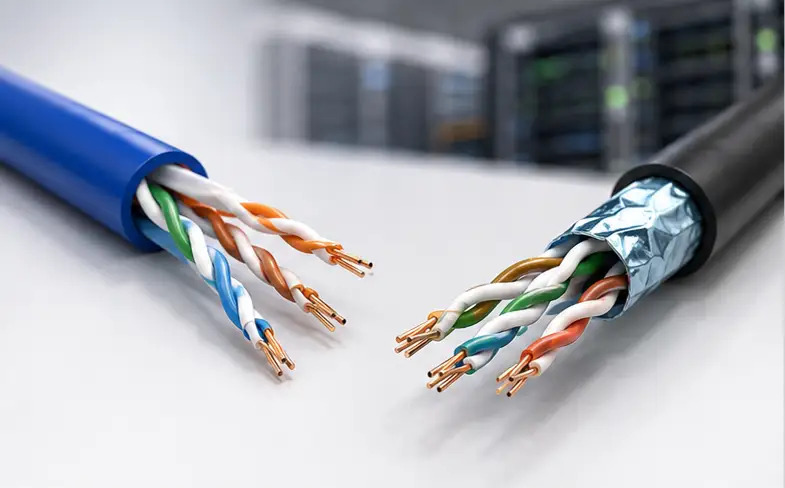
Steel tape armor works differently. That smooth continuous surface gives rodent incisors nothing to bite into. We've pulled GYTS cables from sites with documented rodent activity after eight, nine years of service. Zero bite damage. This is why steel tape stays our default recommendation for any direct burial job.

On suppliers, we've been buying mostly from Hengtong for GYTS series these past few years. Their quote last month for 24-core came in around ¥1.28 per meter, roughly $0.178, down maybe 8% from last year. Probably raw material prices. Yangtze quotes slightly higher, around ¥1.35, but their delivery schedule is more reliable. Hengtong always seems to run a week late. Corning's ALTOS series is genuinely excellent, QC consistency is unmatched, but pricing runs three times domestic equivalents or more. Unless it's a backbone route or the client specifically demands it, good luck explaining that cost to management.
Corrugated steel tape works better than plain steel tape when you need bending flexibility. The wave profile distributes stress so you don't get concentration points during installation. We learned this one the hard way on a telecom project running alongside a rail line. Used standard steel tape. Micro-vibrations from passing trains caused fatigue cracking within 14 months. Switched to corrugated, problem solved.
Steel wire armor I don't deal with much personally. Mainly submarine crossings and river beds from what I understand. Highest tensile strength available, but the weight and installation complexity go way up, cost runs maybe 4-5 times standard steel tape. Unless you genuinely need that strength level, no point over-speccing.
Why Those Neat Price Comparison Tables Don't Help
You see these articles online with perfectly organized price tables, $0.20-$0.30 ranges and so on. Honestly those tables are pretty useless because real procurement pricing depends on volume, delivery location, payment terms, your relationship with the supplier. Too many variables.
Here's something closer to reality. Actual quotes from an 8-kilometer direct burial project we did last month:
Non-armored option with conduit
Cable cost: 24-core GYFTY, 8km at roughly $0.124/m comes to about $990. HDPE conduit runs another $0.48/m, so $3,840 for materials. Conduit installation labor quoted locally at $5,700. Cable pulling labor adds $1,780. Total lands somewhere around $12,310.
Armored direct burial option
Cable cost: 24-core GYTA53 corrugated steel tape, 8km at roughly $0.26/m comes to about $2,080. Direct burial labor quoted at $5,280. Total around $7,360.
Armored cable unit price is double, but total installed cost saves 40%. And that's before you factor in the hidden costs of the conduit approach. We've tracked it, roughly 1-2 splice repairs needed per 10 kilometers from cable damage during pulling. Add another $800-1,200 per occurrence.
The Downtime Math That Convinces Finance
Finance challenges my specs every single time. Why not just go with the cheapest option. I've learned to show them the downtime calculation.
One of our manufacturing clients runs production control over fiber. Last year a cable fault took them down for most of a day. Their own accounting put direct losses at around $47,000, not counting contract penalties for delayed orders. That cable run originally saved maybe $2,500 by skipping armor.
Ponemon Institute's 2023 data center survey pegged unplanned outage costs averaging $9,000 per minute. That's data center numbers, industrial settings aren't usually that extreme, but a few hundred dollars per minute is common.
Submarine cable repairs are terrifying. Submarine Networks tracks global fault statistics, roughly 200 incidents per year, repair costs running $500,000 to over $1,000,000 each, and repair timelines stretching months. Longest documented case took nearly three years. Though honestly subsea isn't my area, I've just read the industry reports.
The Questions That Actually Matter For Spec Decisions
Instead of obsessing over crush resistance differences in N/cm, figure these out first:
Q: Does the site have documented rodent activity?
A: If yes, steel tape or corrugated steel tape only. No aluminum. Period. We've been burned too many times.
Q: Will the route get vehicle traffic?
A: Lots of people assume "pedestrian path" means safe. In practice, delivery trucks, electric scooters, sometimes even the client's own forklifts take shortcuts. If the path crosses anywhere vehicles might go, consider steel wire armor or at minimum add warning tape above the burial.
Q: Any high-voltage lines nearby?
A: This one surprises people. Steel armor in AC electromagnetic fields generates eddy current heating. If fiber shares a trench with high-voltage power cables, spec aluminum armor or go fully dielectric with ADSS.
Q: Soil chemistry?
A: Had a project near a chemical plant once, groundwater pH tested around 5.2. I didn't catch that detail, spec'd standard steel tape armor. Started corroding within two years. Rework cost almost doubled the original cable budget, had to switch to 316 stainless steel tape. Now I ask about soil conditions on every direct burial job.
Grounding Mistakes
I used to ignore grounding, figured that's the electrical engineer's problem. Then in 2021 we had a mountain area project keep getting lightning damage even though the GYTS cable had armor and was supposedly grounded properly. Investigation found the grounding wire used solid copper conductor. The buried section had corroded through. Effectively ungrounded.
Now we mandate #6 AWG stranded copper minimum, Burndy compression terminals or equivalent, no bolt connections. In rocky or sandy soil with high resistivity, add supplemental ground rods or chemical enhancement. NEC 770.93 specifies bonding metallic cable components at the building entry point as close as practicable. If you're not familiar with this stuff, get an electrical engineer to review before sign-off.
One edge case worth mentioning: near high-voltage transmission lines, metallic armor can develop induced voltage that shocks installation crews. For those situations we typically recommend ADSS dielectric cable. No physical armor protection, but no induced voltage hazard either.
Installation Crew Problems
Going to say something that doesn't make me popular: a lot of cable faults trace back to installation quality issues.
Most common mistake is pulling on the armor layer directly. Correct technique puts tension on the internal aramid strength members, but crews take shortcuts and use the armor as the pulling point. This separates the armor from the cable core. That kind of damage often doesn't show up during acceptance testing, manifests months later.
Bend radius is the other big one. TIA-568.3-E specifies 600-pound minimum tensile rating for outside plant cable, but that's for non-armored. Armored cable has less bending tolerance because of armor stiffness. I've watched crews apply non-armored cable experience to armored jobs, bend too sharp at corners, cause microbending loss. OTDR might show an extra 0.1 or 0.2 dB at acceptance, doesn't look like much, but attenuation creeps up over time.
Our standard practice now is running a technical briefing with installation crews right after contract award. Specifically covers armored cable handling. Annoying extra step, but way less painful than arguments after something goes wrong.
A Few Scenarios People Overlook
Data center interior:
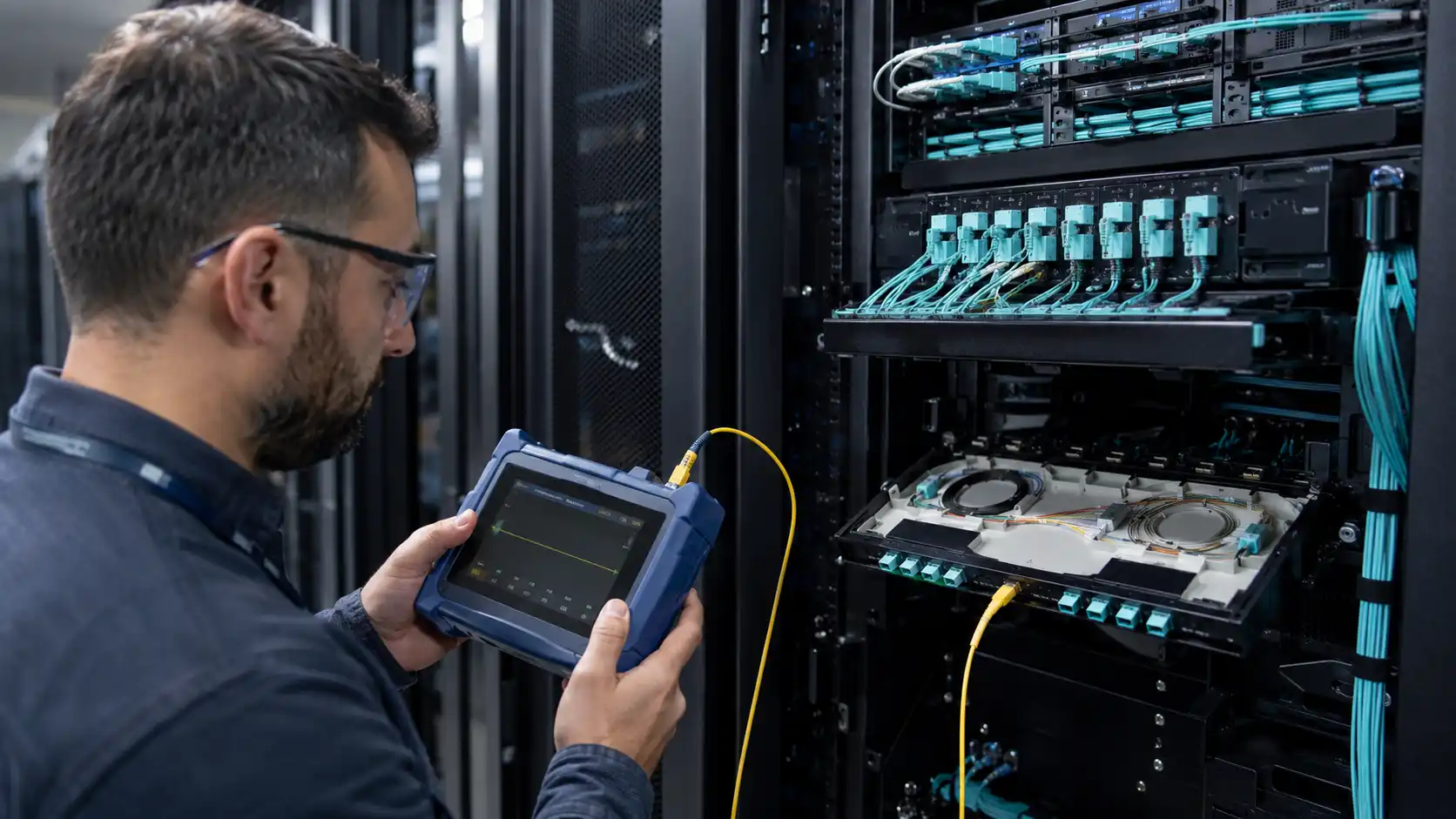
This is where interlocking aluminum armor actually belongs. Underfloor cable runs get stepped on, rolled over by equipment carts, reorganized every few years. Needs crush resistance and flexibility, but no rodent or moisture concerns. A lot of people don't distinguish between facility interior and campus direct burial, specify the same armor for both. Either wastes money or causes problems.
Mining:
I've only done two mining projects, don't consider myself expert here. Main thing is explosion-proof requirements are specialized, needs MSHA certification, 30 CFR Part 7 compliance and so on. Chinese MGTSV series works for domestic projects, but US jobs need OCC or AFL domestic-certified products, pricing significantly higher. Fiber's advantage in mining is non-electrical, no spark risk, which is mandatory in methane environments.
Chemical plants:
Mentioned the soil pH issue already. Jacket material matters too. Standard PE jacket degrades in hydrocarbon exposure. Chemical plant projects we now specify LSZH jacketing minimum, PUR for areas with actual chemical contact risk. Costs more, but liability exposure in those environments isn't worth the savings.
Final Thoughts
Armor selection sounds complicated but really comes down to a few principles. Outdoor direct burial means steel tape or corrugated steel tape. Facility interior means interlocking aluminum. Special scenarios get special analysis. When uncertain, over-spec slightly. The extra armor cost is trivial compared to fault repair expenses.
And don't trust supplier datasheets too much. Those numbers come from lab conditions. Real field environments are messier. Talk to people who've done similar projects. Worth more than ten datasheets.
If you've got a specific project you're working through and want to talk it over, reach out to our technical team. We've probably hit most of the same problems you're facing, can at least help you dodge the obvious mistakes.