AI applications have stringent requirements for data transmission rate, low latency, and high reliability, which promotes the evolution of optical module technology towards ultra-high speed (such as 800G/1.6T) and deep integration of silicon photonics.
According to the forecast of China Business Information Network, the global optical module market size will exceed US$12.1 billion in 2025 and is expected to reach US$15.6 billion in 2027. In order to cope with the rapid growth of AI applications, optical communication technology continues to iterate and break through. With the increase of module bandwidth, the growing demand for faster data transmission rate has prompted transceivers to develop in the direction of miniaturization, high speed, low power consumption, and low latency to meet higher integration and denser connection requirements. In this wave, as an important component of high-speed optical modules, the market demand for FA components has also increased significantly.

Core advantages of MT-FA components
MT-FA components use precision grinding technology and array arrangement technology to achieve efficient parallel transmission of multiple optical signals. Its technical advantages are mainly reflected in the following dimensions:
1. Parallel transmission and coupling
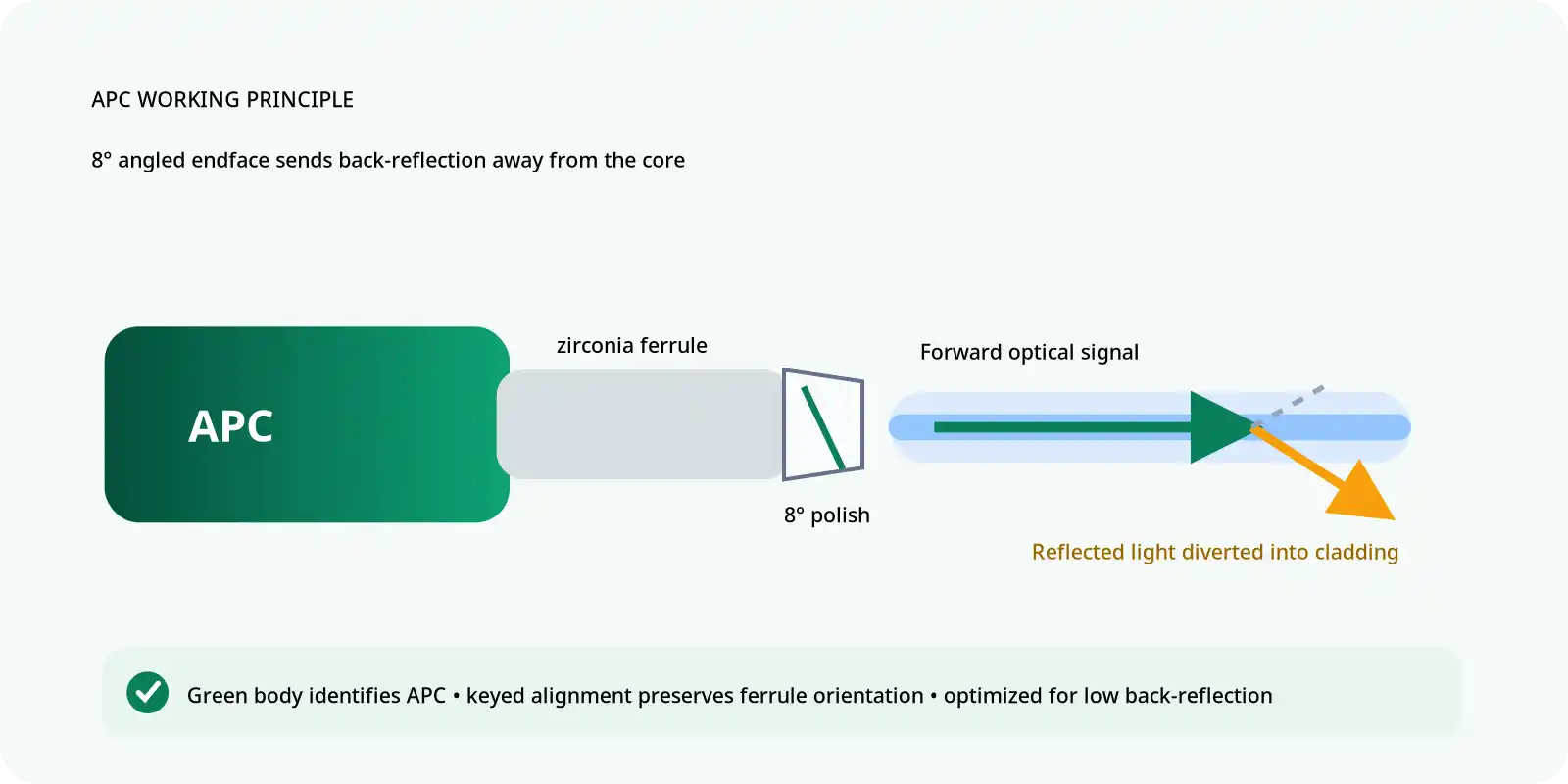
The specific grinding angle achieves full reflection of the end face, and the use of low-loss MT ferrules realizes optical path coupling and provides a compact parallel connection solution for 400G/800G/1.6T multi-channel optical modules, which is especially suitable for long-term, high-load operation scenarios of large-scale data transmission in data centers during AI training.
2 High precision and high reliability
MT-FA's high-precision manufacturing process and low insertion loss characteristics, good multi-channel uniformity, can ensure low loss and transmission stability of optical signals in high-speed transmission, and meet the strict requirements of AI computing power for data transmission quality.
3 High density and small size
The small size adapts to the trend of increasing integration of optical modules, can effectively save space, and meet the needs of data centers for compact equipment to achieve high-density connection.
4 Significant cost-effectiveness
Its high integration and efficient transmission capability can reduce the overall system wiring complexity, especially in the case of large-scale deployment, while maintaining high performance, it can reduce the maintenance cost of optical modules during long-term operation.

FOCC's MT-FA short fiber components can be widely used in the internal connection of optical modules in AI cluster infrastructure, supporting Ethernet optical networks, Fiber Channel networks, Infiniband optical networks and other network types, suitable for switches, CPO/LPO, data storage, supercomputers and other scenarios.