Using light for communication is not an entirely new concept. In ancient China, the use of beacon towers for warnings is the best example of visual light communication. Europeans using semaphore to transmit information can also be considered primitive forms of optical communication.
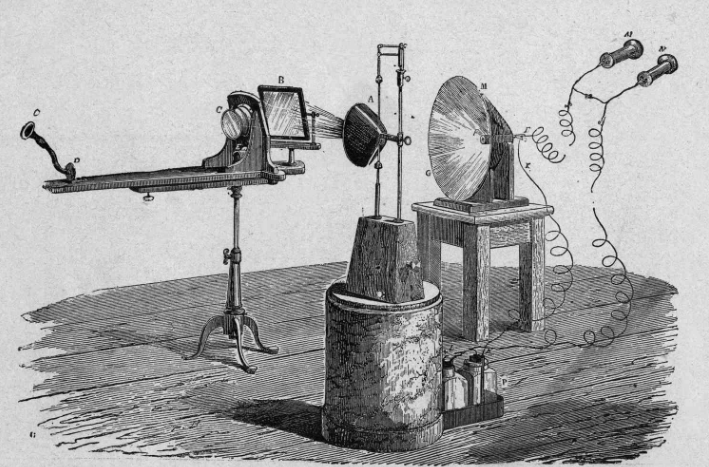
The prototype of modern optical communication can be traced back to Bell's invention of the photophone in 1880. He used sunlight as a light source, focusing the light beam through a lens onto a vibrating mirror in front of the transmitter, causing the light intensity to vary with voice changes, thereby achieving voice modulation of light intensity. At the receiving end, a parabolic reflector reflected the light beam transmitted through the atmosphere onto a battery, with selenium crystals serving as the optical receiving detection device, converting the optical signal into electrical current. In this way, voice signals were successfully transmitted through atmospheric space. Due to the lack of ideal light sources and transmission media at the time, this photophone had a very short transmission distance and no practical application value, resulting in slow development. However, the photophone was still a great invention, as it proved the feasibility of using light waves as carriers to transmit information. Therefore, Bell's photophone can be considered the prototype of modern optical communication.
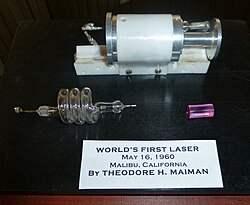
The invention of lamps made it possible for people to construct simple optical communication systems, using them as light sources, such as communication between ships and between ships and land, automobile turn signals, traffic signal lights, etc. In fact, any type of indicator light is a basic optical communication system. In many cases, broad-spectrum fluorescent light-emitting diodes can be used as light sources. In 1960, American Maiman invented the first ruby laser, which in a sense solved the light source problem and brought new hope to optical communication. Compared with ordinary light, lasers have excellent characteristics such as narrow spectral width, extremely good directionality, extremely high brightness, and relatively consistent frequency and phase. Lasers are highly coherent light, with characteristics similar to radio waves, making them ideal optical carriers. Following the ruby laser, helium-neon (He-Ne) lasers and carbon dioxide (CO₂) lasers successively appeared and were put into practical use. The invention and application of lasers brought optical communication, which had been dormant for 80 years, into a brand new stage.
The invention of solid-state lasers greatly increased the transmitted optical power and extended the transmission distance, enabling atmospheric laser communication to be used across riverbanks, between islands, and in certain specific situations. However, the stability and reliability of atmospheric laser communication still remained unresolved. Using light waves carrying information to achieve point-to-point communication through atmospheric propagation is feasible, but communication capability and quality are severely affected by climate. Due to absorption and scattering by rain, fog, snow, and atmospheric dust, light wave energy attenuation is significant; additionally, non-uniformity in atmospheric density and temperature causes changes in refractive index, resulting in beam position shifts. Therefore, the distance and stability of atmospheric laser communication are greatly limited, unable to achieve "all-weather" communication.
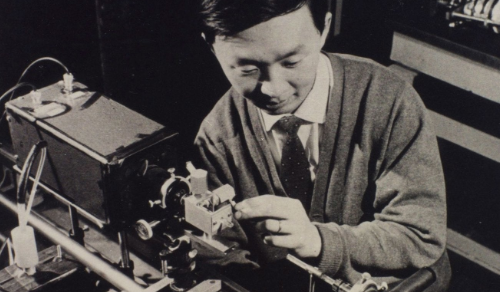
1970 was a brilliant year in the history of optical fiber communication. Corning Company in the United States successfully developed quartz optical fiber with a loss of 20dB/km, enabling optical fiber communication to compete with coaxial cable communication, thus revealing the bright prospects of optical fiber communication and prompting countries around the world to successively invest substantial manpower and material resources, pushing the research and development of optical fiber communication to a new stage. In 1972, Corning Company developed high-purity quartz multimode optical fiber, reducing the loss to 4dB/km. In 1973, Bell Laboratories in the United States achieved even greater results, reducing optical fiber loss to 2.5dB/km, and further reducing it to 1.1dB/km in 1974. In 1976, Japanese companies including Nippon Telegraph and Telephone (NTT) reduced optical fiber loss to 0.47dB/km (at a wavelength of 1.2μm).
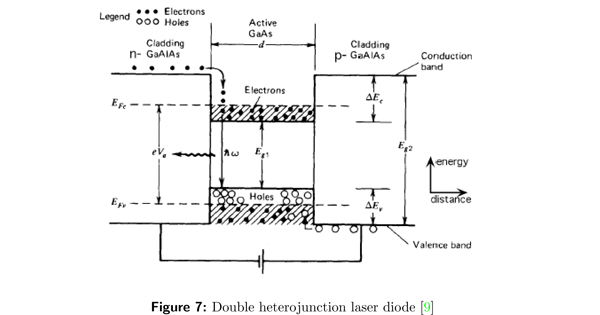
In 1970, substantial progress was also made in light sources for optical fiber communication. That year, Bell Laboratories in the United States, Nippon Electric Company (NEC) in Japan, and the former Soviet Union successively broke through the limitations of semiconductor lasers working at low temperatures (-200℃) or under pulsed excitation conditions, successfully developing gallium aluminum arsenide (GaAlAs) double heterostructure semiconductor lasers (short wave) that could oscillate continuously at room temperature, laying the foundation for the development of semiconductor lasers. In 1973, the lifetime of semiconductor lasers reached 7×10³h. In 1977, the semiconductor lasers developed by Bell Laboratories achieved a lifetime of 100,000 h (approximately 11.4 years), with an extrapolated lifetime of 1 million h, fully meeting practical requirements. In 1976, Nippon Telegraph and Telephone Company successfully developed indium gallium arsenide phosphide (InGaAsP) lasers emitting at a wavelength of 1.3μm. In 1979, AT&T Company in the United States and Nippon Telegraph and Telephone Company in Japan successfully developed continuously oscillating semiconductor lasers emitting at a wavelength of 1.55μm.
In 1976, the United States conducted field trials of the world's first practical optical fiber communication system in Atlanta. The system used GaAlAs lasers as light sources and multimode optical fiber as the transmission medium, with a rate of 44.7Mbit/s and a transmission distance of approximately 10km. In 1980, the standardized FT-3 optical fiber communication system in the United States was put into commercial use. The system used graded-index multimode optical fiber with a rate of 44.7Mbit/s. Subsequently, the United States quickly laid east-west trunk lines and north-south trunk lines, crossing 22 states, with a total optical cable length of 5×10⁴km. In 1976 and 1978, Japan successively conducted trials of step-index multimode optical fiber communication systems with a rate of 34Mbit/s and a transmission distance of 64km, as well as graded-index multimode optical fiber communication systems with a rate of 100Mbit/s. In 1983, Japan laid a long-distance optical cable trunk line running north to south through the country, with a total length of 3400km, an initial transmission rate of 400Mbit/s, later expanded to 1.6Gbit/s. Subsequently, the TAT-8 submarine optical cable communication system across the Atlantic Ocean, initiated by the United States, Japan, the United Kingdom, and France, was completed in 1988, with a total length of 6.4×10³km; the first TPC-3/HAW-4 submarine optical cable communication system across the Pacific Ocean was completed in 1989, with a total length of 1.32×10⁵km. Since then, the construction of submarine optical cable communication systems has been fully developed, promoting the development of global communication networks.
Since Kao proposed the concept of optical fiber as a transmission medium in 1966, optical fiber communication has developed very rapidly from research to application, with continuous technological updates and generations, continuously improving communication capabilities (transmission rate and repeater distance), and continuously expanding application scope. The development of optical communication can be roughly divided into the following five stages:
The first stage: This was the period from basic research to commercial application development. Starting in 1976, closely following research and development steps, after many field trials, in 1978, the first generation optical wave system operating at 0.8μm wavelength was officially put into commercial use, realizing short wavelength (0.85μm), low rate (45Mbit/s or 34Mbit/s) multimode optical fiber communication systems. Optical fiber with a loss of 2dB/km emerged, with a non-repeater transmission distance of approximately 10km and a maximum communication capacity of approximately 500Mbit/(s·km). Compared with coaxial cable systems, optical fiber communication had extended repeater distances, reduced investment and maintenance costs, meeting the pursuit goals of engineering and commercial operations, and optical fiber communication became a reality.

The second stage: This was a practical period with research goals of improving transmission rates and increasing transmission distances, and vigorously promoting applications. During this period, optical fiber developed from multimode to single-mode, working wavelengths developed from short wavelengths (0.85μm) to long wavelengths (1.31μm and 1.55μm), achieving single-mode optical fiber communication with a working wavelength of 1.31μm and transmission rates of 140565Mbit/s. Optical fiber loss was further reduced to levels of 0.5dB/km (1.31μm) and 0.2dB/km (1.55μm), with non-repeater transmission distances of 50100km.
The third stage: This was a period with goals of ultra-large capacity and ultra-long distance, comprehensively and thoroughly carrying out research on new technologies. During this period, 1.55μm dispersion-shifted single-mode optical fiber communication was realized. This optical fiber communication system used external modulation technology, with transmission rates reaching 2.510Gbit/s and non-repeater transmission distances reaching 100150km. Laboratories could achieve even higher levels.

The fourth stage: Optical fiber communication systems were characterized by the use of optical amplifiers to increase repeater distances and the use of wavelength division multiplexing technology to increase bit rates and repeater distances. Because these systems sometimes used homodyne or heterodyne schemes, they were also called coherent optical wave communication systems. In optical fiber communication systems at this stage, optical fiber loss was compensated by optical fiber amplifiers (EDFA), and after compensation, transmission over thousands of kilometers was possible. In one experiment, a star coupler was used to achieve 100-channel 622Gbit/s data multiplexing over a transmission distance of 50km, with negligible inter-channel crosstalk; in another experiment, with a single channel rate of 2.5Gbit/s, without using regenerators, optical fiber loss was compensated by EDFA, with amplifier spacing of 80km and a transmission distance of 2223km. The use of coherent detection technology in optical wave systems was not a prerequisite for using EDFA. Some laboratories had used circulating loops to achieve 2.4Gbit/s, 2.1×10⁴km and 5Gbit/s, 1.4×10⁴km data transmission. The advent of optical fiber amplifiers caused major changes in the field of optical fiber communication.
The fifth stage: Optical fiber communication systems were based on nonlinear compression to offset optical fiber dispersion broadening, achieving conformal transmission of pulse signals, the so-called optical soliton communication. This stage lasted more than 20 years and had achieved breakthrough progress. Although this basic idea was proposed in 1973, it was not until 1988 that Bell Laboratories used stimulated Raman scattering loss compensation for optical fiber loss, transmitting data over 4×10³km, and the following year extended the transmission distance to 6×10³km. EDFA began to be used for optical soliton amplification in 1989. It had greater advantages in engineering practice, and since then, some famous international laboratories began to verify the enormous potential of optical soliton communication as high-speed long-distance communication. From 1990 to 1992, laboratories in the United States and the United Kingdom used circulating loops to transmit 2.5Gbit/s and 5Gbit/s data over more than 1×10⁴km; Japanese laboratories transmitted 10Gbit/s data over 1×10⁶km. In 1995, French laboratories transmitted 20Gbit/s data over 1×10⁶km, with a repeater distance of 140km. In 1995, British laboratories transmitted 20Gbit/s data over 8100km and 40Gbit/s data over 5000km. Field trials of linear optical soliton systems were also conducted in metropolitan area networks around Tokyo, Japan, transmitting 10Gbit/s and 20Gbit/s data over 2.5×10³km and 1×10³km respectively. In 1994 and 1995, high-speed data of 80Gbit/s and 160Gbit/s were also transmitted over 500km and 200km respectively.