In 2026, amidst the global explosion of AI and large language model (LLM) computing demands, optical fiber and cables have transcended the status of mere industrial commodities. They have become critical strategic resources determining global digital sovereignty and computing power delivery. As global investment in new data centers surpasses the 4 trillion RMB mark, the supply gap in overseas markets is widening at an unprecedented pace.
China Dominates Over Half of Global Fiber Capacity
According to the latest data from international research agency CRU, China's annual optical fiber shipments account for over 56.3% of the global market share. Moving into 2026, the massive wave of global AI data center deployments has triggered a golden export boom of rising volumes and premium pricing. Currently, China's annual optical fiber and cable exports have steadily surpassed $3.47 billion USD, with multiple top-tier manufacturers seeing their order books filled for years to come.
In cross-border B2B exports, national grid procurements, and hyper-scale data center builds, major manufacturers have formed clear tiers based on their distinct manufacturing capabilities and core specialties.
The 2026 "Big Four" of China's Optical Fiber Exports
On the procurement lists of global tier-1 telecom operators (such as Verizon and British Telecom) and hyperscale data centers, these four listed Chinese giants represent the undisputed heavyweight division of global exports.
长飞光纤 (YOFC) - The Global Preform & Volume Titan
- Global Footprint: As one of the world's largest producers of optical fiber preforms, fibers, and cables, YOFC pursues an aggressive international expansion strategy. Its overseas revenue has surpassed 6.034 billion RMB (a year-on-year increase of over 46%), with international markets contributing close to 42.33% of its total business volume.
- Core Export Products: High-purity optical fiber preforms, bend-insensitive fibers (G.657 series), and cutting-edge Hollow-Core Fibers designed to push the physical limits of low latency in research and high-frequency financial networks.
- Strategic Rating: No.1 globally in raw material control and economies of scale.
亨通光电 (Hengtong) - The Transoceanic Marine & Turnkey Integration Giant
- Global Footprint: A highly internationalized player, Hengtong's overseas annual revenue has broken through 14.7 billion RMB (growing nearly 30% year-on-year), keeping its international revenue share steadily above 22%.
- Core Export Products: Ultra-long-haul terrestrial backbone cables and turnkey transoceanic submarine cable network systems. For the premium AI market, Hengtong heavily exports its G.654.E ultra-low-attenuation fiber, designed for 400G/800G ultra-high-speed transmission.
- Strategic Rating: Unmatched in overseas localized project delivery and deep-sea EPC (Engineering, Procurement, and Construction) turnkey capabilities.
中天科技 (ZTT) - The Global Standard for Power & Specialty Cables
- Global Footprint: ZTT serves as a foundational pillar in national grid upgrades and telecom infrastructure tenders worldwide. In 2026, with the surging demand for specialty fibers from European, North American, and Middle Eastern data centers, its overseas order books are experiencing a massive demand surge.
- Core Export Products: Optical Fiber Composite Overhead Ground Wires (OPGW) and submarine power/communication composite cables. ZTT is the go-to brand for integrated power and communication tenders.
- Strategic Rating: The undisputed export leader in specialty cables and heavy energy-telecom infrastructure.
烽火通信 (FiberHome) - The "Equipment + Cable" Full-Stack Carrier
- Global Footprint: Backed by the China Information and Communication Technology Group (CICT), FiberHome's edge lies in its integrated hardware-software ecosystem. Rather than just selling bulk cables, they frequently secure overseas national broadband backbone EPC projects, exporting optical transport equipment alongside physical fiber.
- Core Export Products: Carrier-grade backbone fiber cables, optical transport network (OTN) equipment, and high-density indoor distribution assemblies.
- Strategic Rating: Strongest in delivering unified, one-stop solutions pairing active transport hardware with passive physical links.
The Agile Manufacturing Frontier: Nimble Supply Chains and High-Value Customization
Beyond the Tier 1 giants that absorb massive, multi-million fiber-kilometer bulk orders, traditional heavy-volume factories like Futong Group and Tongding Interconnection continue to supply standard outdoor loose-tube armored cables.
However, with the rapid migration toward AI 800G and 1.6T high-speed architectures, the optical power budget allocated to physical layer links has been squeezed to its absolute physical limits. Even a minor insertion loss (IL) deviation or back-reflection can trigger link instability or packet drops across AI clusters. In this strict technical landscape, specialized high-precision assembly and high-density patch cord manufacturers-led by teams like us at FOCC-have carved out a highly sought-after premium niche.
The FOCC Strategic Position: We don't try to compete on raw volume or millions of kilometers of heavy outdoor backbone cables with giants like YOFC or Hengtong. Instead, we focus entirely on high-value, high-density physical layer connectivity components for AI data centers.
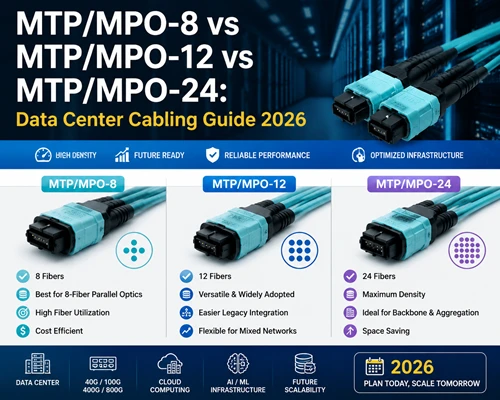
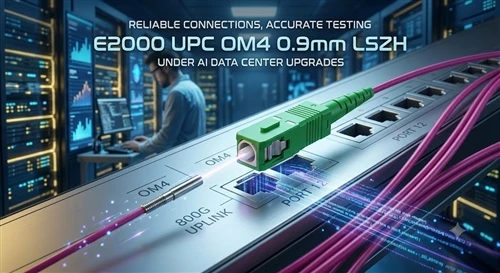
We specialize in custom-engineered MTP/MPO high-density trunk cables, ultra-reliable E2000/UPC Low Smoke Zero Halogen (LSZH) pigtails, and pre-terminated or empty 1U 24-port slide-out LC duplex fiber patch panels. We offer agile 7-to-15-day lead times, low MOQs, and a mandatory 100% factory dual-testing protocol (3D interferometer geometry inspection + 400x video end-face inspection) for flawless carrier-grade performance.
Key Export Shifts in the Era of AI Computing
Looking at the broader export landscape of 2026, Chinese optical fiber manufacturing has completely shed the legacy label of low-cost, low-end mass production. It is demonstrating three distinct premium evolutions:
- From Raw Commodities to Value-Added Solutions: In the past, exports consisted primarily of raw un-terminated fiber. Today, to bypass the prohibitive cost of localized field labor overseas, buyers heavily prefer integrated, pre-terminated solutions. For instance, FOCC's pre-configured, carrier-grade patch panels arrive fully loaded and tested. They can be mounted directly into racks upon arrival, cutting field deployment timelines by over 50%.
- Strict Convergence with International LSZH Fire Safety Codes: To meet the uncompromising safety standards of modern data centers, indoor pigtails and tight-buffered cables now feature advanced flame-retardant, low-smoke, zero-halogen (LSZH) compounds. They fully comply with rigorous international testing frameworks-including IEC 60332-1-2 (vertical flame spread), IEC 60754 (acid gas emissions), and IEC 61034-2 (smoke density). This prevents toxic, acidic smoke from corroding millions of dollars worth of server hardware in the event of a thermal incident.
- Digitalized, Visualized Link Management via Geometric Coding: Beyond supplying standard OS2 Single-mode (Yellow) cables, manufacturers are outputting massive volumes of specialized multi-mode color codings like OM4 (Magenta) and OM5 (Lime Green) specifically for AI high-density computing clusters. This systematic color-coding enables international data center operators to deploy visual cable management, eliminating human patching errors during critical maintenance windows.
How Overseas Buyers Should Select a Chinese Fiber Optic Manufacturer
When sourcing from China's fiber optic industry, buyers should avoid relying solely on supplier rankings. A more effective approach is to evaluate manufacturers based on project requirements, technical capability, compliance, and delivery performance. Significant differences exist across manufacturers in product specialization, pricing structure, engineering support, certification coverage, and project experience.
1. Define Product Scope Clearly
Different fiber optic products serve different network layers and engineering scenarios. Buyers should first identify required product categories, such as:
- G.652.D single-mode fiber
- G.657.A1 / G.657.A2 bend-insensitive fiber
- ADSS aerial optical cable
- OPGW optical ground wire
- FTTH drop cable
- Indoor tight-buffered fiber cable
- Outdoor loose tube cable
- Armored fiber optic cable
- MPO/MTP pre-terminated trunk cables
- Fiber patch cords, pigtails, PLC splitters, fiber distribution frames (ODF)
A precise product definition helps eliminate mismatched supplier selection at an early stage.
2. Match Application Scenarios with Technical Requirements
Different deployment environments impose different mechanical and optical requirements. The selection should be aligned with application engineering conditions:
- FTTH Access Networks: focus on bend radius performance, tensile strength, jacket material, and installation flexibility
- Data Centers: prioritize low insertion loss, high return loss, MPO/MTP polarity management, and low-loss grade performance
- Outdoor Duct Installation: require water resistance, crush resistance, sheath durability, and fiber count scalability
- Aerial Deployment: emphasize tensile strength, span distance, wind load resistance, ADSS/OPGW structural design
- Submarine Networks: require enhanced armoring, hydrostatic pressure resistance, and project-level certification compliance
- Industrial Environments: demand resistance to oil, temperature variation, UV exposure, rodent protection, and flame retardancy
3. Verify Compliance Standards and Certifications
A qualified supplier must be able to provide valid and traceable certifications aligned with product type and target market. Common standards include:
- ITU-T G.652 / G.657
- IEC 60793 / IEC 60794
- ISO 9001 (Quality Management System)
- ISO 14001 (Environmental Management System)
- RoHS / REACH compliance
- CPR (Construction Products Regulation, EU-specific applications)
- UL certification (North American market, product-dependent)
Important: certification validity is model-specific. Buyers should request certificates and test reports corresponding exactly to the quoted product SKU, not general company-level documents.
4. Request Complete Technical Documentation
Professional manufacturers should provide full engineering documentation prior to procurement, including:
- Fiber type and specification
- Fiber count
- Cable structure diagram
- Outer diameter and weight
- Minimum bending radius
- Maximum tensile strength
- Crush resistance rating
- Operating temperature range
- Jacket material specification
- Flame retardant rating
- Attenuation coefficient (dB/km)
- Fiber color coding standard
- Packaging length and configuration
- Factory test reports
- Product datasheet (technical sheet)
This documentation is critical for engineering validation and project approval.
5. Conduct Pre-Production Sample Validation
For bulk procurement or engineering deployment, sample testing is strongly recommended before mass production. Key evaluation indicators include:
- Optical attenuation performance
- Insertion loss and return loss (for connectors and assemblies)
- Sheath diameter consistency
- Mechanical tensile strength
- Bend performance under installation conditions
- Packaging quality and labeling accuracy
- End-face inspection (critical for patch cords and pre-terminated products)
Sample validation reduces project risk and ensures production consistency at scale.
FOCC™ Fiber Optic Manufacturer Selection
FOCC provides several structural advantages:
- Full product ecosystem coverage: from optical fiber cables (G.652D / G.657), ADSS, OPGW, to MPO/MTP high-density assemblies, patch cords, PLC splitters, and ODF/MDF distribution systems
- Project-oriented engineering support: capability to provide configuration guidance based on distance, bandwidth, environmental constraints, and deployment topology
- Manufacturing consistency control: ISO-based quality system with batch-level traceability and optical performance testing
- Export readiness: long-term experience in global deployment scenarios across telecom operators, system integrators, and data center builders
- Customization capability: OEM/ODM support for connector type, cable structure, labeling, packaging, and specification tuning