The OTDR is a sophisticated electro-optical integration instrument made of Rayleigh scattering and Fresnel reflection backscattering when light is transmitted through an optical fiber. It is widely used in the maintenance and construction of optical fiber cables. Perform fiber length measurement, fiber attenuation, joint attenuation, and fault location measurements.
The OTDR test is performed by emitting light pulses into the fiber and then receiving the returned information at the OTDR port. When light pulses propagate within the fiber, scattering or reflection occurs due to the nature of the fiber, connectors, joints, bends, or other similar events. Some of the scattering and reflections are returned to the OTDR. The useful information returned is measured by the OTDR's detectors, which serve as time or curve segments at different locations within the fiber.
The distance can be calculated from the time it takes for the signal to the return signal to determine the speed of the light in the glass material. The following formula explains how the OTDR measures distance. d = (c × t) / 2 (IOR) In this formula, c is the speed of light in a vacuum, and t is the total time after the signal is transmitted until the signal is received (two-way) (the two values are multiplied by 2 After a one-way distance). Because light is slower in glass than in vacuum, in order to accurately measure distance, the fiber under test must specify the refractive index (IOR). IOR is marked by the fiber manufacturer.
The OTDR uses Rayleigh scattering and Fresnel reflection to characterize the fiber. Rayleigh scattering results from the irregular scattering of optical signals along the fiber. The OTDR measures a portion of the scattered light back to the OTDR port. These backscatter signals indicate the degree of attenuation (loss/distance) caused by the fiber. The resulting trajectory is a downward curve, which indicates that the backscattering power is decreasing, which is due to the loss of both the transmitted and backscattered signals after transmission over a certain distance.
Given the fiber parameters, the Rayleigh scattering power can be specified. If the wavelength is known, it is proportional to the pulse width of the signal: the longer the pulse width, the stronger the backscattering power. Rayleigh scattering power is also related to the wavelength of the transmitted signal, and shorter wavelengths are more powerful. That is, the trajectory generated by the 1310 nm signal will be higher than the Rayleigh backscatter of the trajectory generated by the 1550 nm signal.
In the high-wavelength region (over 1500 nm), Rayleigh scattering continues to decrease, but another phenomenon called infrared attenuation (or absorption) occurs, increasing and resulting in an increase in the overall attenuation value. Therefore, 1550 nm is the lowest attenuation wavelength; this also explains why it is the wavelength of long-distance communication. Naturally, these phenomena also affect the OTDR. As an OTDR with a wavelength of 1550 nm, it also has low attenuation performance, so it can be tested over long distances. As a highly attenuated 1310nm or 1625nm wavelength, the OTDR's test distance is bound to be limited because the test equipment needs to detect a sharp spike in the OTDR trace, and the tip of this spike will quickly fall into the noise.
Fresnel reflections, on the other hand, are discrete reflections that are caused by individual points in the entire fiber. These points are made up of factors that cause a change in the coefficient of refraction, such as the gap between glass and air. At these points, there will be strong backscattered light reflected back. Therefore, OTDR is to use Fresnel reflection information to locate the connection point, fiber termination or breakpoint.
Large OTDRs have the ability to fully and automatically identify the scope of the fiber. This new capability stems largely from the use of advanced analysis software that reviews OTDR sampling and creates an event table. This event table shows all trajectory-related data such as the type of fault, distance to the fault, attenuation, return loss, and splice loss.
OTDR principle
1.1 Rayleigh Backscattering
Due to the defect of the optical fiber itself and the inhomogeneity of the doping components, Rayleigh scattering occurs in the optical pulses propagated in the optical fiber. A portion of the light (approximately 0.0001% [1]) is scattered back in the opposite direction of the pulse and is therefore referred to as Rayleigh backscattering, which provides length-dependent attenuation details.

Fresnel reflections occur at the boundaries of two different refractive index transmission media (such as connectors, mechanical splices, fractures, or fiber terminations). This phenomenon is used by the OTDR to accurately determine the position along a length of discontinuity in the length of the fiber. The size of the reflection depends on the flatness of the boundary surface and the difference in refractive index. The Fresnel reflection can be reduced by using the refractive index matching liquid.
OTDR main performance index
Understanding the performance parameters of the OTDR contributes to the actual fiber measurement of the OTDR. The OTDR performance parameters mainly include dynamic range, blind area, resolution, and accuracy.
2.1 Dynamic range
Dynamic range is one of the main performance indicators of the OTDR, which determines the maximum measurable length of the fiber. The larger the dynamic range, the better the curve line type and the longer the measurable distance. Dynamic Range There is currently no uniform standard calculation method [1]. The commonly used dynamic range definitions mainly include the following four:
1 IEC definition (Bellcore): One of the commonly used dynamic range definitions. The dB difference between the backscatter level at the beginning and the noise peak level is taken. The measurement condition is the maximum pulse width of the OTDR and the measurement time of 180 seconds.
2RMS Definition: The most commonly used dynamic range definition. Take the difference in dB between the starting backscatter level and the RMS noise level. If the noise level is Gaussian, the defined value of RMS is approximately 1.56 dB higher than the IEC defined value.
3N = 0.1dB Definition: The most practical definition method. Take the maximum allowable attenuation value that can measure the loss of 0.1dB event. The N=0.1dB defined value is approximately 6.6dB smaller than the RMS defined signal-to-noise ratio SNR=1, which means that if the OTDR has a 30dB RMS dynamic range, the N=0.1dB defines a dynamic range of only 23.4dB, which means only Losses with 0.1 dB loss measured over a 23.4dB attenuation range.
End detection: The dB difference between the 4% Fresnel reflection at the beginning of the fiber and the RMS noise level, which is about 12 dB higher than the IEC definition.
2.2 Deadzone
"Blind zone" is also called "dead zone" and refers to the part where the OTDR curve cannot reflect the state of the optical fiber line within a certain distance range under the influence of Fresnel reflection. This phenomenon mainly occurs because the Fresnel reflection signal on the fiber link makes the photodetector saturated, which requires a certain recovery time. The dead zone can occur at the front of the OTDR panel, or at other Fresnel reflections in the fiber optic link.
Bellcore defines two dead zones [2]: Attenuation blind zone (ADZ) and Event blind zone (EDZ). Attenuation blind zone refers to the minimum distance between two reflection events when the respective loss can be measured respectively. Generally, the attenuation blind zone is 5-6 times of the pulse width (indicated by distance); the event blind zone means that two reflection events are still distinguishable. At the minimum distance, the distance to each event is measurable, but the individual loss of each event is unmeasurable.

2.3 Resolution
The OTDR has four main resolution indicators: sample resolution, display resolution (also called readout resolution), event resolution, and distance resolution. The sampling resolution is the minimum distance between the two sampling points, which determines the ability of the OTDR to locate events. The sampling resolution is related to the choice of pulse width and distance range size. The display resolution is the minimum value the instrument can display. The OTDR subdivides each sampling interval by the microprocessing system so that the cursor can move within the sampling interval. The shortest distance the cursor moves is the horizontal display resolution and the displayed minimum attenuation vertical display resolution.
The resolution of the event refers to the threshold of the OTDR to identify the event point in the link under test, that is, the value of the event field (detection threshold). The OTDR treats event changes smaller than this threshold as the point of uniform slope change in the curve. The resolution of the event is determined by the resolution threshold of the photodiode, which specifies the minimum attenuation that can be measured based on two close power levels. Distance resolution refers to the shortest distance between two adjacent event points that the instrument can resolve. This index is similar to the blind spot of the event, and related to pulse width and refractive index parameters.
Use of OTDR
The OTDR can perform the following measurements:
* For each event: distance, loss, reflection
* For each fiber segment: segment length, segment loss dB or dB/Km, segment return loss (ORL)
* For the entire terminal system: chain length, chain loss dB, chain ORL
Fiber measurement with OTDR can be divided into three steps: parameter setting, data acquisition, and curve analysis.
3.1 Parameter Settings
Most OTDR test fibers automatically select the best acquisition parameters by transmitting test pulses. The user only needs to select the wavelength, acquisition time, and necessary fiber parameters (such as refractive index, scattering coefficient, etc.). It takes a certain amount of time to acquire the parameters automatically, so that the operator can manually select the measurement parameters under known measurement conditions.
3.1.1 Wavelength Selection
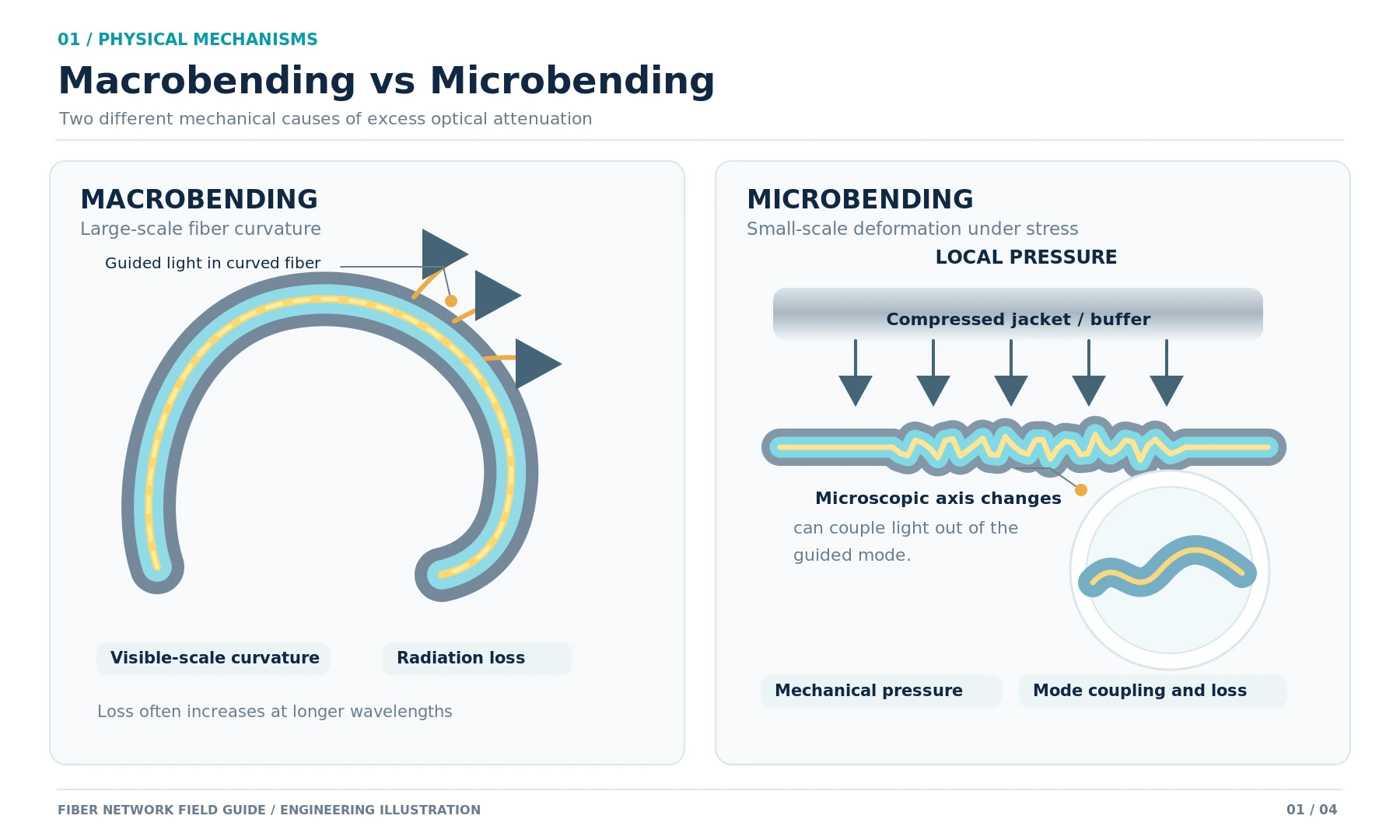
The behavior of the optical system is directly related to the transmission wavelength. Different wavelengths have different attenuation characteristics of optical fibers and different behaviors in the optical fiber connection: In the same optical fiber, the 1550 nm is more sensitive to bending than the 1310 nm optical fiber, and the 1550 nm attenuation is smaller than the unit length of 1310 nm. Solder or connector losses are higher at 1310 nm than at 1550 nm. For this reason, the optical fiber test should be the same as the wavelength transmitted by the system, which means that the 1550 nm optical system needs to select the wavelength of 1550 nm.
3.1.2 Pulse Width
The pulse width controls the optical power injected into the fiber by the OTDR. The longer the pulse width, the larger the dynamic measurement range. It can be used to measure a longer distance fiber, but the long pulse will also generate a larger blind zone in the OTDR curve waveform; short pulse injection light level Low but can reduce blind spots. The pulse width period is usually expressed in ns, and can also be expressed in units of length (m) according to formula (4). For example, a 100 ns pulse can be interpreted as a "10 m" pulse.
3.1.3 Measurement Range
The OTDR measurement range refers to the maximum distance that the OTDR acquires data samples. The choice of this parameter determines the size of the sampling resolution. The measurement range is usually set to a distance of 1 to 2 times the length of the fiber to be measured.
3.1.4 Average time
Since the backscattered light signal is extremely weak, the statistical average method is generally used to improve the signal-to-noise ratio. The longer the average time, the higher the signal-to-noise ratio. For example, the acquisition of 3 min will be 0.8 dB more dynamic than the acquisition of 1 min. However, the acquisition time of more than 10 minutes does not improve the signal-to-noise ratio. The average time does not exceed 3 minutes.
3.1.5 Fiber Parameters
The setting of the fiber parameters includes the setting of the refractive index n and the backscatter coefficient η. The refractive index parameter is related to the distance measurement, and the backscatter coefficient affects the measurement result of the reflection and return loss. These two parameters are usually given by the manufacturer of the optical fiber. For most types of optical fiber, the index of refraction and the backscatter coefficient given in Table 2 can obtain more accurate distance and return loss measurements.
Experience and skills
(1) Simple identification of fiber quality:
Under normal circumstances, the OTDR test ray curve main body (single or several optical fiber cable) slope is basically the same, if a certain section of the slope is larger, it shows that the attenuation of this section is larger; if the curve body is irregular shape, the slope fluctuates, If bent or arced, it indicates that the quality of the optical fiber is seriously degraded and does not meet the communication requirements.
(2) Wavelength selection and single bidirectional test:
The 1550 wavelength is farther away from the test. The 1550 nm is more sensitive to bending than the 1310 nm. The 1550 nm is smaller than the 1310 nm unit, and the 1310 nm is higher than the 1550 nm or the connector. In actual optical cable maintenance work, both wavelengths are generally tested and compared. For positive gain phenomena and over-range distances, bi-directional test analysis must be performed to obtain good test conclusions.
(3) joint cleaning:
Before the optical fiber connector is connected to the OTDR, it must be carefully cleaned, including the output connector of the OTDR and the live connector under test. Otherwise, the insertion loss is too large, the measurement is unreliable, the curve is noisy or even the measurement cannot be performed, and it may also damage the OTDR. Avoid cleaning agents other than alcohol or refractive index matching fluids because they can dissolve the binder in the fiber optic connector.
(4) Correction of refractive index and scattering coefficient: For the measurement of the length of the optical fiber, a deviation of 0.01 from the refractive index would cause errors of as much as 7m/km. For longer light segments, the refractive index provided by the cable manufacturer should be used. value.
(5) Recognition and processing of ghosts:
The spike on the OTDR curve is sometimes due to echoes caused by near and strong reflections from the incident end. This spike is called ghosting. Recognition of ghosts: The ghosts on the curves did not cause significant loss; the distance between the ghost and the beginning of the curve was a multiple of the distance between the strong reflection event and the beginning, becoming symmetrical. Eliminate ghosting: Select a short pulse width and add attenuation to the strong reflection front end (such as the OTDR output). If the event that caused the ghosting is at the end of the fiber, a "small bend" can be made to attenuate the light reflected back to the beginning.
(6) Positive gain phenomenon processing:
Positive gain may occur on the OTDR trace. The positive gain is due to the fact that the fiber after the splice point produces more backward astigmatism than the fiber before the splice point. In fact, the fiber is splice-loss at this splice point. It often occurs in the welding process of fibers with different mode field diameters or different backscatter coefficients. Therefore, it is necessary to measure in both directions and average the results as the splice loss. In the actual optical cable maintenance, ≤0.08dB can also be used as a simple principle of acceptance.
(7) Use of additional optical fiber:
The additional fiber is a piece of fiber used to connect the OTDR with the fiber to be measured and has a length of 300-2000 m. Its main functions are: front-end blind zone processing and terminal connector insertion measurement.
In general, the dead zone caused by the connector between the OTDR and the fiber under test is the largest. In the actual measurement of the optical fiber, a transitional optical fiber is added between the OTDR and the optical fiber to be tested so that the front-end dead zone falls within the transition optical fiber, and the beginning of the optical fiber to be tested falls in the linear stable region of the OTDR curve. The insertion loss of the connector at the beginning of the fiber system can be measured by adding a transition fiber to the OTDR. If you want to measure the insertion loss of connectors at both ends, you can add a transition fiber at each end.
The main factors of test error
1) Inherent deviations of OTDR test instruments
According to the test principle of OTDR, it transmits optical pulses to the tested optical fiber according to a certain period, and then samples, quantizes, codes, and stores the backscattered signals from the optical fibers at a certain rate. The OTDR instrument itself has errors due to the sampling interval, which is mainly reflected in the distance resolution. The distance resolution of the OTDR is proportional to the sampling frequency.
2) Errors due to improper operation of test instruments
In the cable fault location test, the correctness of the OTDR meter's use is directly related to the accuracy of the obstacle test. The instrument's parameter setting and accuracy, improper selection of the meter's range, or inaccurate cursor settings will lead to errors in the test results.
(1) Set the error caused by the refractive index deviation of the meter
The refractive index of different types and manufacturers of optical fibers is different. When using the OTDR to test the length of the fiber, the instrument parameters must be set first, and the setting of the refractive index is one of them. When the refractive index of several segments of cable is different, a method of segmentation can be used to reduce the test error caused by the refractive index setting error.
(2) Improper selection of measuring range
When the OTDR meter test distance resolution is 1 meter, it means that the figure can only be enlarged when the horizontal scale is 25 meters per grid. The meter design is one full cell with 25 steps per cursor. In this case, every move of the cursor means a distance of 1 meter, so the reading resolution is 1 meter. If you select 2 km/div for the horizontal scale, the cursor will shift by 80 meters for each move of the cursor. It can be seen that the larger the range of measurement selected during the test, the greater the deviation of the test results.
(3) Improper selection of pulse width
Under the condition of the same pulse amplitude, the greater the pulse width is, the greater the pulse energy is. At this time, the dynamic range of the OTDR is also greater, and the corresponding blind area is also large.
(4) Improper selection of averaging time
The OTDR test curve samples the reflected signal after each output pulse and averages multiple samples to eliminate some random events. The longer the averaging time, the closer the noise level is to the minimum value and the greater the dynamic range. The longer the average time, the higher the test accuracy, but the accuracy will not increase when it reaches a certain level. In order to improve the test speed and shorten the overall test time, the general test time can be selected within 0.5 to 3 minutes.
(5) Improper placement of cursor
Breaks in fiber optic connectors, mechanical splices, and fibers can cause loss and reflections, and the broken end face of the fiber end can produce various Fresnel reflection peaks or no Fresnel reflection due to the irregularity of the end face. If the cursor settings are not accurate enough, there will be some errors.