


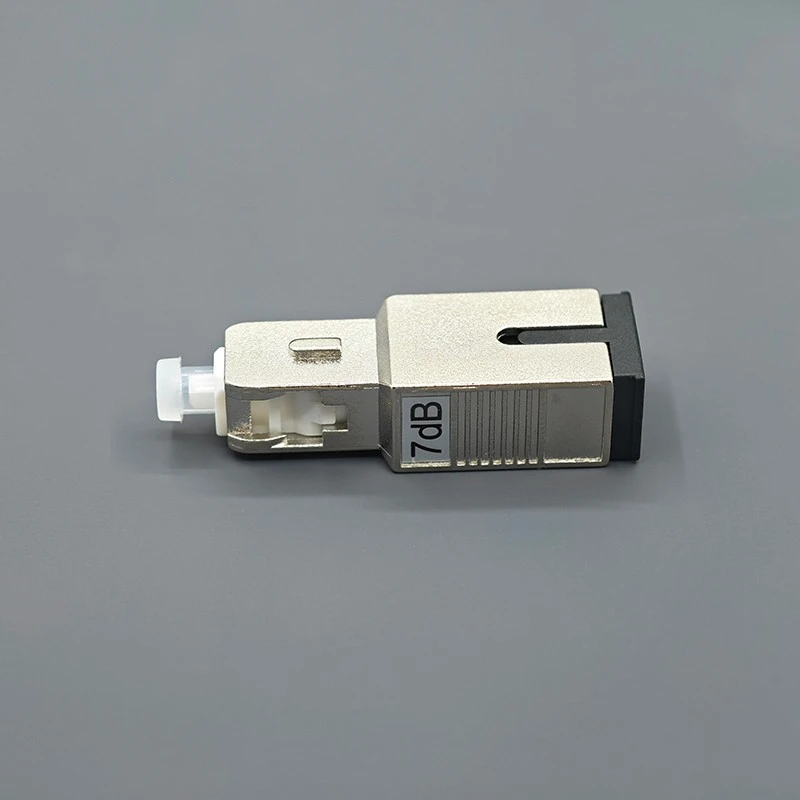

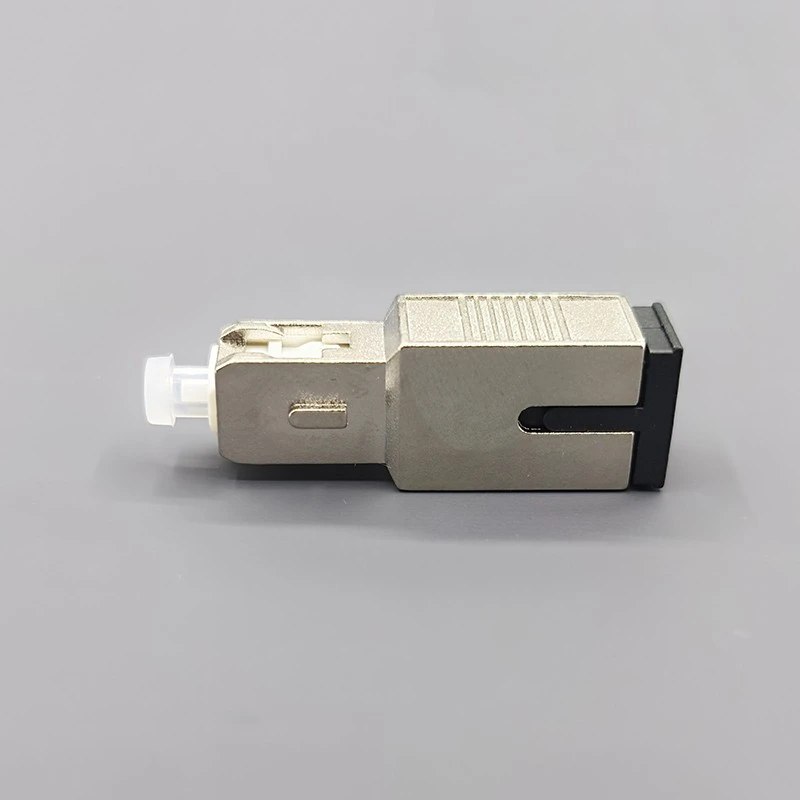

Welcome to buy the sc/upc male-female fixed fiber optic attenuator with our factory. As one of the leading manufacturers and suppliers in China, we also welcome the customized orders. Consult the price and the quotation with us now.
Features
- Connector family:SC/UPC male-female build-out style for direct inline use
- Stock focus:11 dB, 12 dB, 13 dB, 14 dB and 15 dB sample pieces
- Best use:Maintenance kits, lab test benches and legacy SC network service
- Datasheet basis:1310/1550 nm test option, zirconia ceramic sleeve and RoHS materials
When a buyer actually needs this part
A fixed optical attenuator is not selected just because a catalog needs another accessory. It is selected when measured receiver power, repeatability or connector compatibility makes a defined loss value the cleanest solution. Market references from SENKO, Lightel, Fibertronics, Fiberdyne, FS and Technetix consistently present fixed attenuators as passive male-female devices used to reduce optical power in fiber links, commonly at 1310 nm and 1550 nm.
Receiver input is too high
Short single-mode runs or high-output transceivers can deliver more power than the receiver should see. A fixed SC/UPC attenuator adds a predictable loss before the receive port.
Scenario 01
Test conditions must repeat
Labs often need the same loss value again and again. A fixed attenuator is faster than resetting a variable unit for routine pass/fail or margin checks.
Scenario 02
Existing equipment uses SC/UPC
Many older optical instruments, patch panels and media converters still use SC/UPC. A matching attenuator avoids connector-polish confusion.
Scenario 03
Service teams need simple stock
Fixed dB parts are easy to label, issue and replace. That matters when a technician is solving a field issue, not designing a new optical system.
Scenario 04
Selection workflow: measure first, then choose dB
Practical dB selection logic
Industry guidance for optical attenuation starts with measurement: check the power reaching the receiver, compare it with the receiver operating window, then choose the attenuation value that brings the link back into range.
Required attenuation = measured receiver power - target receiver power, then choose the nearest fixed dB value with the correct SC/UPC interface.
- Measure optical receive power:Use a calibrated power meter at the receiver side. Do not choose a fixed value only from cable length.
- Check the equipment power window:Compare the reading against the receiver or instrument specification, especially during short-link tests.
- Keep SC/UPC as SC/UPC:Use a UPC attenuator in a UPC route. Avoid mixing APC and UPC faces as a substitute for proper attenuation.
- Stock nearby dB values:For service use, keep adjacent values so technicians can solve different overpower margins without waiting for a special part.
How this SC/UPC page should sell differently from SC/APC
SC/UPC is the compatibility story
SC/APC pages naturally focus on green APC interfaces, return-loss-sensitive access networks and PON/ODN language. This SC/UPC page should not compete on the same promise. It should sell the part as a stable, easy-to-stock component for existing UPC environments.
- Existing SC/UPC panels and patch routes
- Test instruments and lab jumpers using UPC polish
- Maintenance drawers organized by connector and dB value
- Replacement stock for older single-mode networks
Middle-loss values are useful stock
Many attenuator catalogs show wide ranges such as 1 dB to 30 dB. For a service-stock page, the stronger message is not a long list; it is explaining why fixed values around the middle of the range help solve real receiver-power problems without changing the cable plant.
- Useful when low-dB trim is not enough
- Simple passive part for noticeable power reduction
- Good for repeatable test loss and temporary troubleshooting
- Easy to reorder by connector, polish, wavelength and dB
Specifications and Attributes
| Product type | SC/UPC male-female fixed fiber optic attenuator |
|---|---|
| Fiber mode | Single-mode |
| Attenuation range | Datasheet: 0-30 dB; visible SC/UPC sample set: 11 dB, 12 dB, 13 dB, 14 dB, 15 dB |
| Attenuation tolerance | 0 dB: ±0.3 dB; 1-5 dB: ±0.5 dB; 6-30 dB: ±10% |
| Return loss | Single-mode UPC ≥45 dB; single-mode APC ≥50 dB is listed separately in the datasheet |
| Test wavelength | 1310/1550 nm, 1260/1620 nm, or 1240/1650 nm according to test requirement |
| Ceramic sleeve | Zirconia ceramic |
| Operating temperature | -40°C to +80°C |
| Material compliance | Raw materials comply with RoHS requirements |
| Appearance requirement | Clean and smooth surface, free of oil stains, burrs, cracks, deformation, rust and other visible defects |
Application map for procurement teams
| Buyer situation | Why SC/UPC fixed attenuation fits | What to confirm before order |
|---|---|---|
| Maintenance department supporting older SC single-mode routes | SC/UPC interface matches existing patch panels and passive link hardware. | Connector polish, dB value, packaging label and stock quantity. |
| Lab team testing receiver behavior at controlled power levels | Fixed loss gives repeatable conditions without resetting a variable attenuator each time. | Test wavelength, target loss value and inspection data requirement. |
| Installer correcting high receive power after commissioning | Male-female build-out format can be inserted into the link path quickly. | Measured power, receiver window and nearest fixed dB value. |
| Distributor building a passive fiber accessory kit | SC/UPC attenuators are recognizable, compact and easy to reorder by fixed value. | Value sequence, carton label, individual bag label and lead time. |
Best-fit applications
Maintenance spare kits
Keep multiple fixed dB values ready for field service teams who need quick power correction in existing SC/UPC routes.
Laboratory testing
Use a fixed attenuation value when engineers need a repeatable optical loss condition without setting a variable attenuator every time.
Traditional SC networks
Useful for older panels, media converters, optical instruments and access equipment that still rely on SC/UPC interfaces.
Receiver power protection
Add a known loss before the receive port when source output is too high for the receiver's preferred operating window.
Commissioning checks
Helps simulate link budget margin and verify receiver behavior at a chosen optical power level during setup.
Inventory standardization
A male-female build-out attenuator is easy to label, store and issue as a compact passive component.
How to specify SC/UPC attenuators
Confirm the installed connector polish
Use SC/UPC where the link already uses UPC. Do not substitute APC parts into a UPC chain just to create attenuation.
Select the fixed dB value from measured power
Choose 11-15 dB when the receiver needs a stronger correction than low-dB trim but the link still needs a compact passive part.
Match the test wavelength
The FOCC datasheet supports 1310/1550 nm as well as 1260/1620 nm and 1240/1650 nm test combinations.
Define packaging and label requirements
For maintenance stock, request clear dB marking and consistent packaging so technicians can select the right attenuator quickly.
Buyer FAQ
Is this SC/UPC page mainly for FTTH/PON APC networks?
No. This page is positioned for general SC/UPC single-mode compatibility, especially maintenance stock, laboratory testing and traditional SC equipment environments.
Which dB values are visible in the current product folder?
The current SC/UPC folder includes visible samples for 11 dB, 12 dB, 13 dB, 14 dB and 15 dB.
What is the confirmed UPC return loss?
The local SC single-mode attenuator datasheet states single-mode UPC return loss of at least 45 dB.
Can this attenuator be used for lab testing?
Yes. A fixed attenuator is useful when a test bench needs a repeatable optical loss value, especially for receiver power checks and equipment verification.
Hot Tags: sc/upc male-female fixed fiber optic attenuator, China, factory, suppliers, manufacturers, quotation, customized, price, buy


